Train your emergency, crisis, and inpatient teams to deliver structured, suicide-focused care in about 60 minutes. CAMS gives hospitals a clear pathway for patients at risk of suicide that fits inside existing workflows and reduces return visits.
Inquire About Training
Training is available for:
- Crisis response teams
- Emergency department providers
- Nurses
- Psychologists
- Social workers
- Graduate students and peer support workers under supervision
Why Hospitals Need Clinical Suicide Prevention Training
In recent years, hospitals and emergency departments have seen many patients in crisis. They often lack the resources to treat them properly and on time. Many times, patients dealing with a mental health crisis are triaged over and may not get a clear disposition plan to follow once they’re released from the hospital. Multiple studies suggest that once discharged, their risk for suicide goes up significantly.1 Studies also show that 30% of patients who go to the ED for a suicide-related concern return within a year2 and most do not follow discharge plans for follow up care.
Currently, EmPATH units are helping offer an alternative solution to some of the overwhelming number of patients that emergency departments see on a daily basis. EmPATH units are specialized emergency department extensions designed to provide compassionate and appropriate care for those facing a mental health crisis. Whether your hospital has an EmPATH unit or not, CAMS training can help improve outcomes at your facility.
Webinar
2024 CAMS Update and Introducing CAMS Brief Intervention
This webinar explores the latest clinical research, training developments, and real-world applications of the CAMS Framework®, including the introduction of CAMS Brief Intervention (CAMS-BI™). Featuring Dr. David Jobes and Dr. Raymond Tucker, the session highlights emerging evidence for suicide-focused brief interventions designed for inpatient and emergency department settings.
The CAMS-BI™ Playbook: Structured Suicide Care in 60 Minutes
Emergency departments, crisis programs, inpatient units, and EmPATH settings are under growing pressure to manage suicide risk while balancing safety, staffing, patient flow, and continuity of care. The CAMS-BI Playbook outlines a structured, evidence-informed approach to delivering collaborative suicide-focused care in about 60 minutes using the CAMS Framework.
Download this guide to learn how health systems are implementing CAMS-BI to reduce operational burden, improve patient stabilization, support multidisciplinary teams, and create more effective pathways to ongoing outpatient care.
Inside: results from over 5,000 CAMS-BI sessions and a side by side look at a standard ED pathway versus a pathway with CAMS.

How CAMS Can Help
CAMS is a proven solution that focuses on suicide prevention. It offers clinical training for handling suicidal risk. This training is useful in many hospital settings, such as inpatient care and emergency departments. CAMS is used in both inpatient and outpatient settings. It focuses on keeping the individual safe. At the same time, it helps understand why they are struggling. This understanding helps create a treatment plan for the future. CAMS has also shown a significant reduction in suicidal ideation for those who have been discharged.3
Benefits of Suicide Prevention Training for Healthcare Professionals with CAMS

Cost-Effective Solution
Implementing CAMS can help save hospitals money. Rather than needing to expand due to demand, CAMS can help hospitals and emergency departments reduce patient recidivism while improving quality of care.
Can Help Reduce Malpractice Risk
CAMS greatly lowers the risk of malpractice. It does this by using detailed medical record documentation. This is done with a tool called the Suicide Status Form. Using CAMS and related SSF documentation can help staff feel feel more confident and competent to treat suicidal risk which positively impacts patients as well.

Shared Language
When CAMS is being used in a system of care, it creates a shared language for each provider who works with the patient moving forward. This helps ensure that the patient is getting the best care possible at each stage of their treatment journey.

A Clear Path Forward for Patients
Recovery is always the end goal. By training hospital staff in suicide treatment with CAMS, you are helping patients receive a clear and direct path for optimal treatment and recovery from suicidal suffering.
Hospitals & Health Systems Trained in CAMS




How CAMS Provides Clinical Suicide Prevention Training in Hospitals
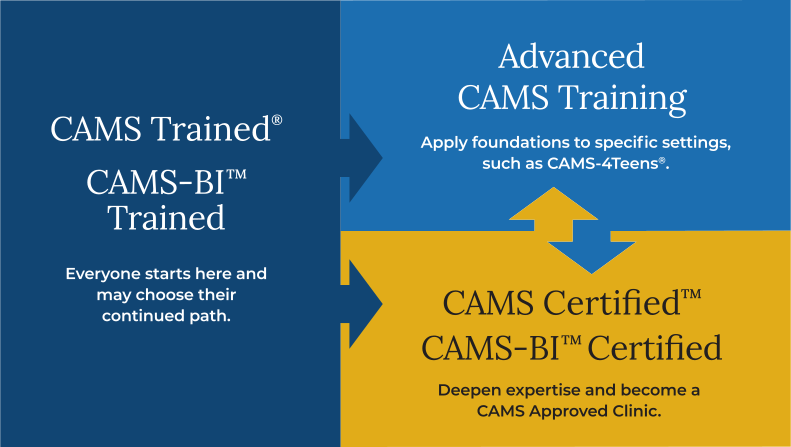
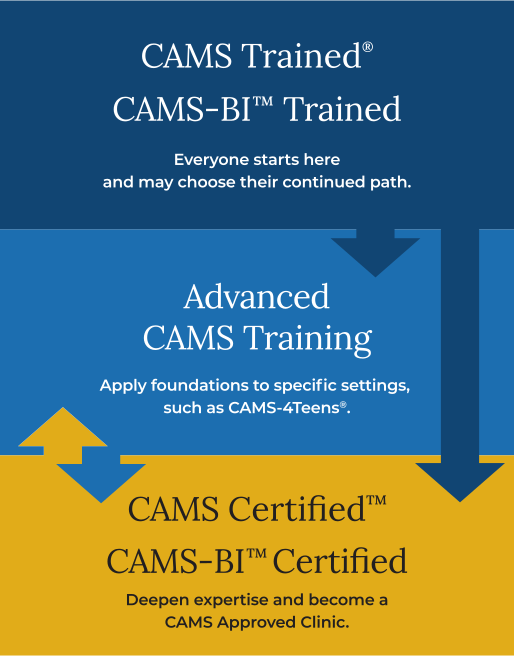
CAMS offers clinical suicide treatment training specifically designed to be used in hospitals and emergency departments. Everyone first becomes CAMS Trained. After receiving the CAMS Trained designation, you and your team can enroll in Advanced CAMS training programs that take your CAMS knowledge further.
CAMS Brief Intervention (CAMS-BI) is a training specifically designed for those working in emergency departments and hospitals. When using CAMS-BI, you help set patients up for success by creating a personalized treatment plan and referral for outpatient care. These shorter, one-hour consultations have a quick effect. About 58% of patients say they feel less distressed and more hopeful.
The approach of sitting with a client’s thoughts of self harm without immediately jumping to hospitalization has led to better outcomes — both because I’m more confident to stay in that space with them and because that willingness creates a greater trust between us.
CAMS Trained Clinician
As a clinician who has lost a loved one to suicide, I can vouch for CAMS being not only instructive but also personally healing in helping me feel like I CAN help people who think of suicide.
Evan Merida, MA, LPC, NCC
Sun and Shade Counseling, Denver, CO
Clinical Training for Suicide Prevention
CAMS is a proven solution that focuses on suicide prevention. It offers clinical training for handling suicidal risk. This training is useful in many hospital settings, such as inpatient care and emergency departments. CAMS is used in both inpatient and outpatient settings. It focuses on keeping the individual safe. At the same time, it helps understand why they are struggling. This understanding helps create a treatment plan for the future. CAMS has also shown a significant reduction in suicidal ideation for those who have been discharged.3
Rachael Jasperson, LCSW, PhD, MBA, Manager, Zero Suicide Program, University of Utah Health
Frequently Asked Questions
Yes. The CAMS Framework® (Collaborative Assessment and Management of Suicidality) is grounded in 40+ years of rigorous clinical research, including 11 open trials, 7 randomized controlled trials, and 2 meta-analyses. It’s endorsed by the CDC, Joint Commission, Surgeon General, featured in the 2024 National Suicide Prevention Strategy, and integrated into Zero Suicide initiatives worldwide. (CAMS-care)
The core CAMS Trained™ program includes 10 hours of structured online coursework plus 4 hours of consultation calls, designed to equip clinicians to apply CAMS effectively with their first patient. Most clinicians earn their CAMS Trained designation in around 30 days. (CAMS-care)
Clinical suicide prevention training involves structured instruction and supervised practice enabling clinicians to assess, collaborate, and intervene with individuals at risk for suicide. CAMS-centered training teaches providers to co-create safety plans, identify underlying drivers of suicidal thoughts, and document treatment using the evidence-based Suicide Status Form in as few as 6–8 therapeutic sessions. (CAMS-care)