Suicide Prevention: Why Are Therapists Rarely Trained in Suicide Prevention & Treatment?

Date: February 21, 2023

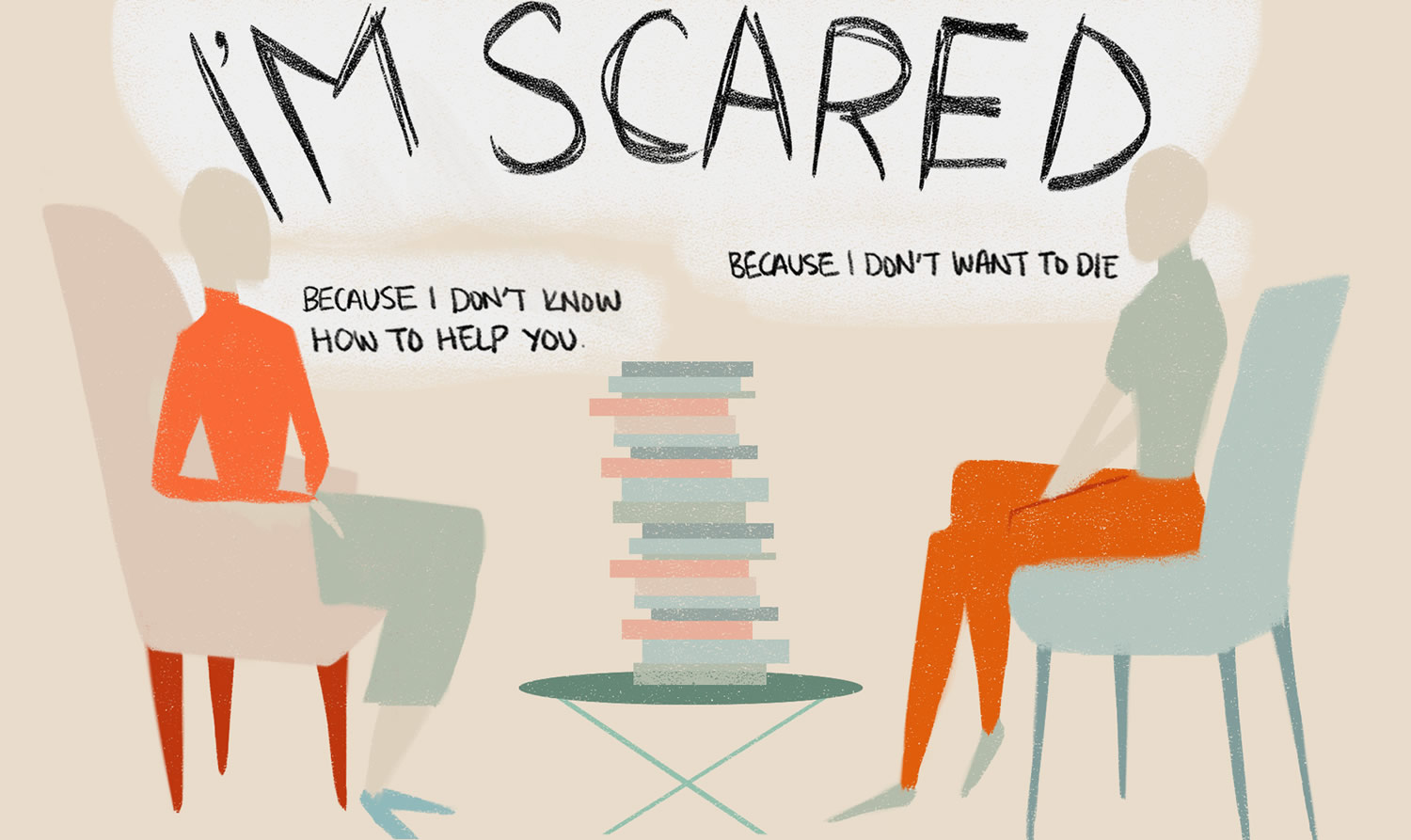
Rates for death by suicide are on the rise and sadly, those we turn to for help have little to no formal training to effectively treat suicidal patients. The current state of suicide prevention is well illustrated in the image below.

Suicide Prevention Training
Teresa Lo/USA Today


USA Today recently published two articles that explore the challenges of training mental health professionals in preventing suicide and tips for suicidal people on how to find a qualified mental health professional.  CAMS is one of only a few evidence and outcome-based treatments noted by the Joint Commission and included in both the Zero Suicide Toolkit and the CDC’s Preventing Suicide: A Technical Package of Policy, Programs and Practices.

Explore USA Today Articles on the Relationship Between Therapy & Suicide Prevention

Learn more about the challenges faced by both therapists and patients when it comes to managing & preventing suicidal ideation. Read the articles below to find out more.

We Tell Suicidal People to Go to Therapy. So Why Are Therapists Rarely Trained in Suicide?

Get the expert perspective on the importance of suicide prevention training and how it can be improved in the mental health field. Learn more about challenges that therapists face in identifying and treating patients with suicidal thoughts, including the stigma surrounding suicide and the lack of standardized suicide prevention training in graduate programs for mental health professionals. Read the article

How To Find a Therapist if You’re Suicidal

Find out about the importance of seeking professional help for those struggling with suicidal thoughts, and get practical advice on how to find a therapist who can provide effective, evidence-based support for suicidal ideation. Read the article

The CAMS Framework® of Suicide Assessment: Intervention, Prevention & Treatment Backed By 30 Years of Ongoing Clinical Research

CAMS-care (Collaborative Assessment and Management of Suicidality) offers several courses to mental health professionals to help them provide effective care to individuals with suicidal ideation.

Managing Suicidal Risk: A Collaborative Approach

The current edition of Dr. Jobes’ book, “Managing Suicidal Risk: A Collaborative Approach,” introduces the CAMS Framework for suicide prevention and therapy. The CAMS Framework is backed by decades of extensive research and emphasizes a collaborative approach to managing suicidal risk. The book provides evidence-based data and practical guidance on how to implement CAMS in clinical settings, making it an essential resource for mental health professionals seeking to provide effective care to individuals with suicidal ideation.

Suicide Prevention Video Training

CAMS-care provides video training opportunities for mental health professionals to effectively address malpractice and ethical liability issues when working with suicidal patients. The training covers essential topics, including how to deal with difficult patients and treating suicidal risk in children and adolescents. By providing comprehensive suicide prevention and therapy training, CAMS-care aims to equip mental health professionals with the skills and knowledge they need to provide effective care to individuals with suicidal ideation while minimizing malpractice and ethical liability risks.

Other Evidence-Based Suicide Prevention Training

CAMS consultants offer a range of suicide prevention and therapy training opportunities for mental health professionals. Their on-site Role-Play Training enables clinicians to practice using the CAMS approach with patients, while Education Days provide a broader audience with an understanding of the importance of evidence-based treatments in a system of care. Additionally, CAMS consultants offer Consultation Calls, which provide clinicians with the opportunity to ask questions and receive expert guidance when working with patients who have suicidal ideation. By offering these comprehensive training and consultation services, CAMS aims to equip mental health professionals with the skills and support they need to provide effective care to patients at risk of suicide.

About the Author

David A. Jobes Ph.D. ABPP

David A. Jobes Ph.D. ABPP
David Jobes, PhD, ABPP, is the founder of CAMS-care, LLC. He began his career in 1987 in the Counseling Center of the Catholic University of America, where he developed a suicide risk assessment tool for college students that evolved into CAMS. Dr. Jobes is now a Professor of Psychology and Associate Director of Clinical Training at Catholic; he has trained thousands of mental health professionals in the United States and abroad in evidence-based assessment and treatment of suicide risk and the use of CAMS.

About David A. Jobes Ph.D. ABPP

David A. Jobes Ph.D. ABPP
David Jobes, PhD, ABPP, is the founder of CAMS-care, LLC. He began his career in 1987 in the Counseling Center of the Catholic University of America, where he developed a suicide risk assessment tool for college students that evolved into CAMS. Dr. Jobes is now a Professor of Psychology and Associate Director of Clinical Training at Catholic; he has trained thousands of mental health professionals in the United States and abroad in evidence-based assessment and treatment of suicide risk and the use of CAMS.

Strengths-Based Approaches to Suicide Prevention in the Black Community

Strengths-Based Approaches to Suicide Prevention in the Black Community Webinar

The crisis of suicide among Black youth and emerging adults has escalated in recent years. Despite this, little is known about what factors can protect against the occurrence of suicide for Black Americans. In this talk, Dr. Brooks Stephens will review socio-cultural risk factors for suicide among Black youth and emerging adults, share her research focusing on strengths-based approaches to suicide prevention, and outline essential actions needed to address this public health crisis.

Jasmin Brooks Stephens, PhD

Jasmin Brooks Stephens, PhD

Dr. Jasmin Brooks Stephens is an incoming Assistant Professor in the Department of Psychology at the University of California, Berkeley (starting July 2025). Dr. Brooks Stephens earned her PhD in Clinical Psychology at the University of Houston and completed her clinical internship at Harvard Medical School/Massachusetts General Hospital. Dr. Brooks Stephens’ research focuses on utilizing qualitative and quantitative clinical science methods to characterize the unique social and contextual risk factors that shape the mental health trajectories of Black youth and emerging adults, with a focus on suicide vulnerability and racial trauma. Grounded in strengths-based approaches, her work also aims to identify cultural protective factors that promote resilience and positive psychological well-being for diverse Black communities. Through her work, she aims to develop and implement culturally relevant interventions, programming, and policies that target the reduction of racism-related stress, suicide, and health disparities within Black communities. Her work has been supported by several national organizations including the NASEM Ford Foundation, APA Minority Fellowship Program, and P.E.O. Foundation.

Dr Raymond Tucker Headshot

About Dr. Raymond P. Tucker

Associate Professor of Psychology, Louisiana State University (LSU)
Clinical Assistant Professor of Psychiatry, Louisiana State University Health Sciences Center (LSUHSC)/Our Lady of the Lake (OLOL),
Raymond P. Tucker is a licensed clinical psychologist and associate professor of psychology at Louisiana State University. There he teaches undergraduate courses in psychology, graduate courses in clinical psychology, and founded the LSU Mitigation of Suicidal Behavior research laboratory. As a clinical assistant professor of psychology at LSUHSC/OLOL, he trains medical staff/students in suicide-specific evidence-based assessment and intervention protocols.

Watch the Recorded Webinar On-Demand

Enter you information to gain access.

  • This field is for validation purposes and should be left unchanged.
  • This field is hidden when viewing the form
  • This field is hidden when viewing the form
  • This field is hidden when viewing the form
  • This field is hidden when viewing the form
  • This field is hidden when viewing the form
  • This field is hidden when viewing the form

Jumping in the Hole

This guy’s walking down a street when he falls in a hole. The walls are so steep he can’t get out. A doctor passes by, and the guy shouts up, “Hey you, can you help me out?” The doctor writes a prescription, throws it down in the hole and moves on. Then a priest comes along, and the guy shouts up, “Father, I’m down in this hole, can you help me out?” The priest writes out a prayer, throws it down in the hole and moves on. Then a friend walks by. “Hey Joe, it’s me, can you help me out?” And the friend jumps in the hole. Our guy says, “Are you stupid? Now we’re both down here.” The friend says, “Yeah, but I’ve been down here before, and I know the way out.” 

“Noel” (2000) The West Wing, Season 2, Episode 10


I suffered for years with constant thoughts of ending my life, eventually coming to find comfort in them, like a blanket that would keep me warm on cold winter nights.  On the few occasions that I would share this with people, I was either dismissed outright or met with hostility, fear, or was shamed.  While it was painful and difficult for me to understand these responses, as if my verbalization of these thoughts could infect the other person, I have never been able to understand why I was met with these same responses from the mental health professionals who were supposed to be helping me.

By my sophomore year in college, I had taken definitive action to end my life three times.  Although I had been in therapy at the time of each attempt, I never told anybody.  There had already been power struggles about thoughts of ending my life, having been dismissed by one therapist and threatened with hospitalization by another; sharing about actual attempts was off the table.  At age 19, l was starting with a new therapist.  I was suicidal, self-destructive, and distrustful–my prior experiences had taught me to keep secrets.  I do not have memories of our first few sessions, but at some point early on my new therapist asked what I thought my life would be like when I was 25 and I answered honestly, saying “I don’t plan to live that long.”

Instead of being dismissive, moralizing or threatening he was empathetic, compassionate and genuinely interested in what I had to say about my own experience; I was in unfamiliar territory.  Over the next six months, I slowly learned how to trust another person and he tried everything to help me.  We started an interactive journal, each writing in a notebook and passing them back and forth at each meeting to have something between our sessions.  On a beautiful spring day following an especially difficult session, we spent an hour talking and walking around a DC neighborhood instead of sitting in the office.  I remember a particularly painful session where we both sat on the floor and I just cried, remarking that I hated crying in public and him responding with, “I don’t consider myself public.”  I did not realize it at the time, but somewhere along the way, he had jumped down into the hole with me and was desperately trying to help me find my way out.

Seven months after we started working together, on a Tuesday evening, I experienced an acute suicidal crisis.  The thoughts that had always been comforting were terrifying; I was incredibly agitated, self-destructive, and very determined.  Nothing good was going to come out of that night but instead of doing the same thing I had done on three previous occasions, I picked up the phone.  Despite our collective best effort to keep me out of the hospital, that is where I ended up–but I was alive and it was because of the strength of the relationship we had forged.  It very easily could have ended differently.

In the following weeks and months, that relationship was my sanctuary providing protection from the life I was trying to figure out if I was even interested in living.  He was unwavering in his position that my life was worth saving and steadfast in his commitment to help me but was always, always respectful when I often did not feel the same way.  Slowly, over time, my position changed.  It was not a linear path, I certainly took the long road to get there, and he stood next to me the entire way.

A year ago, I never would have even considered sharing my story but as I read the lived experience stories of others, it became clear that my experience is different in two significant ways.  First, we tried many different types of medication, alone and in combination, but nothing worked.  Despite what is often reflected in these stories, medication does not work for everybody and if it’s not working for you please know that you are not alone.  Recovery is possible without medication and while I wish it had worked, that was not to be part of my story and it may not be part of your story either.  Second, and most importantly, I had a therapist who was an expert in treating suicide.  For me, this was the game-changer.

As I shared, I saw other mental health providers prior to finding the therapist who would ultimately save my life.  While I liked all of them, they were either not trained in how to manage a patient with suicide or were working within a system that was not set-up to manage a patient with suicide.  Treating suicide is not something that most professionals are taught in training programs and many mental health systems still use threats, coercion, and practices like no-suicide contracts, which do more damage than good.

If you work within these systems, I implore you to work to change them and if you are a provider who may not be familiar with evidence-based treatments and brief-interventions for suicide, please explore the resources available to learn more and get the training necessary to implement them adherently. I am not a mental health provider, but I have been told by many that it is incredibly scary to work with people with suicide and I believe this to be true.  But standing up at the top of the hole and looking down is not what a person in the fight for their life needs or, frankly, deserves.

Perspective from a person with lived experience of serious thoughts of suicide.

Zero Suicide – Outcomes and Opportunities

Zero Suicide - Outcomes and Opportunities

The Zero Suicide model was launched in 2012 as part of the National Action Alliance for Suicide Prevention. Consistent with the National Strategy for Suicide Prevention, Zero Suicide called for improved suicide identification and care in health care systems and promoted use of evidence-based practices by health care providers. Seven core elements comprise the model: “Lead”, “Train”, and “Improve” are the structural components embedded throughout the system and necessary for change, success, fidelity, and continuous quality improvement. “Identify”, “Engage”, “Treat”, and “Transition” are clinical components of the model and define the care patients should receive. Despite evidence supporting each component, use of the full model within systems of care varies.

Over 38% of individuals have made a healthcare visit (e.g., primary care, emergency department, specialty care, etc.) within the week before their suicide attempt and 95% have had a healthcare visit within the preceding year. While this varies across race and ethnicity, these are clearly missed opportunities to identify and care for people at risk for suicide.

Seeing suicide as a never event forces the organization to use best practices, apply continuous quality improvement, and emphasize reducing errors while holding the system to account, not the individual. The clinical science of treating suicidality has evolved such that we now have several proven suicide-specific treatments with additional promising treatments in development. However, graduate programs, professional certification, and continuing education rarely focus on suicide-specific treatments as a competency for graduation or licensure and clinicians report a lack of comfort, confidence, and skill in delivering suicide care.

The Zero Suicide approach has demonstrated notable reductions in suicide and suicide behaviors as well as improvements to using evidenced-based practices. This webinar will describe the Zero Suicide model, discuss challenges, disparities, and opportunities regarding uptake of the unique components of the model, and share how organizations can get started on their Zero Suicide implementation efforts.

Julie Goldstein Grumet, PhD

Julie Goldstein Grumet, PhD

Julie is Vice President for Suicide Prevention Strategy and the Director of the Zero Suicide Institute at the Education Development Center. She provides strategic direction to health care systems to improve the identification and treatment for people at risk for suicide. She has collaborated on numerous grants and publications about systems-based approaches to suicide prevention. Julie’s primary responsibility is to advance the development, dissemination, and effective implementation of comprehensive suicide care practices in various settings. She has expertise in behavioral health transformation, state and local community suicide prevention, quality improvement, and the use of evidence-based practices for suicide care in clinical settings. Julie has a Ph.D. in Clinical Psychology from The George Washington University and lives in Silver Spring, MD.

Watch the Recorded Webinar On-Demand

Enter you information to gain access.

  • This field is for validation purposes and should be left unchanged.
  • This field is hidden when viewing the form
  • This field is hidden when viewing the form
  • This field is hidden when viewing the form
  • This field is hidden when viewing the form
  • This field is hidden when viewing the form
  • This field is hidden when viewing the form

Improving Outpatient Suicide Treatment, a Better Alternative to EDs and Hospitals

Improving Outpatient Suicide Treatment, a Better Alternative to EDs and Hospitals

In a 2021 proclamation, President Biden stated “My Administration is committed to advancing suicide prevention best practices and improving non-punitive crisis response.” This and other mandates for suicide care have come from the Joint Commission and system change recommendations from national Zero Suicide programs. Because of these efforts there has been substantial expansion of suicide screening and assessment as well as safety planning, but treatment has lagged behind. As a result, patients and families are often referred to the emergency department even when an outpatient intervention is better suited to their immediate needs. This approach results in overwhelmed systems and negative experiences for patients and providers. The new Suicide Care Research Center at the University of Washington is working to improve the design and delivery of suicide specific care in outpatient medical settings, so they are effective, feasible in busy clinic environments and supportive of adolescent and young adult (AYA) patients, their providers, and their families. This presentation will highlight the need for a paradigm shift in suicide care, describe our innovative integration of human centered design and optimization in the development of new interventions, and showcase some example interventions and interventions under development.

Kate Comtois, PhD, MPH

Kate Comtois, PhD, MPH

Kate Comtois, PhD, MPH is a professor and clinical psychologist in the University of Washington Department of Psychiatry and Behavioral Sciences and director of the UW Center for Suicide Prevention and Recovery (CSPAR) and the Suicide Care Research Center (SCRC) – an NIMH-funded practice-based research center. Dr. Comtois’ career is dedicated to promoting the recovery of individuals experiencing suicidal thoughts and behavior and the effectiveness and resilience of the clinical staff and families who care for them. This is the focus of her clinical work and training as well as her health services, treatment development, clinical trials, and implementation research.

Watch the Recorded Webinar On-Demand

Enter your information to gain access.

  • This field is for validation purposes and should be left unchanged.
  • This field is hidden when viewing the form
  • This field is hidden when viewing the form
  • This field is hidden when viewing the form
  • This field is hidden when viewing the form
  • This field is hidden when viewing the form
  • This field is hidden when viewing the form

Stigma, Shame, and Suicide Webinar

Stigma, Shame, and Suicide On-Demand Webinar

The connection between stigma, shame, and suicide will be discussed, with a focus on not just understanding the importance of these challenges in clinical care, but what available empirical evidence suggests are the most effective ways to target stigma and shame in treatment. Simple, strategic, and effective interventions will be shared.

M. David Rudd, Ph.D., ABPP

About M. David Rudd, Ph.D., ABPP

M. David Rudd, Ph.D., ABPP is Distinguished University Professor of Psychology and President Emeritus at the University of Memphis. His undergraduate degree is from Princeton University and his doctoral degree from the University of Texas. As one of the developers of brief cognitive behavioral therapy for suicide prevention (BCBT-SP), he has published and cited extensively on the assessment, clinical management, and treatment of suicide risk. A recently completed RCT demonstrated the effectiveness of a modified BCBT-SP protocol with suicidal inpatients.

Watch the Recorded Webinar On-Demand

Enter your information to gain access.

  • This field is for validation purposes and should be left unchanged.
  • This field is hidden when viewing the form
  • This field is hidden when viewing the form
  • This field is hidden when viewing the form
  • This field is hidden when viewing the form
  • This field is hidden when viewing the form
  • This field is hidden when viewing the form

Innovations in Clinical Suicide Prevention: 2023 CAMS Update and the 3rd Edition of “Managing Suicidal Risk”

Innovations in Clinical Suicide Prevention: CAMS Update and the 3rd Edition of "Managing Suicidal Risk” On-Demand Webinar

This webinar provides a major update on the use of CAMS focused on the third and final edition of “Managing Suicidal Risk: A Collaborative Approach” published by Guilford Press. This webinar delves into the latest research and tools presented in the new book, written for mental health clinicians dedicated to treating their patients experiencing serious thoughts of suicide.
Explore the key highlights of the new book, including the:

  • Updated Suicide Status Form (SSF-5) for comprehensive risk assessment and suicide-focused treatment
  • CAMS-4Teens®: Engaging parents and families in adolescent care using the new Stabilization Support Plan (SSP)
  • Exploration of post-suicidal life and the optional Living Status Form (LSF)
  • Further insights on CAMS driver-oriented treatment planning
  • Major revision of the CAMS Therapeutic Worksheet
  • Suicide Status Form is available digitally for telehealth and electronic health records

Don’t miss this opportunity to hear directly from Dr. Jobes during Suicide Prevention Awareness Month. Hosted by Dr. Kevin Crowley, clinical psychologist, private practitioner and CAMS Consultant.


Watch the Recorded Webinar On-Demand

Enter you information to gain access

  • This field is for validation purposes and should be left unchanged.
  • This field is hidden when viewing the form
  • This field is hidden when viewing the form
  • This field is hidden when viewing the form
  • This field is hidden when viewing the form
  • This field is hidden when viewing the form
  • This field is hidden when viewing the form

Black Suicidology Summit Webinar

Black Suicidology Summit Webinar On-Demand Webinar

The Interfaith America Black Leadership Fellows introduces the Black Suicidology Summit webinar. We examine the socio-historical context of systemic disparities, provide intersectional discourse on current risk/preventative factors, and visualize the possibilities of future evidence-based practices. This virtual, fireside chat, is a space created for healing, awareness, and community innovation.

Tanisha Esperanza, M.A.

About Tanisha Esperanza, M.A.

Tanisha Esperanza, M.A. is a neurodivergent consultant and suicidologist. She is a 1st generation Afro-Latinx American, queer, and an autistic adult. She obtained her B.A. in anthropology & sociology from Spelman College. In 2019, she graduated with her M.A. in psychology from the Catholic University of America. Her work focuses on providing neuro-affirming support to LGBTQ+/BIPOC adults. Integrating an intersectional and womanist approach in holistically treating trauma. She examines the social-historical impact of systemic trauma on the daily functionings of marginalized individuals and communities. Tanisha is a proud companion of a cavapoo, Ms. Ella Fitzgerald.

Janel Cubbage

About Janel Cubbage

Janel Cubbage currently serves as the Strategic Partnerships and Equity Program Manager at the Johns Hopkins Center for Gun Violence Solutions. Janel began her career providing case management and care coordination to adjudicated youth where she encountered firsthand the deleterious effects of gun violence. It was then that Janel made a commitment to prevent gun violence and care for those who have been affected. Janel transitioned to a career as a suicidologist where she gained experience managing prevention programs for the military, and serving as the Director of Suicide Prevention at Maryland’s Behavioral Health Administration and chairing Maryland’s Governor’s Commission on Suicide Prevention. Janel also works as a licensed trauma therapist, specializing in providing therapy for minoritized communities. She is passionate about healing racial trauma and actively working for racial and social justice. Janel is a recent Fellow of the Bloomberg American Health Initiative and earned her MPH at the Johns Hopkins School of Public Health in 2022. Janel also holds a masters of science in clinical mental health counseling from McDaniel College.

Tianna Dowie-Chin, PhD

About Tianna Dowie-Chin, PhD

Dr. Tianna Dowie-Chin is currently an Assistant Professor of Social Studies Education at the University of Georgia. Tianna was born and raised in Toronto, ON, Canada by Jamaican born parents. She earned her Ph.D. in curriculum and instruction specializing in Teachers, Schools and Society (TSS) from the University of Florida. Her dissertation titled “My Child’s First Teacher: Utilizing Black Mothers’ Counter-Narratives to Reimagine Black Schooling” recently won an Outstanding Dissertation Award from American Educational Research Association’s (AERA) Critical Examination of Race, Ethnicity, Class, and Gender Special Interest Group (SIG). Additionally, her research has been recognized with the University of Florida’s Association for Academic Women (AAW) Madelyn Lockhart Dissertation Fellowship and a National Council of Social Studies (NCSS) Exemplary Research Award. Her research broadly examines race in education with a particular focus on Black feminist thought and education, fostering critical race approaches to teacher education, and challenging global anti-Black racism in education through race theory. She currently serves on the executive committee for NCSS’s College & University Faculty Assembly (CUFA) Scholars of Color Forum and AERA’s Social Studies SIG. One of her professional goals is to support and inspire educators to honor and make space for Black voices and experiences in order to challenge the ways Blackness has been essentialized.

Watch the Recorded Webinar On-Demand

Enter your information to gain access.

  • This field is for validation purposes and should be left unchanged.
  • This field is hidden when viewing the form
  • This field is hidden when viewing the form
  • This field is hidden when viewing the form
  • This field is hidden when viewing the form
  • This field is hidden when viewing the form
  • This field is hidden when viewing the form

Empirical, Clinical, and Conceptual Evidence Converges to Indicate Good Support for the Interpersonal Theory of Suicide

Empirical, Clinical, and Conceptual Evidence Converges to Indicate Good Support for the Interpersonal Theory of Suicide On-Demand Webinar

In this webinar, Thomas Joiner, Ph.D. discusses the topic of Empirical, Clinical, and Conceptual Evidence Converges to Indicate Good Support for the Interpersonal Theory of Suicide.

Watch the Recorded Webinar On-Demand

Enter your information to gain access.

  • This field is for validation purposes and should be left unchanged.
  • This field is hidden when viewing the form
  • This field is hidden when viewing the form
  • This field is hidden when viewing the form
  • This field is hidden when viewing the form
  • This field is hidden when viewing the form
  • This field is hidden when viewing the form

A Voice of Autistic Adulthood: Suicide & Other Challenges Amongst Autistic Adults

Disclaimer: In this article, I use identity-first language when referring to autism rather than person-first language (autistic person vs person with autism). In the adult autistic community, we use this language because 1) being autistic is a part of our identity, and 2) autism is not a disorder. For more information about terminology check out this article on identity-first language by the Autism Network: https://autisticadvocacy.org/about-asan/identity-first-language/

Think of the word: autism. What image comes to mind? How would you describe an autistic person? Would you say they’re socially awkward, low empathy, genius, or weird? Or maybe you imagine an awkward, pompous nerd – one who unintentionally says the most inappropriate things, but means well. Like Sheldon from ‘The Big Bang Theory’ or Dr. Shaun Murphy from ‘The Good Doctor’. This stereotype of the autistic person is reductive, exaggerated, and harmful to the diversity and complexities of the adult autistic community.

This characterization was originally invented during WWII, when a Nazi eugenicist named Hans Asperger identified a subset of characteristics that explained the symptomatology of research subjects.[1] He began his experimentation on ‘undesirables’ or disabled children. Asperger discovered a subset of disabled boys who presented as antisocial and ‘lacking empathy’, but having advanced intellectual capabilities. These children were used as the perfect subjects for his discovery of Asperger’s Syndrome, and those who did not fit into his characterization were euthanized.[2]  The term and diagnosis of Aspergers is no longer used within the DSM-5-TR (and Aspergers has been integrated into the autistic diagnosis). However, the characterization of autism as a ‘genius’ disorder that only affects white boys has persisted and gained popularity since the 90’s. While some autistics are white, male geniuses, it is not the whole spectrum of our identities. We represent the collective diversity that is present in the world. In fact, a vast majority of autistic individuals identify as LGBTQ, are women and/or non-binary.[3] Some of us are a part of the High IQ society, while others struggle with math. Some of us love trains, while others are obsessed with lining up their barbie dolls or are die-hard thespians. Autistic people come in a variety of identities, and to limit these complexities, hinders the assessment, support, and resources we receive as adults. In this article, we will examine the challenges autistic adults experience and the types of support adult autistic individuals need to improve functionality.

 What is autism?

  • Autism or Autism Spectrum Disorder (ASD) is a neuro-developmental condition that impacts the way a person communicates, perceives, and interacts with the world around them.[4] Autistic traits include the below, though there are numerous other tendencies that can be described as autistic lack of eye contact
  • an interest in select special interest
  • (repetitive, reflexive movements used to self-regulate or express joy; E.g. arm flapping or humming)
  • Following rigid routines
  • Prone to meltdowns and over stimulation
  • Difficulty understanding subtext in communication (takes things literally)

Autism is not a mental health disorder nor a disease; although mental disorders and physical disabilities do co-occur.[5] In more simplistic terms, autism is a different way of functioning and perceiving the world. For non-autistics (or neurotypical individuals), autistic people are perceived as ignoring social norms, lacking social competency, and communicative skills. However, to us, our functioning is a normal way we interact with the world. From our perspective, we adhere to our moral compass, communicate directly, and our intentions are genuine. Autistics are not asking to be fixed. They are asking for understanding, support, and resources to improve their functionality in a world that is not designed for them. Without these supportive systems, autistic adults face a multitude of challenges that lead towards factors of trauma, alienation, and abuse.

5 Common Challenges Faced by Autistic Adults

  1. Substance Addiction

    Research suggests that 50% of autistic adults develop substance addiction within their lifetime.[6] Drugs, alcohol, and other substances both alter behavioral responses and coping mechanisms. From one angle, substances can be a barrier against the anxieties of strenuous, social interactions. An autistic adult who is perceived as ‘socially awkward’ and ‘withdrawn’ while sober, may become the life of the party (or at least socially ‘normal’) while in an altered state. This allows the person to mask—a coping mechanism for autistic people where they interact with others using neurotypical behaviors. From another angle, substances are also a coping mechanism in helping autistic adults deal with the long-term effects of bullying, trauma, and loneliness.

  2. Suicidality & Shorter Life Expectancy

    Death by suicide is three times higher in autistic adults than in the general population.[7] For autistic women the rates of suicidal behavior and non-suicidal self-harm is even higher. [8] As previously discussed, autistic adults have a lifetime of experiences with childhood bullying, which leads to adult trauma. These traumas are often comorbid with anxiety, depression, post traumatic stress disorder (PTSD), and complex post-traumatic stress disorder (C-PTSD). [9] As the NIH research shows, these co-occurring with psychological disorders increases an autistic adult’s risk of suicidal ideation. Individuals experiencing comorbid anxiety disorders in tandem with autism will often experience higher suicidal risk, and be more susceptible to its effects

    Autistic adults have lower life expectancy in comparison to the general population.[10] The average age expectancy for an autistic adult is 36 years. What’s causing these premature deaths? A few risk factors leading to premature deaths in autistic adults are linked to systemic discrimination, chronic disabilities, and economic challenges. We are more likely to be unemployed and live below the poverty line. In fact, over 60% of autistic adults are unemployed.[11] Circumstances that are impacted by employment consist of hardships within the job application, interview, and hiring process. In addition, we are more likely to have chronic disabilities, such as autoimmune disorders, chronic inflammation (which can lead to cancer), and other health problems that are linked to lower life expectancy. [12]

  3. Childhood Bullying & Abusive Adult Relationships

    Over 60% of autistic children and teens experience bullying. [13] The long term effects of bullying include, but are not limited to: low self-esteem, trust issues, social isolation, relational problems, depression, and anxiety. These long term effects continue into adulthood.

    As adults, many autistic individuals (especially women) experience abusive intimate partner relationships. An alarming study conducted in 2022 found that 9 out of 10 autistic women experienced sexual assault. [14] Many abusers prey on individuals who are disabled, and autistic people are an easy target due to our neurological wiring and alienation. Autistic adults tend to be more trusting of people and may not recognize red flags/toxic behavior, due to a history of trauma and people-pleasing tendencies.

  4. Misdiagnosis

    Within the autistic community and neurodivergent-affirming therapeutic spaces, self-diagnosis as autistic is valid. For autistics within underserved communities (i.e., BIPOC, LGBTQ, women, etc…) official and early diagnosis has been inaccessible, unaffordable, and misdiagnosed. Autistic individuals have been misdiagnosed with mental disorders such as bipolar disorder, borderline personality disorder, schizophrenia, antisocial personality disorder, and other mental health functionalities.[15] As discussed earlier, autistic behaviors present differently within each individual and sometimes behaviors are similar or co-occur with diagnostic criteria of mental disorders. Sometimes autistic behaviors are overlooked by family members or providers based on societal biases. For example, autistic behaviors in boys are often categorized by ‘antisocial’ or withdrawn behavior. However, many young girls and women are socialized to be more socially adaptable and are ‘better” at masking autistic traits. For many marginalized groups, masking is a normalized response to systemic disparities.[16]

  5. Lack of Adult Resources & Support

    ASD is officially diagnosed in childhood through a lengthy evaluation process, which contains parent/teacher interviews, psychological assessments, and clinical observations. There are no adult assessments, so assessments are based on the same criteria as the children’s assessments. Many of my autistic clients have shared, they find the assessment process to be intrusive and alienating. Those who are estranged from their bio families, have difficulties with the parent interview process. Diagnostic rates range from $1,000 and up, which eliminates individuals with low socioeconomic status.

Once diagnosed, adult autistics are left without support in understanding their diagnosis, finding community, or navigating their daily lives. As with childhood diagnoses, often the only referral service is Applied Behavioral Analysis (ABA) therapy. For adult advocates, community members, and professionals (like myself) ABA is an abusive treatment practice. Founded by the misguided creator of gay conversion therapy, ABA is a treatment that uses extreme compliance and erasure of autistic autonomy, enforcing normative behavior by repressing ‘undesirable’ autistic traits (i.e. stimming, natural coping strategies for overstimulation, etc…).[17] For example, a child who is lashing out by screaming and hitting themselves is perceived as destructive. In ABA, the why is not addressed. A course of negative reinforcement, by way of restricting stimming (self-soothing, autistic behaviors) and the autistic child’s favorite things is the treatment.  Eventually the child stops the destructive behavior and everyone moves on. Except, the basis for the meltdown continues and the child internalizes their autistic traits. If we deconstruct the autistic child’s behavior from a neurodivergent affirming framework, our treatment plan centers the child’s needs, autonomy, and self-confidence. Autistic adults who had ABA therapy as children self-reported and current research studies show the long-term effects of ABA include increased depression, anxiety, and PTSD symptoms.[18]

[When an autistic child is experiencing sensory overload, they experience meltdowns that include hitting themselves, biting, screaming, and other non-verbal behaviors. This behavior is called an autistic meltdown and the best approach to stopping the behavior, is to remove the child from the stimulant. As a child, I would often become overstimulated by overhead lights or intense sounds (family gatherings). I could not articulate what I was experiencing and would fall into meltdowns of epic proportions. As a late-diagnosed adult, I can finally comprehend that I am overstimulated and take measures to reduce my discomfort. Noise-cancelling headphones or temporarily moving to a quiet area has increased my autonomy and interpersonal relationships. However, for a child (especially non-verbal, autistic children) communicating these discomforts is impossible and is often punished rather than supported.]

A Modified-CAMS Autistic Approach

The Collaborative Assessment and Management of Suicidality (CAMS) is an evidence-based therapeutic approach using randomized control trials as an effective approach to decreasing suicidal risk across a diverse range of clients.[19] We autistic individuals tend to love concise, clear, and organized information. In my professional opinion, the effectiveness of CAMS in articulating direct questions and organization through the Suicide Status Form (SSF), makes CAMS an effective framework to support autistic teens and adults. Below, I have compiled a list of 3 ways CAMS can be modified to directly support autistic individuals. [These suggestions can also be applied to general therapeutic practices].

  1. Use a Direct, Concise Approach

    As I have discussed, autistic people often need concise, direct language when communicating. It is imperative for the provider to use direct language, due to the communication barriers that are frequently presented in conversations between neurotypical and autistics. For example, when a neurotypical question such as “how are you feeling?” is asked, a neurotypical person might say, “I’m feeling sad”. For many autistic people this question is not direct because it can be applied to a number of factors (I.e., how I’m feeling in the present moment, or how I’m feeling regarding interacting with you, or even how I’m feeling regarding the weather). Another factor to consider is that some autistics have alexithymia—an inability to identify and describe emotions. Often when asked about emotional states an autistic person might respond by saying “I don’t know” or even state an emotion that is opposite of what they are feeling. When filling out the SSF with the client, ask questions that are concise, but also describe what you mean, such as, “when you think about dying by suicide, where in the body do you feel it?” or “do you have a plan to die by suicide?”.

  2. Be Open to Unconventional Support Systems

    For many autistics, making and maintaining relationships is extremely difficult – and adult relationships especially. In addition to communication difficulties, factors such as emotional dysregulation and rejection sensitivity makes interpersonal relationships almost impossible. Due to a history of trauma, it can be hard for autistic individuals to reach out for support. Even greater, due to limited resources, support can be inaccessible. When discussing external support systems with a client, providers must ‘think outside the box’. This may look like finding external support through adult autistic online communities, support groups, or social media spaces. Or creating a support plan that includes non-family systems such as friends, neighbors, and fellow providers.

  3. Respect Their Autonomy

    If I gained a quarter for every time someone spoke to me as if I was a child or incapable of making decisions, after disclosing I’m autistic to a provider, well I could retire. The spectrum of functionality of autistic people is so broad, that one autistic adult might have challenges with motor skills (dyspraxia), while another has difficulty with word processing (dyslexia). No two autistic individuals are similar and we are not a monolith. To support autistic clients is to 1) trust they are the expert on their own experience and 2) functionality difficulties are different in each individual.

Finding support for autistic adults is universally inaccessible to many underserved communities. Many medical and mental health providers are not versed in providing evidence-based, neurodivergent-affirming treatment. They do not receive training on recognizing autistic traits nor how to interact with autistic adults. It makes seeking medical and mental health support problematic. Navigating the challenges of dating, sex, employment, and all the other complexities of adulthood becomes an impossible reality for unsupported autistic adults. Which leads to increased burnout, meltdowns, and mental health tragedies.

References

[1] Neurotribes: The Legacy of Autism and the Future of Neurodiversity by Steve Silberman

[2] https://www.nytimes.com/2018/03/31/opinion/sunday/nazi-history-asperger.html

[3] https://www.cam.ac.uk/research/news/autistic-individuals-are-more-likely-to-be-lgbtq

[4] https://www.ncbi.nlm.nih.gov/pmc/articles/PMC6225088/

[5] https://www.theatlantic.com/health/archive/2017/03/autism-and-addiction/518289/

[6] https://jamanetwork.com/journals/jamanetworkopen/fullarticle/2774847

[7] https://www.ncbi.nlm.nih.gov/pmc/articles/PMC6457664/

[8] https://www.ncbi.nlm.nih.gov/pmc/articles/PMC6225088/

[9] https://www.cnn.com/2017/03/21/health/autism-injury-deaths-study/index.html

[10] https://drexel.edu/~/media/Files/autismoutcomes/publications/LCO Fact Sheet Employment.ashx

[11] https://www.cam.ac.uk/research/news/autistic-adults-have-a-higher-rate-of-physical-health-conditions

[12] https://www.cbsnews.com/news/survey-finds-63-of-children-with-autism-bullied/

[13] https://www.ncbi.nlm.nih.gov/pmc/articles/PMC9087551/

[14] https://www.cambridge.org/core/journals/cns-spectrums/article/what-misdiagnoses-do-women-with-autism-spectrum-disorder-receive-in-the-dsm5/37409014E08A16D93FF0DB95675E9EED

[15] https://www.aane.org/women-asperger-profiles/

[16] https://www.ncbi.nlm.nih.gov/pmc/articles/PMC9114057/

[17] https://neuroclastic.com/invisible-abuse-aba-and-the-things-only-autistic-people-can-see/

[18] https://cams-care.com/about-cams/the-evidence-base-for-cams/