First Touch: Administrative Policy vs. Caring Concern, Empathy, Validation, and Truth

“I sure hope I can get her to come back so I can do CAMS with her. I think she would really benefit…but I’m afraid that she may have been scared off by our bio-psycho-social intake!”

This was said to me on a coaching call last week with a savvy Licensed Professional Counselor (LPC) I had previously trained, along with others who work with veterans and their dependents. This colleague was referring to the 19-year old dependent of a divorced veteran, who had been referred by her veteran father after she made a low-lethality overdose. The patient had just endured a 2-hour intake process required by agency policy, and this counselor was having trouble reaching her after her experience.

This account pains me greatly, and it is certainly not the first time I have encountered this problem – the effects of extremely long intake processes and administrative paperwork that most clinical settings require before any therapeutic care is provided to suicidal patients. I have been told by such agencies that “there are no exceptions.” So, even though a person is struggling with acute suicidal thoughts and/or behaviors, he or she must first endure hours of questions – some as inane as their birth order and whether they were delivered by forceps – before receiving any therapeutic assessment or suicide-specific treatment.

I believe there is often a unique moment, a window, of potential engagement that is squandered by unnecessarily long intake interviews and administrative paperwork. Administrative exceptions can and should be made for those who struggle with suicide. If we truly aim to clinically prevent suicides, the first touch experience for patients should be one of caring concern, empathy, validation, and truth – in other words, the CAMS assessment. I know this to be true because a published metanalysis proves that the CAMS assessment functions as a “therapeutic assessment” and further, we know from a randomized controlled trial (RCT) that suicidal patients prefer CAMS to usual care.

I face opposition to my position on the matter regularly. I win some, and I lose many. My first significant win occurred many years ago in a randomized controlled trial at a large VA Medical Center. In this instance, The Joint Commission’s “staff expert” was insisting on the first contact with the suicidal patient to be a 2-hour intake interview. The Chief of the service sided with me and agreed CAMS should be the first touch. I was thrilled to take the “win”.

However, at another large military medical center we were discussing how an abbreviated version of CAMS could be used in their emergency department, and the debate did not go my way. In this instance, not only was the provider arguing to initiate contact with a suicidal patient with an exhaustive intake procedure, but also stated “we could never engage on the topic of suicide so directly and quickly without forming a relationship first”, which he described as chatting about “the weather, sports, and the usual stuff”. I adamantly shared my opinion that such superficial chit-chat is ridiculous (it not only trivializes the seriousness of the patient’s suicidality, it is also transparently patronizing) and is no way to form a meaningful clinical relationship with a suicidal person.

As you might guess, I didn’t make many friends that day. Instead I was summarily dismissed, with the suggestion that I knew nothing about their military suicide patients and the challenges they faced. In truth, I have worked with suicidal military veterans for over 30 years, covering all four branches of the armed forces. I was appointed to a Veterans Blue-Ribbon panel by the Secretary of the VA, and to the Department of Defense Suicide Prevention Task Force. I was selected as a member of these investigative groups to become intimately knowledgeable of this “military suicide problem” in order to develop solutions. Finding the solutions was not the most difficult task – getting military mental health settings to implement them proved to be almost impossible.

The negative and vexing experiences these rigid and fruitless intake procedures cause simply must be reconciled with the reality of the challenges facing the suicidal person—and their provider—each time someone struggling seeks help that might avert a suicide outcome. The reality is that it is very scary for many to seek mental health care at all, let alone seeking care when one is contemplating ending their life by suicide. To be greeted by a stack of administrative documents and then subjected to an exhaustive “required” intake interview experience that may last up to two hours throws cold water on a patient’s motivation to seek care—it can be an instant turn off. Such requirements may close a window of opportunity to help save a person’s life through an evidence-based, suicide-focused treatment like CAMS. If we truly aim to clinically prevent suicides, the first touch experience for that patient should be one of caring concern, empathy, validation, and truth. Not data gathering and procedure-for-the-sake-of-procedure.

Our clinical experience and extensive research have shown that CAMS can be used to create a strong therapeutic relationship, forged in the crucible of the suicidal crisis. This is because CAMS providers go right into the patient’s suicidal struggle as they quickly engage with empathy, collaboration, and honesty using the Suicide Status Form.

I understand how people get comfortable with how things have always been done and fall into an “if it ain’t broke, don’t fix it” mentality. But what if it is broken? What if there is research evidence that proves it is broken, and by not fixing it many lives are lost? Shouldn’t we step out of this “comfort zone”? There are examples all around us of courageous people taking a stand to change policies that are wrong and harmful to individuals. It won’t be easy and it will be a long process, but those of us who believe in putting our patients first must fight for what the research is telling us and fix the currently broken mental health care system.

I will continue to beat this drum. In the meantime, for those mental health professionals who approach me with their challenges of how to effectively engage a suicidal patient when burdened with long intake interview requirements, I recommend that they not give up on the person. Follow up with the patient by phone or e-mail to get them to come back for a CAMS assessment and treatment. Additionally, when sending e-mail, include information about CAMS (Fact Sheet for CAMS Patients). Besides working to change the system from within, it may be the best we can do for now. Lack of purposeful and caring follow-up may result in lost opportunities, and I fear possibly lost lives.

I do hope that 19-year-old patient comes back to give CAMS a try – it could make all the difference in her world and give her a second chance at life.

Jaspr: Using Avatars in Emergency Departments with Suicidal Patients Brings New Hope

It was a hot summer afternoon half a dozen years ago and I was talking to a couple of new colleagues, Dr. Linda Dimeff and Kelly Koerner, both of whom had trained under and worked with my research mentor Marsha Linehan (the famous developer of Dialectical Behavior Therapy–DBT). Linda was describing to me a fascinating study that was conducted at the University of Boston using a computer-based avatar of a medical-surgical discharge nurse (named “Nurse Louise”). The clinical trial study that we were discussing compared the impact of the Nurse Louise avatar to a living discharge nurse in terms of patient compliance with discharge orders. To my amazement the outcomes for the avatar “nurse” were far superior to the living nurse with significant reductions in recidivism (among other desirable outcomes).

Linda then asked me about the general experience of suicidal patients in emergency departments (EDs), which I knew to be uniformly negative (both as a clinician and from the relevant ED/suicide literature). Linda then proposed something outlandish: that we go for a NIMH Small Business Innovation Research (SBIR) grant to create an all new avatar-based intervention using a modified version of CAMS as the heart of the assessment and intervention.

Cams-care Image
“Dr. Dave” – the first avatar

Ultimately this initial conversation led to a “proof of concept” Phase I NIMH SBIR grant that supported the creation and preliminary investigation of “Dr. Dave”—a rather pedestrian avatar based on me! The patient will work through a CAMS-based Suicide Status Interview (SSI) assessment for suicidal ED patients while they wait, often for many hours, to see their ED doctor for evaluation and treatment disposition.

The Phase I study was a resounding success and we published an initial paper of our findings in a peer-review journal. The success of this proof of concept lead to a Phase II SBIR grant from NIMH to conduct a randomized controlled trial (RCT) of this new ED-based intervention.  I have come to truly love this line of research for many reasons.

Perhaps foremost in my mind, is that with some exceptions (for example, the inspired work by Dr. Ed Boudreaux), the ED has largely been completely ignored as a place to effectively work with suicidal risk. And yet every day around the world, suicidal people sit 6, 10, or 20 hours sometimes being “boarded” overnight waiting to see their ED doctor. For patients struggling with acute suicidal pain this ED wait is an intolerable eternity and it is not uncommon that patients simply give up and walk out the door.

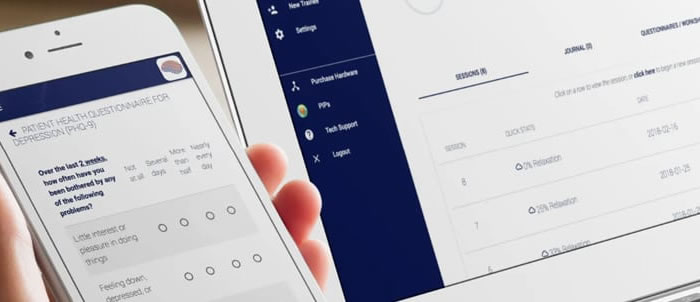
Another amazing thing about this research has been the incredible engagement of people with lived experience (those individuals who have previously been suicidal, made attempts, and sat in ED for countless hours). We have harnessed the power of this perspective which has transformed the Dr. Dave avatar experience into “Jaspr Heath” which is now a multipurpose tablet-based engagement experience that still features the CAMS-based SSI assessment and a version of CAMS intervention in the form of a Stabilization Plan. Dr. Dave is gone and has been replaced by a virtual guide named “Jasper” (a little cartoon character) or a pleasant looking woman, by the name of “Jaz” (a much better alternative to my original avatar, which frankly, frightened my wife and kids).

Cams-care Image

“Jasper” or “Jaz” can then introduce a full array of options to engage the suicidal ED patient, including education about the ED experience and what to expect while they are there. Patients are offered access to a menu of “Comfort and Skills” which is content to help them learn new options for coping, ranging from DBT-inspired coping skills to comforting video content of puppies playing, a crackling fireplace, to distracting techniques, etc. There is also an option to engage in video content of people with lived experience who provide hope and inspiration through their own stories of despair and redemption and lessons learned.

The Jaspr Health patient engagement ultimately produces a detailed report for busy ED providers that provides key assessment information about the patient’s suicidal risk, their CAMS-inspired Stabilization Plan, information about their access to lethal means (and willingness to secure such means), and further considerations that should help shape and inform an optimal disposition plan for the patient. For their engagement with Jaspr, patients are provided a digital companion app of their “favorite” content from the Jaspr engagement that they can download to their smart phone or laptop.

To get a taste of the Jaspr experience, check out a 2 minute YouTube video at:  https://www.youtube.com/watch?v=l9zbM8jEsvY&feature=youtu.be)

As per Phase II, in the last year we began using Jaspr Health in a rigorous RCT within ED care at the famed Mayo Clinic in Rochester MN. It is fair to say, that doing ED-based research is challenging even in the best of circumstances. But adding the worldwide COVID-19 pandemic to the mix made our ED-based research impossible to further pursue and the RCT was abruptly interrupted in March to accommodate needed ED space and focus on COVID-19 patients. With about a third of the sample recruited, we went ahead and did a preliminary analysis of the 30+ ED patients that had been engaged in the RCT prior to COVID-19 preempting further RCT data collection. With limited statistical power (due to the small sample), we were nevertheless thrilled with significant and favorable findings fully supporting the use of Jaspr Health. I will leave the particulars for a later blog as the study and our preliminary results are now under review in a paper that we recently submitted to a peer-reviewed journal. But suffice it to say, even we were stunned by the incredibly positive results from suicidal ED patients’ engagement with Jaspr. We are planning to continue the Jaspr RCT when the COVID-19 transmission and infection rates become more stable.

The Jaspr research experience has been an unexpected gift within my professional life. I have never been particularly savvy with technology and as a provider and professor of clinical psychology, I am very biased to favor a live person-to-person clinical engagement between a provider and patient. But the Jaspr experience has taught me new lessons about what can work in the service of saving lives. The technology of Jaspr is impressive. The ED experience is uniformly negative, but the Jaspr engagement makes it much more tolerable and ensures that time in the ED a productive and valuable experience for the patient with benefits for busy ED providers as well.

These benefits of Jaspr need not end as the patient leaves the ED because they will have access to Jaspr-based content that is downloaded to their phone or laptop. I am a pragmatist, and with 10,600,000 adult Americans struggling with serious suicidal ideation each year, we need any and all help possible to address that suffering in the service of saving more lives from suicide. As our research continues to unfold, I am convinced that Jaspr can play a key role in that pursuit.