
Big Ideas for Advancing Suicide Prevention

The recent end of the Spring 2023 semester marked my 40th year of working in the field of suicide prevention. During my first year in graduate school at American University, I took a remarkable class with Dr. Lanny Berman in the Spring of 1983. Lanny would soon become my major professor and the person who steered me into the world of suicidology. His course was entitled “Suicide, Death, and Life-Threatening Behavior,” and it was an eye-opening immersion into this important area of study. During that memorable semester, Lanny and I began a productive collaboration that led to my master’s thesis, my doctoral dissertation, many journal articles, book chapters, and a couple of books. Through my work with Lanny I had the good fortune to meet and work with many of the founders and heroes of the field, including Ed Shneidman, Bob Litman, Norman Farberow, Jerry Motto, and Marsha Linehan. Little did I know sitting in Lanny’s class all those years ago that my nascent interest in suicidology would evolve into a remarkably rewarding career that has been singularly dedicated to this important cause.

My Final Decade of Suicide Research

As I enter into my final decade of work in this field, I find myself at the ripe old age of 64 reflecting on the many challenges, abject failures, and dead ends that are inherent to the study of suicide. But through a lot of hard work, perseverance, and good fortune, there have been noteworthy successes. Chief among these has been the creation of CAMS and a rigorous line of clinical research to prove its effectiveness. And now with ten published open trials, seven published randomized controlled trials (RCTs), and two supportive meta-analyses, the question of whether CAMS works has been answered. The replicated and independent clinical trial data show that CAMS reliably reduces suicidal ideation (SI) and overall symptom distress, while it also consistently increases hope and decreases hopelessness. Of course, additional research questions still linger. For example, does CAMS reliably reduce suicide attempts and self-harm? And what exactly is the “secret sauce” of CAMS—the moderators, mediators, and mechanisms that make it work like it does? As for suicidal behaviors, I am delighted to note the publication of a new inpatient RCT of CAMS that was conducted in Germany showing that CAMS significantly reduced suicide attempts during the high-risk post-discharge period. Moderators, mediators, and mechanisms of CAMS are being further investigated within five ongoing RCTs of CAMS (and additional clinical trials of CAMS are now being developed). Building on this robust foundation of clinical evidence, our professional training company, CAMS-care, has trained thousands of clinicians across the nation and around the world. But from my perspective, perhaps the most exciting developments of all is the publication of the 3rd—and final—edition of the Guilford Press book, Managing Suicidal Risk: A Collaborative Approach. After two years of exhaustive work, this definitive source book on CAMS will prove to be a fitting capstone to the Guilford Press book series.

A Lack of Progress in Reducing Suicidal Suffering

While all these CAMS-related developments are exciting, I nevertheless find myself feeling frustrated and frankly impatient about the relative lack of progress overall within the larger field of suicidology. After 40 years of hammering away, I find myself craving more impactful changes and innovations to meaningfully reduce suicide-related suffering that can ultimately prevent this leading cause of death. So to this end, I would like to note and explore four particularly compelling big ideas that could make a meaningful impact as I further reflect on this field to which I have dedicated my professional life.

Focusing on Suicidal Ideation

Several years ago I found myself ruminating over the rejection of a manuscript from a peer review scientific journal. One particular reviewer pointedly dismissed various significant findings from a CAMS RCT because the intervention had failed to reduce suicide attempts. On the heels of this rejection, I began musing about the issue of “only” reducing suicidal ideation as a major criticism of CAMS. I then started to look at this critique differently. I began to question the behavioral bias that has dominated the field and I started to formulate an argument for the importance of suicidal ideation in and of itself. In fact, I have come to believe that reducing suicidal ideation may actually be a more important outcome vs. solely focusing on suicide attempt and self-harm behaviors. This train of thought was something that I had memorably discussed with my friend and colleague Dr. Thomas Joiner. I thus emailed Thomas and we ultimately wrote a well-received editorial entitled “Reflections on Suicidal Ideation” that was published in the journal Crisis—The Journal of Crisis Intervention and Suicide Prevention . In this piece, we argued that from a population perspective, that the biggest challenge we face in suicide prevention (by far) is the population of people who report “serious thoughts of suicide” in a given year. According to a recent SAMHSA (2022 ) survey, the population with serious SI included 15,600,000 American adults and adolescents in 2021 (the most recent year of data collection). Mind you, this number dwarfs the population that attempt suicide (1.7 adults in 2021) and is well over 300 times greater than the number of those who die by suicide. As Thomas thoughtfully noted, this is a profound level of human suffering. We argued that identifying and helping this enormous population upstream, could result in fewer attempts and suicides downstream. We consequently asserted that a shift in the field was needed to more fully appreciate and investigate the importance of SI as a means of decreasing this pervasive form of human suffering. Importantly, while there are excellent treatments that reduce suicidal behaviors (e.g., DBT, CT-SP, and BCBT) they do NOT reliably reduce suicidal ideation. Since this piece, we have endeavored to shift thinking within the field to meaningfully increase a focus on suicidal ideation within our collective research, clinical practices, prevention programming, and policy-related work.

Jaspr Health – Providing Hope during ED Visits

One summer day some years ago I was on a call with my colleagues Drs. Linda Dimeff and Kelly Koerner who were telling me about the successful use of an avatar named “Nurse Louis” and how this avatar-based technology demonstrated success related to discharge orders with medical surgical patients in a study conducted by Boston College investigators. The conversation evolved as we talked about the experiences of patients who are suicidal within emergency departments (ED) and I noted an extensive literature about how negative the ED experience can be for such people. This call became the genesis of a whole new avatar intervention that led to a NIMH-funded Small Business Innovation Research (SBIR) grant and the creation of an avatar based on my likeness named “Dr. Dave” that would be used to engage patients who were suicidal in the ED . Our novel tablet-based digital intervention integrated key elements of CAMS (among other related interventions from DBT and elsewhere). The striking initial success of this intervention was also in part due to the input of people with lived experience (of having been suicidal) which led to the integration of this important voice in developing the application and in the form of video testimonial stories of recovery and hope. Further NIMH SBIR funding led to an evolved intervention named “Jaspr Health” which was further shaped and refined based on input from a panel of people with lived experiences (and Dr. Dave was “retired” to my relief). Even though our RCT of Jaspr was cut short by EDs being overrun by Covid-19 patients, the obvious success within our underpowered clinical trial nevertheless provided ample and convincing evidence of the effectiveness of this novel intervention. Importantly, across my travels I have never heard of any ED experiences for patients who are suicidal being characterized as positive—not in the US, China, Uruguay, Australia, or throughout Europe. And yet with Jaspr, patients in the ED were having notably positive experiences and their Jaspr “favorites” could be downloaded to their smart phone for later use. Doctors get full reports based on CAMS aspects of the app which also ensures that certain Joint Commission institutional requirements are met as well. This remarkable line of innovation and clinical research is ongoing and reflects a fresh and exciting solution for a particularly infamous worldwide need—providing effective suicide-focused care in emergency departments for those patients who struggle with suicidal thoughts and behaviors.

The Hope Institute – Keeping Suicidal Patients out of the Hospital

Another undeniably compelling and recent development in suicide-focused clinical care is The Hope Institute that has been developed by my colleague Derek Lee in Perrysburg Ohio. The Hope Institute is an outpatient crisis setting that employs the use of both CAMS and DBT to stabilize patients who are suicidal using next day appointments (NDAs) and frequent visits (up to four times/week in some cases) to reliably stabilize patients in 5-7 weeks. The key within this model is that all care is suicide-focused and fundamentally evidence-based with proven clinical interventions. Perhaps most importantly, The Hope Institute singularly aspires to achieve stabilization as a worthy and valuable clinical goal in and of itself. Staff morale is high as clinicians do remarkable life-saving work. We are now in the process of standing up additional Hope Institutes in multiple different locations. The field needs this kind of model that emphasizes evidence-based, least-restrictive, cost-effective, suicide-focused clinical care to help people who struggle so that they can become stable and able to manage their suicidal thoughts, feelings, and behaviors. In my view, The Hope Institute is proving to be an exciting and notable clinical game-changer.

Mental Health Service Corp

Finally, I have been preoccupied with the idea of a “Mental Health Service Corp” since 2016. Given that 15.6M Americans wrestle with serious thoughts of suicide, we will frankly never have a sufficiently large and trained clinical workforce to begin to deal with the obvious and pressing needs of this considerable population (and research shows that many in this group do not want conventional mental health care). Given these considerations, a Mental Health Service Corp reflects one of my favorite pie in the sky big ideas that could significantly change the field. To have a Peace Corp-level national initiative to create a substantial paraprofessional workforce that could person the 988 Suicide & Crisis Lifeline, provide peer-support, work at respite and retreat centers for suicide stabilization, and with proper training and supervision even provide various evidence-based resources (e.g., safety planning, lethal means safety, and caring contacts) could have a profound impact. This concept was potentially under consideration by team members of the losing 2016 Presidential candidate. And while the concept did not play out then, it is nevertheless a compelling big idea that could be transformative if the political stars and will of the people were ever to align to make a significant difference in the larger suicide prevention workforce.

* * * * *

So, after 40 years, these are some of the big ideas to which I am drawn. I believe these ideas could make a meaningful difference for those who struggle in the most profound manner possible—considering suicide as an alternative to suffering. While progress is clearly being made, I am impatient. Far too many people continue to suffer, and too many people get hospitalized and medicated in ways that may not be helpful and might in fact be harmful. If we aspire to make a lifesaving difference, we must endeavor to think outside the box and fully embrace compelling big ideas to advance the field of suicide prevention.

A Voice of Autistic Adulthood: Suicide & Other Challenges Amongst Autistic Adults

Disclaimer: In this article, I use identity-first language when referring to autism rather than person-first language (autistic person vs person with autism). In the adult autistic community, we use this language because 1) being autistic is a part of our identity, and 2) autism is not a disorder. For more information about terminology check out this article on identity-first language by the Autism Network: https://autisticadvocacy.org/about-asan/identity-first-language/

Think of the word: autism. What image comes to mind? How would you describe an autistic person? Would you say they’re socially awkward, low empathy, genius, or weird? Or maybe you imagine an awkward, pompous nerd – one who unintentionally says the most inappropriate things, but means well. Like Sheldon from ‘The Big Bang Theory’ or Dr. Shaun Murphy from ‘The Good Doctor’. This stereotype of the autistic person is reductive, exaggerated, and harmful to the diversity and complexities of the adult autistic community.

This characterization was originally invented during WWII, when a Nazi eugenicist named Hans Asperger identified a subset of characteristics that explained the symptomatology of research subjects.[1] He began his experimentation on ‘undesirables’ or disabled children. Asperger discovered a subset of disabled boys who presented as antisocial and ‘lacking empathy’, but having advanced intellectual capabilities. These children were used as the perfect subjects for his discovery of Asperger’s Syndrome, and those who did not fit into his characterization were euthanized.[2]  The term and diagnosis of Aspergers is no longer used within the DSM-5-TR (and Aspergers has been integrated into the autistic diagnosis). However, the characterization of autism as a ‘genius’ disorder that only affects white boys has persisted and gained popularity since the 90’s. While some autistics are white, male geniuses, it is not the whole spectrum of our identities. We represent the collective diversity that is present in the world. In fact, a vast majority of autistic individuals identify as LGBTQ, are women and/or non-binary.[3] Some of us are a part of the High IQ society, while others struggle with math. Some of us love trains, while others are obsessed with lining up their barbie dolls or are die-hard thespians. Autistic people come in a variety of identities, and to limit these complexities, hinders the assessment, support, and resources we receive as adults. In this article, we will examine the challenges autistic adults experience and the types of support adult autistic individuals need to improve functionality.

 What is autism?

  • Autism or Autism Spectrum Disorder (ASD) is a neuro-developmental condition that impacts the way a person communicates, perceives, and interacts with the world around them.[4] Autistic traits include the below, though there are numerous other tendencies that can be described as autistic lack of eye contact
  • an interest in select special interest
  • (repetitive, reflexive movements used to self-regulate or express joy; E.g. arm flapping or humming)
  • Following rigid routines
  • Prone to meltdowns and over stimulation
  • Difficulty understanding subtext in communication (takes things literally)

Autism is not a mental health disorder nor a disease; although mental disorders and physical disabilities do co-occur.[5] In more simplistic terms, autism is a different way of functioning and perceiving the world. For non-autistics (or neurotypical individuals), autistic people are perceived as ignoring social norms, lacking social competency, and communicative skills. However, to us, our functioning is a normal way we interact with the world. From our perspective, we adhere to our moral compass, communicate directly, and our intentions are genuine. Autistics are not asking to be fixed. They are asking for understanding, support, and resources to improve their functionality in a world that is not designed for them. Without these supportive systems, autistic adults face a multitude of challenges that lead towards factors of trauma, alienation, and abuse.

5 Common Challenges Faced by Autistic Adults

  1. Substance Addiction

    Research suggests that 50% of autistic adults develop substance addiction within their lifetime.[6] Drugs, alcohol, and other substances both alter behavioral responses and coping mechanisms. From one angle, substances can be a barrier against the anxieties of strenuous, social interactions. An autistic adult who is perceived as ‘socially awkward’ and ‘withdrawn’ while sober, may become the life of the party (or at least socially ‘normal’) while in an altered state. This allows the person to mask—a coping mechanism for autistic people where they interact with others using neurotypical behaviors. From another angle, substances are also a coping mechanism in helping autistic adults deal with the long-term effects of bullying, trauma, and loneliness.

  2. Suicidality & Shorter Life Expectancy

    Death by suicide is three times higher in autistic adults than in the general population.[7] For autistic women the rates of suicidal behavior and non-suicidal self-harm is even higher. [8] As previously discussed, autistic adults have a lifetime of experiences with childhood bullying, which leads to adult trauma. These traumas are often comorbid with anxiety, depression, post traumatic stress disorder (PTSD), and complex post-traumatic stress disorder (C-PTSD). [9] As the NIH research shows, these co-occurring with psychological disorders increases an autistic adult’s risk of suicidal ideation. Individuals experiencing comorbid anxiety disorders in tandem with autism will often experience higher suicidal risk, and be more susceptible to its effects

    Autistic adults have lower life expectancy in comparison to the general population.[10] The average age expectancy for an autistic adult is 36 years. What’s causing these premature deaths? A few risk factors leading to premature deaths in autistic adults are linked to systemic discrimination, chronic disabilities, and economic challenges. We are more likely to be unemployed and live below the poverty line. In fact, over 60% of autistic adults are unemployed.[11] Circumstances that are impacted by employment consist of hardships within the job application, interview, and hiring process. In addition, we are more likely to have chronic disabilities, such as autoimmune disorders, chronic inflammation (which can lead to cancer), and other health problems that are linked to lower life expectancy. [12]

  3. Childhood Bullying & Abusive Adult Relationships

    Over 60% of autistic children and teens experience bullying. [13] The long term effects of bullying include, but are not limited to: low self-esteem, trust issues, social isolation, relational problems, depression, and anxiety. These long term effects continue into adulthood.

    As adults, many autistic individuals (especially women) experience abusive intimate partner relationships. An alarming study conducted in 2022 found that 9 out of 10 autistic women experienced sexual assault. [14] Many abusers prey on individuals who are disabled, and autistic people are an easy target due to our neurological wiring and alienation. Autistic adults tend to be more trusting of people and may not recognize red flags/toxic behavior, due to a history of trauma and people-pleasing tendencies.

  4. Misdiagnosis

    Within the autistic community and neurodivergent-affirming therapeutic spaces, self-diagnosis as autistic is valid. For autistics within underserved communities (i.e., BIPOC, LGBTQ, women, etc…) official and early diagnosis has been inaccessible, unaffordable, and misdiagnosed. Autistic individuals have been misdiagnosed with mental disorders such as bipolar disorder, borderline personality disorder, schizophrenia, antisocial personality disorder, and other mental health functionalities.[15] As discussed earlier, autistic behaviors present differently within each individual and sometimes behaviors are similar or co-occur with diagnostic criteria of mental disorders. Sometimes autistic behaviors are overlooked by family members or providers based on societal biases. For example, autistic behaviors in boys are often categorized by ‘antisocial’ or withdrawn behavior. However, many young girls and women are socialized to be more socially adaptable and are ‘better” at masking autistic traits. For many marginalized groups, masking is a normalized response to systemic disparities.[16]

  5. Lack of Adult Resources & Support

    ASD is officially diagnosed in childhood through a lengthy evaluation process, which contains parent/teacher interviews, psychological assessments, and clinical observations. There are no adult assessments, so assessments are based on the same criteria as the children’s assessments. Many of my autistic clients have shared, they find the assessment process to be intrusive and alienating. Those who are estranged from their bio families, have difficulties with the parent interview process. Diagnostic rates range from $1,000 and up, which eliminates individuals with low socioeconomic status.

Once diagnosed, adult autistics are left without support in understanding their diagnosis, finding community, or navigating their daily lives. As with childhood diagnoses, often the only referral service is Applied Behavioral Analysis (ABA) therapy. For adult advocates, community members, and professionals (like myself) ABA is an abusive treatment practice. Founded by the misguided creator of gay conversion therapy, ABA is a treatment that uses extreme compliance and erasure of autistic autonomy, enforcing normative behavior by repressing ‘undesirable’ autistic traits (i.e. stimming, natural coping strategies for overstimulation, etc…).[17] For example, a child who is lashing out by screaming and hitting themselves is perceived as destructive. In ABA, the why is not addressed. A course of negative reinforcement, by way of restricting stimming (self-soothing, autistic behaviors) and the autistic child’s favorite things is the treatment.  Eventually the child stops the destructive behavior and everyone moves on. Except, the basis for the meltdown continues and the child internalizes their autistic traits. If we deconstruct the autistic child’s behavior from a neurodivergent affirming framework, our treatment plan centers the child’s needs, autonomy, and self-confidence. Autistic adults who had ABA therapy as children self-reported and current research studies show the long-term effects of ABA include increased depression, anxiety, and PTSD symptoms.[18]

[When an autistic child is experiencing sensory overload, they experience meltdowns that include hitting themselves, biting, screaming, and other non-verbal behaviors. This behavior is called an autistic meltdown and the best approach to stopping the behavior, is to remove the child from the stimulant. As a child, I would often become overstimulated by overhead lights or intense sounds (family gatherings). I could not articulate what I was experiencing and would fall into meltdowns of epic proportions. As a late-diagnosed adult, I can finally comprehend that I am overstimulated and take measures to reduce my discomfort. Noise-cancelling headphones or temporarily moving to a quiet area has increased my autonomy and interpersonal relationships. However, for a child (especially non-verbal, autistic children) communicating these discomforts is impossible and is often punished rather than supported.]

A Modified-CAMS Autistic Approach

The Collaborative Assessment and Management of Suicidality (CAMS) is an evidence-based therapeutic approach using randomized control trials as an effective approach to decreasing suicidal risk across a diverse range of clients.[19] We autistic individuals tend to love concise, clear, and organized information. In my professional opinion, the effectiveness of CAMS in articulating direct questions and organization through the Suicide Status Form (SSF), makes CAMS an effective framework to support autistic teens and adults. Below, I have compiled a list of 3 ways CAMS can be modified to directly support autistic individuals. [These suggestions can also be applied to general therapeutic practices].

  1. Use a Direct, Concise Approach

    As I have discussed, autistic people often need concise, direct language when communicating. It is imperative for the provider to use direct language, due to the communication barriers that are frequently presented in conversations between neurotypical and autistics. For example, when a neurotypical question such as “how are you feeling?” is asked, a neurotypical person might say, “I’m feeling sad”. For many autistic people this question is not direct because it can be applied to a number of factors (I.e., how I’m feeling in the present moment, or how I’m feeling regarding interacting with you, or even how I’m feeling regarding the weather). Another factor to consider is that some autistics have alexithymia—an inability to identify and describe emotions. Often when asked about emotional states an autistic person might respond by saying “I don’t know” or even state an emotion that is opposite of what they are feeling. When filling out the SSF with the client, ask questions that are concise, but also describe what you mean, such as, “when you think about dying by suicide, where in the body do you feel it?” or “do you have a plan to die by suicide?”.

  2. Be Open to Unconventional Support Systems

    For many autistics, making and maintaining relationships is extremely difficult – and adult relationships especially. In addition to communication difficulties, factors such as emotional dysregulation and rejection sensitivity makes interpersonal relationships almost impossible. Due to a history of trauma, it can be hard for autistic individuals to reach out for support. Even greater, due to limited resources, support can be inaccessible. When discussing external support systems with a client, providers must ‘think outside the box’. This may look like finding external support through adult autistic online communities, support groups, or social media spaces. Or creating a support plan that includes non-family systems such as friends, neighbors, and fellow providers.

  3. Respect Their Autonomy

    If I gained a quarter for every time someone spoke to me as if I was a child or incapable of making decisions, after disclosing I’m autistic to a provider, well I could retire. The spectrum of functionality of autistic people is so broad, that one autistic adult might have challenges with motor skills (dyspraxia), while another has difficulty with word processing (dyslexia). No two autistic individuals are similar and we are not a monolith. To support autistic clients is to 1) trust they are the expert on their own experience and 2) functionality difficulties are different in each individual.

Finding support for autistic adults is universally inaccessible to many underserved communities. Many medical and mental health providers are not versed in providing evidence-based, neurodivergent-affirming treatment. They do not receive training on recognizing autistic traits nor how to interact with autistic adults. It makes seeking medical and mental health support problematic. Navigating the challenges of dating, sex, employment, and all the other complexities of adulthood becomes an impossible reality for unsupported autistic adults. Which leads to increased burnout, meltdowns, and mental health tragedies.

References

[1] Neurotribes: The Legacy of Autism and the Future of Neurodiversity by Steve Silberman

[2] https://www.nytimes.com/2018/03/31/opinion/sunday/nazi-history-asperger.html

[3] https://www.cam.ac.uk/research/news/autistic-individuals-are-more-likely-to-be-lgbtq

[4] https://www.ncbi.nlm.nih.gov/pmc/articles/PMC6225088/

[5] https://www.theatlantic.com/health/archive/2017/03/autism-and-addiction/518289/

[6] https://jamanetwork.com/journals/jamanetworkopen/fullarticle/2774847

[7] https://www.ncbi.nlm.nih.gov/pmc/articles/PMC6457664/

[8] https://www.ncbi.nlm.nih.gov/pmc/articles/PMC6225088/

[9] https://www.cnn.com/2017/03/21/health/autism-injury-deaths-study/index.html

[10] https://drexel.edu/~/media/Files/autismoutcomes/publications/LCO Fact Sheet Employment.ashx

[11] https://www.cam.ac.uk/research/news/autistic-adults-have-a-higher-rate-of-physical-health-conditions

[12] https://www.cbsnews.com/news/survey-finds-63-of-children-with-autism-bullied/

[13] https://www.ncbi.nlm.nih.gov/pmc/articles/PMC9087551/

[14] https://www.cambridge.org/core/journals/cns-spectrums/article/what-misdiagnoses-do-women-with-autism-spectrum-disorder-receive-in-the-dsm5/37409014E08A16D93FF0DB95675E9EED

[15] https://www.aane.org/women-asperger-profiles/

[16] https://www.ncbi.nlm.nih.gov/pmc/articles/PMC9114057/

[17] https://neuroclastic.com/invisible-abuse-aba-and-the-things-only-autistic-people-can-see/

[18] https://cams-care.com/about-cams/the-evidence-base-for-cams/

Essential DBT Skills for Individuals Who are Suicidal and the People that Care for Them

Essential DBT Skills for Individuals Who are Suicidal and the People that Care for Them On-Demand Webinar

Dialectical Behavior Therapy (DBT) is a comprehensive psychological treatment that was originally developed for borderline personality disorder but has been expanded to a variety of problems, many of which have been experienced by people during the historical events of the past few years. Dozens of randomized trials of DBT have been conducted including studies evaluating the efficacy of only the skills portion of the treatment. Results support the use of DBT skills to increase emotion regulation capabilities and decrease negative mental health outcomes such as depression and anxiety. In this presentation, Dr. Rizvi reviews the DBT skills modules, the proposed mechanisms of change within DBT, and will highlight specific skills that may be especially useful to the majority of clients who experience suicidal thoughts and behaviors. In addition, skills that therapists and family members can use themselves to manage stress and burnout will be reviewed.

Shireen L. Rizvi, PhD, ABPP

About Shireen L. Rizvi, PhD, ABPP

Shireen L. Rizvi, PhD, ABPP is Professor of Clinical Psychology at the Graduate School of Applied and Professional Psychology (GSAPP) at Rutgers University, where she also holds affiliate appointments in the psychology department, School of Public Health, and the Department of Psychiatry. Her research interests include improving outcomes, training, and dissemination of Dialectical Behavior Therapy (DBT) for the treatment of complex and severe populations. Dr. Rizvi has received funding from the National Institute of Mental Health (NIMH), the National Institute on Drug Abuse (NIDA), Rutgers University, and the American Foundation for Suicide Prevention (AFSP) for her research. Her work has resulted in dozens of peer-reviewed articles and book chapters, as well as a sole-authored book entitled Chain Analysis in Dialectical Behavior Therapy and a co-edited volume, DBT in Clinical Practice (2nd edition). Dr. Rizvi is board certified in Behavioral and Cognitive Psychology and in Dialectical Behavior Therapy. Dr. Rizvi has trained hundreds of students and practitioners from around the world in DBT. She has received the Spotlight on a Mentor Award from the Association of Cognitive and Behavioral Therapies (2017), the International Society for the Improvement and Teaching of DBT (ISITDBT) Perry Hoffman Service Award (2020), and Professor of the Year for Excellence in Teaching, Graduate School of Applied and Professional Psychology (2022).

Watch the Recorded Webinar On-Demand

Enter your information to gain access.

  • This field is for validation purposes and should be left unchanged.
  • This field is hidden when viewing the form
  • This field is hidden when viewing the form
  • This field is hidden when viewing the form
  • This field is hidden when viewing the form
  • This field is hidden when viewing the form
  • This field is hidden when viewing the form

Attachment-Based Family Therapy: a family safety net approach to suicide treatment

Attachment-Based Family Therapy: a family safety net approach to suicide treatment On-Demand Webinar

For adolescent and young adults, family conflict can drive a suicidal crisis and family support can buffer against it. ABFT aims to identify and address the family events (e.g. divorce) and processes (e.g. high demand, low warmth) that may exacerbate the distress and prohibit the family serving as a safety net. Individual sessions with the patient and the parents prepare them for conversations that address attachment ruptures and disappointment. Not only do these conjoint sessions resolve problems but server as in vivo change events where parents practice new parenting skills and the young person practices new emotion regulation skills. This brief talk will present the essential theory and elements of this well researched empirically supported therapy.

Guy Diamond, Ph.D.

About Guy Diamond, Ph.D.

Guy Diamond Ph.D. is Professor Emeritus at the University of Pennsylvania School of Medicine and Associate Professor at Drexel University in the College of Nursing and Health Professions. At Drexel, he is the Director of the Center for Family Intervention Science (CFIS). His primary work has been in the area of youth suicide prevention and treatment research. On the prevention side, he has created a program focused on training, screening and triage to be implemented in non-behavioral health settings. On the treatment side, he has focused on the development and testing of attachment-based family therapy, especially for teens struggling with depression and suicide. Much of this work has focused on inner city low income families.

Watch the Recorded Webinar On-Demand

Enter your information to gain access.

  • This field is for validation purposes and should be left unchanged.
  • This field is hidden when viewing the form
  • This field is hidden when viewing the form
  • This field is hidden when viewing the form
  • This field is hidden when viewing the form
  • This field is hidden when viewing the form
  • This field is hidden when viewing the form

988 and the State of Suicide Treatment in the US

On July 16, 2022, the United States took an enormous step forward in crisis care and suicide prevention with the launch of a nationwide 3-digit, 24/7 helpline, known as “988.”

In parallel with 911, the FCC designation of this easy-to-remember number for the Suicide & Crisis Lifeline (formerly the National Suicide Prevention Lifeline), marks an important shift in the way that suicidal thoughts and actions are prioritized, identified, and treated in the United States. And it’s already revolutionizing how individuals living with suicidal thoughts connect to life-saving resources across the US.

But it’s not enough.

The State of Suicide Treatment & Prevention in the US

In 2020, the CDC reported over 312,000 emergency visits for “self-harm injuries” and 45,979 suicide deaths, making suicide the 12th leading cause of death in the US. Suicide was the third leading cause of death for Americans ages 10-24 and the 12th leading cause of death overall.

There are 12.2 million adults and 3 million adolescents in the US with serious thoughts of suicide and yet current wait times for behavioral health care and the treatment of suicidal thoughts can be months. And unfortunately, the launch of 988 will not alleviate this crisis of care on its own.

According to the HHS Assistant Secretary for Mental Health and Substance Use, and leader of the Substance Abuse and Mental Health Services Administration (SAMHSA), Miriam E. Delphin-Rittmon, Ph.D., the demand for timely, effective mental health and suicide interventions is only going to increase — even as federal investment reaches an all-time high.

“Recent investments made in the [988] Lifeline have already resulted in more calls, chats, and texts answered even as volume has increased, but we know that too many people are still experiencing suicidal crisis or mental health-related distress without the support they need.”

In 2021, the National Suicide Prevention Lifeline received 3.6 million calls, chats, and texts. SAMHSA expects that number to at least double within the first full year after the 988 transition.  According to Vibrant Emotional Health, call volumes to 988 are up 45% compared to the week before 988 went live and 66% compared to the same time in 2021.

How to Improve Suicide Treatment & Prevention at Scale

Creating an easy-to-use nationwide suicide prevention helpline is a fantastic tool that is already making a tangible impact on Americans’ lives. But 988 is just the first step in solving our national suicide crisis.

Suicide prevention and mental health crisis services will continue to overwhelm existing systems until we do these two things:

  1. Integrate evidence-based suicide treatment methods directly into the electronic health record (EHR) via the Suicide Status Form (SSF) so that every clinician has access to a simple, effective tool to assess and treat suicidal thoughts in a growing client population.
  2. Provide next-day suicide interventions across the country, regardless of location, with help from organizations like The Hope Institute.

Here’s how healthcare providers can build on the momentum of the 988 launch to create a better suicide response system and take the next steps in suicide treatment and prevention in the US.

Improving the Electronic Health Record with Evidence-Based Care

The biggest hurdle for effective suicide treatment and prevention in the US isn’t a lack of effective treatment models. In fact, the Collaborative Assessment and Management of Suicidality (CAMS) is one of four evidence-based treatments that are trusted by the Joint Commission, Surgeon General and the CDC.

CAMS itself has more than 30 years of evidence, five published randomized control trials, and two meta analyses one of which shows that CAMS is a “Well Supported” treatment by CDC criteria and is even proven to “reduce hopelessness and increase hope” in as few as six sessions.

So if the problem with suicide prevention isn’t a lack of effective treatment methods, what is the issue?

One of the biggest limiting factors in the US for improving suicide crisis care is the current Electronic Health Record (EHR) — or more accurately, the lack of evidence-based methods for suicidal treatment and prevention within most EHRs.

However, CAMS can change that with an 8-page form — the Suicide Status Form — that is a proven and reliable multi-purpose clinical tool once it’s included in the medical record.

How the SSF works

Simply put, the SSF functions as a clinical roadmap within CAMS for assessments, treatment planning, tracking ongoing risk, and clinical outcomes for suicidal ideation. It does this in three-parts:

1. Initial session (Pages 1-4)

The first session of CAMS includes a therapeutic assessment completed by the client and the clinician, and the development of a stabilization and a treatment plan for two “drivers” that the client says makes them consider suicide.

2. Interim (Pages 5 & 6)

In each interim session of CAMS, the clinician treats the client’s drivers and checks with the client to ensure the stabilization plan and treatment plan are working.

3. Outcome (Pages 7 & 8)

The final session of CAMS is held when the clinician and the client is behaviorally stable and able to manage suicidal thoughts and feelings.

Learn how to use the Suicide Status Form

The goal is to build the Suicide Status Form directly into the medical record itself, integrating this effective method into the diagnosis, treatment, and even the billing model for clients across the country for continuity of care no matter where you are. Meta analytic research has even shown that collaboratively completing the assessment portions of the SSF is a therapeutic experience for the client in itself.

One substantial obstacle to the adoption of this evidence-based treatment has been the lack of adoption of this tool into EHRs.

Fortunately, that’s changing as more healthcare record providers recognize the need for integrated systems that streamline assessments, guide treatment, and improve client outcomes within increasing client populations — especially at scale.

Who is currently using the SSF?

At CAMS-care we are proud to say that we have partnered with several healthcare leaders to include the SSF in their platforms and client records including:

  • Epic
  • Netsmart
  • InSync
  • Psyquel
  • Bhworks – a School Mental Health Management System
  • NeuroFlow – a leading Health Integration Solution

These Electronic Health Record and Health Management platforms recognize that having access to evidence-based care within clients’ records is essential for clinicians to meet the complex needs of growing client populations. And that need is quickly being felt as 988 rolls out across the country.

The first crucial step in improving suicide outcomes is to integrate an evidence-based framework — like CAMS and the Suicide Status Form (SSF) — directly into the electronic health record so that every clinician has access to tools backed by more than 30 years of clinical trial evidence.

The next step is changing the way we respond to suicide crises by providing interventions as quickly as possible — ideally within 24 hours of first contact.

The Importance of Next-Day Suicide Interventions

SAMHSA has created new federal resources to help states, territories, tribes, and mental health and substance use disorder professionals better respond to suicide crisis events, and 988 is a large part of that effort that will undoubtedly help millions of Americans.

However, treatment and prevention still largely occur at the state or local level, and that’s where 988 currently falls short.

Today, many suicide crisis interventions involve routing people to emergency departments where they can wait for hours—or even days—for treatment. The other alternative is waiting months for an appointment with a community mental health center (where care is typically not suicide focused or evidence-based). Obviously, neither of these is optimal.

Not only are most EDs ill-equipped to assess, treat, and track suicidal thoughts, they’re also unable to keep up with the increased demand from 988. Relying on either option to treat and prevent suicide leads to wasted resources, or worse, a lack of trust in the system from clients in desperate need of urgent care.

SAMHSA has designed a 988 crisis response system — a Mobile Crisis Team — for people who are in immediate danger to themselves. And while it’s essential that these systems are implemented, most people with serious thoughts of suicide don’t want or need to be picked up and taken to a Crisis Facility.

In fact, according to National Lifeline data, less than 10% of callers are high-risk cases that require immediate intervention on this scale.

The other 90% of callers to 988 can simply benefit from a trained crisis line specialist to provide a Safety Plan and a next-day appointment to receive evidence-based treatment that specifically addresses thoughts of suicide.

And the good news is there’s a way to integrate 988 with existing institutions, like the Hope Institute, to provide better, more timely suicide interventions at locations across the country.

How The Hope Institute works

The Hope Institute integrates the best practices of a modern crisis care continuum with next-day appointments, taking referrals from emergency rooms and hospitals and relieving the strain of suicidal distress on schools, colleges, jails, sheriff’s offices, and first responders. Even better, treatment begins within 24 hours of referral.

Outpatient or telehealth—sometimes offering multiple sessions per week based on need — further increases reach across strained healthcare networks and remote rural areas with few to no services.

Hope Institutes use a combination of evidence-based, suicide-focused treatments, including the Collaborative Assessment and Management of Suicidality (CAMS) and group skills in Dialectic Behavioral Therapy (DBT).

Moreover, Hope Institutes are small, calm, and stigma free, staffed by clinicians who focus exclusively on suicide cases. And the results are clear.

Hope Institute clients are stabilized in an average of 6 weeks (adolescents in an average of 5.2 weeks). Even more impressive, a Hope Institute can be opened in just 90 days and an 18 clinician center can treat over 3,000 clients each year.

Next Steps: How to Include CAMS in your EHR

988 is changing the conversation around suicide treatment and prevention. But there’s still a long way to go to improve suicide crisis care in the US.

It’s time to integrate evidence-based best practices into your EHR, and support more responsive, effective, targeted next-day suicide interventions to communities across the country at scale.

Contact our team today to learn more about the Suicide Status Form (SSF), how you can integrate evidence-based frameworks like CAMS into your EHR, or how to bring The Hope Institute into your community.

Derek Lee – derek@thehopeinstitute.net

Andrew Evans – andrew@cams-care.com

For more information about 988, our partners at NeuroFlow wrote a helpful blog post discussing the new hotline.

For training in evidence-based, suicide-focused treatment visit CAMS Training Products.

What Future? How People Who Are Suicidal Look Beyond the Present Moment

What future? How People Who Are Suicidal Look Beyond The Present Moment On-Demand Webinar

The consideration of suicide involves the contemplation of not only death, but also of life and what it can offer. This presentation explores cognitive underpinnings of life-oriented thoughts, with a particular focus on how people who are suicidal envision their future. Dr. Cha will introduce various ways to assess future thinking among individuals who are suicidal, and present an emerging profile of future thinking abilities that are characteristic of this population.

Christine Cha, PhD

About Christine Cha, PhD

Dr. Christine Cha is an Associate Professor of Clinical Psychology at Teachers College, Columbia University, and Director of the Laboratory for Clinical and Developmental Studies. Her research focuses on thought patterns that may contribute to suicidal thoughts and behaviors, and pertain to concepts proximal to suicide (e.g., death) as well as alternatives to suicide (e.g., future). Dr. Cha’s work has been funded by the American Foundation for Suicide Prevention and the National Institute of Mental Health (NIMH). She serves on the editorial boards of the Journal of Clinical Child and Adolescent Psychology, Journal of Abnormal Psychology, and General Hospital Psychiatry, and has received the Rising Star Award from the Association for Psychological Science.

Watch the Recorded Webinar On-Demand

Enter your information to gain access.

  • This field is for validation purposes and should be left unchanged.
  • This field is hidden when viewing the form
  • This field is hidden when viewing the form
  • This field is hidden when viewing the form
  • This field is hidden when viewing the form
  • This field is hidden when viewing the form
  • This field is hidden when viewing the form

Suicide Risk Factors and Warning Signs: What we’ve learned from the research

It’s important to understand that there are many potential suicide risk variables, the following are a subset of variables with strong empirical research support.

SUICIDE RISK FACTORS

Suicide risk factors are diverse and multifaceted, encompassing a range of individual, social, and environmental factors. They include personal characteristics such as mental health conditions, previous suicide attempts, substance abuse, and other factors. Understanding and addressing these factors can aid in suicide prevention efforts.

History of Suicidal Behaviors

The history of previous suicide attempts has long been considered a major risk factor related to future suicidal behavior. The risk of such future behavior increases significantly with any past attempt behaviors, particularly a multiple-attempt history of two or more bona fide attempts. 

Suicidal Thoughts & Ideation

When a person has suicidal thoughts, the details and frequency of these thoughts are critical. It’s important to determine whether such thoughts are a brief passing fantasy or something they have explored, made a plan and taken specific actions. By directly asking a person whether they are thinking about taking their life, with appropriate follow-up questions, you will be better able to assess their risk of suicide. Contrary to some popular beliefs, several research studies have clearly shown that asking a person suicide-related questions WILL NOT put the idea of suicide in their head.

Do not be afraid to ask, something like:  “It sounds like you are having a difficult time, have you ever wished you were dead?” or “ It sounds like you are really struggling, have you ever wished you could just go to sleep and not wake up?”.  

  • If the answer is “no”, ask: “In the past three months, have you thought about taking your life, or prepared to do anything that could end your life?”
  • If the answer is “yes” ask: “Have you thought about how you might do this?”

Asking your friend or family member to describe their suicide-related thoughts and provide specifics on the frequency and duration of these thoughts will not only help you better understand your loved-one’s struggles and suicide risk factors, but also send them a clear message that you truly hear them and want to listen. You are telling them that they are not alone and you are willing to try and understand their pain.  

Suicide Plan

While suicidal thoughts are an important suicide risk factor, research has indicated that the specific details and seriousness of planning and preparing for suicide can be predictive of the likelihood of future death by suicide. In other words, someone with a vague, inexact, or nonspecific plan is generally much less serious about taking their life, as opposed to someone with a plan that includes a particular method, place, time, and date for how they will end their life.   

The next important question to ask a friend or family member who has shared their suicide plan with you is whether they have access to the item or method they plan to use for carrying out the plan, such as a stash of sleeping pills or access to a firearm. These items are referred to as “lethal means”, and limiting their access can be an important step in suicide prevention. You might ask: “Have you started to work out the details of how you plan to kill yourself?” or “Do you have an idea of where and when you will do it?”

If your friend or family member does have access to the lethal means that they describe in their suicide plan, your next critical step is to work with them to develop a “safety strategy” to remove their direct access to the lethal item, at least until their suicidal crisis is over. For example, are they willing to let you hold their pills for safe keeping?  Are they willing to let an appropriate and trusted friend or relative keep their gun until their suicide crisis is over? Are they willing to take a different route to work or school so that they do not walk by railroad tracks?  Are they willing to avoid parking their car in a tall parking structure?  

Suicide Preparation

In general, preparation behaviors are often related to organizing the suicide attempt action itself, such as obtaining the lethal means, as well as doing research to determine a lethal dose of drugs or determining a suitable location where the possibility of interruption or intervention may be reduced. Other preparation behaviors may include putting one’s affairs in order, such as writing a will, writing suicide notes, shooting a good-bye video, posting a cryptic Facebook message, doing a favorite activity one final time, saying a final good-bye to friends and family, or giving away prized possessions. All of these behaviors may indicate significantly increased suicidal risk for the individual. In these circumstances, you might ask: “Have you collected pills?” or “Have you obtained a gun?” or “Have you given away valuables, written a will or a suicide note?

Suicide Rehearsal

Rehearsal behaviors” is a suicide risk factor that typically involves the acting out of the planned suicide attempt. For example, someone may obtain a rope, find a beam in the garage, secure the rope at a certain length, position a short stool, and even step up on the stool and place the rope around their neck without actually stepping off the stool to make the attempt. Such rehearsal behavior is serious.  You might ask: “Have you held the gun, but changed your mind?” or “Have you cut yourself?” or “Have you hung a rope?”

WARNING SIGNS of Suicidal Ideation

In contrast to risk factors “warning signs” for suicide typically center on being extremely upset and agitated —when someone feels totally out of control. Warning signs for suicide suggest an immediate risk of self-destructive behavior. For example, in the case of heart disease (which is the #1 cause of death around the world), many people have both short and long term risk factors (e.g., obesity, hypertension, high cholesterol, and smoking) but do not die of heart disease. In contrast, someone with such risk factors might have key warning signs that prompt urgent intervention to avert a heart attack (e.g., chest pains, pain in their left arm, feeling faint). 

Below are various topics when experienced in a very serious manner can contribute to imminent for self-harm behaviors, such as cutting or burning one’s skin, over-dosing and suicide attempts.

Severe Substance Abuse

The extremely excessive use of alcohol or drugs during a crisis can directly contribute to being highly upset and out of control which may trigger individuals to harm themselves or even make a suicide attempt.

Impulsivity in Decision Making

Generally, impulsivity refers to the lack of ability to think through the consequences of one’s actions, in other words “acting without thinking”. Suicide attempts and deaths often occur when someone is upset, distressed, anxious, highly emotional and/or highly impulsive. The risk is further increased if impulsive behaviors are essentially self-destructive, for example, a history of fighting, pathological gambling, kleptomania, or other similar impulsive disorders.  

Extreme Reaction to a Death or Significant Loss

For many years, suicidologists have known that suicides often occur after someone has experienced a loss, which may seem to trigger the suicidal act. Such losses may be big or small; it can be one particularly significant loss or an accumulation of several lesser losses. Examples may include a divorce, a romantic breakup, a financial disaster, loss of a job, the death of a loved one or a pet— any event that has significant meaning to the person. Additionally, suicide-triggering losses can be symbolic—for example, retirement from a meaningful career. Although losses often contribute to the circumstances leading up to a suicide, usually such losses are not the only reason for suicidal behavior. 

Critical Relationship Problems

Research studies have shown that relationship issues are often the number one suicide-related concern of people struggling with suicidal thoughts. These problems could be romantic issues or relationships with friends, parents or siblings. In contrast, we also know that social relationships can protect a person against suicide. It is important to not let the highly suicidal person be or feel alone. The perception of being a burden to others can be a particularly important relationship problem when experienced by someone who is extremely upset. Experiencing oneself as a burden on others can create a dangerous downward spiral, wherein the individual experiencing suicidal ideation is disinclined to seek help. In the mind of the person with suicidal thoughts, their suicide can be perceived as a “gift” to the people in their lives who they believe are “weighed down” with the troubles of the person who struggles with suicide. 

Chronic Pain and Severe Health/Pain Problems

There are studies that suggest that general health-related issues, particularly if these issues are constantly occurring or chronic, may be related to suicidal thoughts and behaviors – particularly if these issues are chronically occurring or terminal in nature. While many people live out their lives in chronic physical pain, other can find such pain to be utterly unbearable, which may lead to increased suicidal thoughts as a way to finally escape the pain. 

Serious Sleep Problems & Insomnia

Sleep problems related to insomnia, hypersomnia, and nightmares have been shown to be significant suicide risk factors in adolescents and adults and the lack of sleep impacts REM sleep which is critical to everyone to maintain, and the heightened stress levels caused by lack of proper sleep can exacerbate a sense of peace and calm.   

Legal/Financial Crisis

Legal problems can contribute significantly to suicidal risk.  There is often a window of considerable suicidal risk shortly after a person is first faced with a legal accusation. Similarly, financial issues from poverty, unemployment, credit card debt, payday lenders, owing back taxes, and simply not being able to make ends meet can all contribute to increased suicidal risk. 

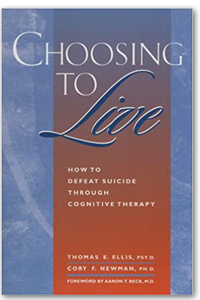
Choosing to Live: How to Defeat Suicide Through Cognitive Therapy

Choosing to Live: How to Defeat Suicide Through Cognitive Therapy, by Thomas Ellis and Corey Newman. Award winning book that includes Appendix A: Guide for Concerned Family Members and Friends. Addresses some of the questions frequently asked by friends and family members of persons struggling with suicide thoughts and behaviors.

Choosing to Live: How to Defeat Suicide Through Cognitive Therapy

Suicide is Different Website

Suicide is Different: A web-based resource that provides support to those supporting someone who is thinking about suicide. Here you can learn more about suicide through activities and videos, plan ahead for your own wellness as a suicide caregiver and connect with group support and workshops.

How NeuroFlow is Combining Technology and Treatment to Prevent Suicide

NeuroFlow and CAMS-care partner to offer an evidence based therapeutic framework for suicide-specific assessment and treatment on electronic medical records.

Enhancing an already unique partnership, CAMS-care and NeuroFlow are once again teaming up to help create a happier and healthier world. The latest element of the partnership now gives clinicians using NeuroFlow access to the CAMS evidence based Suicide Status Form to treat patients with serious thoughts of suicide.

According to the Substance Abuse and Mental Health Services Administration, there are 12.2 million adults and 3 million adolescents in the United States who are thinking of ending their lives. The Joint Commission, the Surgeon General, the CDC and Zero Suicide all reference the Collaborative Assessment and Management of Suicidality (CAMS) as one of a handful of evidence-based treatments that clinicians should use to reduce suicidal ideation.

Most clinicians today either don’t know that evidence-based treatments exist, have not been trained, or lack access to them in their electronic medical records. Building on an already existing, mission-aligned partnership between the two organizations, this development addresses these issues directly by getting evidence-based resources to care providers when it matters most.

“NeuroFlow is committed to integrating technology with evidence-based practices. Our partnership with CAMS-care provides a solution for the Treat step in Zero Suicide, putting clinicians on the NeuroFlow platform at the forefront of suicide prevention with access to tools that properly Identify, Engage and Treat the patient,” noted Matt Miclette, Head of Clinical Operations.

About NeuroFlow

NeuroFlow provides best-in-class technology and care services for the effective integration of behavioral health. NeuroFlow’s HIPAA-compliant platform supports over 14 million users across 300 health systems, payors, and organizations, helping them capture behavioral health insights and take action to proactively manage individuals and populations holistically.

Visit the NeuroFlow site

About the CAMS Framework®

Developed by David A. Jobes, Ph.D., ABPP, the Collaborative Assessment and Management of Suicidality (CAMS) Framework is a both a clinical philosophy of care and a therapeutic framework for suicide-specific assessment, management, and treatment of a patient’s suicidal risk. With an evidence base supported by multiple randomized controlled trials (RCTs) from around the world, CAMS focuses on empathy, honesty, and collaboration to form a strong alliance between the caregiver and patient to motivate the patient to save their life instead of ending it.

View the Suicide Status Form

About CAMS-care

Our mission is to save lives through effective care by training clinicians to treat suicidal patients. We have developed CAMS Trained™ and CAMS Certified™ designations, which licensed clinicians can achieve through completing training and gaining hands-on experience in the CAMS Framework. Never again feel unprepared when working with a person with serious thoughts of sucide.

Learn more about CAMS-care training & certification