After Your Child’s Suicide Attempt

What to Do After Your Child’s Suicide Attempt — and How CAMS-Care Can Help

When a child has attempted suicide, the days and weeks that follow are often filled with fear, confusion, guilt, and uncertainty. Many parents describe feeling overwhelmed — unsure of what to say, what to do next, or how to help their child begin to heal. The video Parents to Parents: After Your Child’s Suicide Attempt was created to speak directly to these very real experiences, offering guidance from both clinicians and other parents who have walked this difficult path.

This guidance aligns with principles from the Zero Suicide Initiative, an organization that offers evidence-based, suicide prevention consultation and guidance. Research on the Zero Suicide Framework shows that care is improved (individually and at a system level) when it is proactive, collaborative, and specifically focused on suicide risk rather than general mental health alone.

The video linked at the bottom of this page can help parents understand what recovery actually looks like after an attempt: how to talk with their child, how to create safety, and how to partner with clinicians in a structured and hopeful way during a frightening time.

1. Acknowledge the Emotional Impact

First and foremost, it’s important for caregivers to recognize and validate their own emotions. Guilt, fear, anger, panic, numbness, and even relief can all coexist in the aftermath of a suicide attempt. These feelings are understandable — and common.

The video underscores that, while it can feel isolating, parents are not alone, and their reactions are shared by many families who have survived this crisis.

2. Understand What Comes Next

After the immediate medical response (emergency care, hospitalization if needed), the focus shifts to support and safety. This includes:

  • Co-creating a safe home environment by removing/securing or reducing access to potential means of harm.
  • Engaging with clinicians and mental health providers to initiate follow-up care, including therapy and psychiatric support.
  • Listening openly to your child’s feelings and thoughts without judgment, and letting them know they are loved, valued, and safe. The film encourages parents to learn what signs to watch for, how to talk about the attempt with their child, and how to make mental health care accessible.

3. Seek Evidence-Based Suicide-Focused Care

One essential piece in a child’s recovery journey is accessing evidence-based therapeutic approaches that focus specifically on suicidality rather than general mental health management alone. One such model is the Collaborative Assessment and Management of Suicidality (CAMS) — often referenced in suicide care communities and clinical settings.

CAMS is a suicide-specific treatment framework that actively involves the young person in identifying what is “driving” their suicidal thinking and collaboratively building a plan to address those drivers. It’s not a rote checklist; it’s a flexible, empathic approach where the clinician and child (or family) work together to:

  • Assess suicidal risk in depth
  • Create personalized safety and stabilization plans
  • Build treatment beyond safety and stability that moves teens towards lives they find worth living
  • Track progress and adapt care as needed

This model has been supported by research showing reductions in suicidal ideation, hopelessness, and distress, and improved engagement with care — all critical in the period after an attempt.

CAMS-4Teens® is a framework in which a clinician works with the parents to keep the home safe and provide guidance on how best to support your child through a course of CAMS treatment( typically six to 8 one-hour sessions) using the Stabilization Support Plan (CAMS-4Teens: Working with Parents).

Parents can locate a CAMS Trained™ clinician in their area using the CAMS‑care Clinician Locator.

4. Build a Support Team Around Your Child

Recovery is rarely a solo journey. The video highlights the value of connecting with both professional and community support — including family therapists, school counselors, peer support groups, and other caregivers who understand the experience. Parents who have been there often say that having someone to talk to — whether a trained provider or another parent who has survived similar circumstances — can make all the difference.

5. Maintain Hope and Patience 

Perhaps the most crucial message is one of hope. While a suicide attempt is a serious and frightening event, it does not mean a child is beyond help or that recovery isn’t possible. With appropriate care, safety planning, ongoing support, and open, compassionate treatment and communication, many families find their way back to stability and connection. Over time, parents and children can work toward healing together — learning new ways to cope, to stay connected, and to build a future worth living.

Please visit Supporting Parents | Zero Suicide where the film can be viewed in chapters and there are additional resources for healthcare providers, faith leaders, and schools.

Supporting Clients Between Sessions: Peer Support and New Data from NowMattersNow

When clients are struggling most, support often needs to extend beyond the therapy hour. This webinar introduces Now Matters Now’s (NMN) three free programs, with a focused look at NMN Peer Support Meetings and new engagement and outcomes data, highlighting how peer support can complement CAMS-informed care between sessions.

Ursula Whiteside, PhD

About Ursula Whiteside Ph.D.

Dr. Ursula Whiteside is a licensed psychologist, certified DBT clinician, and founder/CEO of NowMattersNow.org. She trained for over a decade directly with Dr. Marsha Linehan, the creator of Dialectical Behavior Therapy. Today, NowMattersNow.org hosts the world’s largest lived-experience DBT skills library, offers free weekly DBT Peer Support Meetings, and provides a brief intervention for overwhelming suicidal urges.

Dr. Whiteside serves as Clinical Faculty at the University of Washington and as national faculty for the Zero Suicide initiative. She is co-founder of United Suicide Survivors International and advises on AI chatbot development, centering the lived experience, preferences, and safety of suicidal users. Dr. Whiteside is open about her experiences with intense emotions and suicidal thoughts.


David A. Jobes, PhD

About David A. Jobes, Ph.D. ABPP

David A. Jobes, Ph.D., ABPP, is a Professor of Psychology, Director of the Suicide Prevention Laboratory, and Associate Director of Clinical Training at The Catholic University of America. Dr. Jobes is also an Adjunct Professor of Psychiatry, School of Medicine, at Uniformed Services University. He is the author of seven books and hundreds of articles and book chapters. He is the creator of the Collaborative Assessment and Management of Suicidality (CAMS) and one of the founders of CAMS-care, LLC (a professional training and consultation company). Dr Jobes is the recipient of many awards such as the 2022 Alfred M. Wellner Award for Lifetime Achievement (for research excellence) from the National Register of Health Service Psychologists and the 2025 “Erwin Ringel Service Award” for contributions to suicide prevention from the International Association of Suicide Prevention (IASP). He is a Fellow of the American Psychological Association and is board certified in clinical psychology (American Board of Professional Psychology). Dr. Jobes maintains a private clinical and consulting practice in Washington DC and in Maryland.

Watch the Recorded Webinar On-Demand

Enter your information to gain access.

  • This field is hidden when viewing the form
  • This field is hidden when viewing the form
  • This field is hidden when viewing the form
  • This field is hidden when viewing the form
  • This field is hidden when viewing the form
  • This field is hidden when viewing the form
  • This field is for validation purposes and should be left unchanged.

The Network Effect: Turning Connection into Protection in Suicide Prevention

Communities are made up of relationship networks, but we rarely consider how the structure of these networks—and the interaction between them—shapes suicide prevention. Prof. Tony Pisani reveals how shared trusted connections promote protection, why even small changes in networks make a difference, and how organizations can strengthen these networks to better serve people in their communities. Drawing on research and case examples from high schools, healthcare, and the military, Tony highlights innovative, network-informed approaches. Through reflective exercises, attendees will explore how these insights apply to their life, team, and work, leaving with actionable strategies to build networks that promote connection and wellbeing.

Holly Wilcox, PhD

About Tony Pisani, Ph.D.

Tony Pisani is a Professor of Psychiatry and Pediatrics at the University of Rochester Center for the Study and Prevention of Suicide and the founder of SafeSide Prevention has devoted his career to preventing suicide and promoting wellbeing, combining research at University of Rochester with practical implementation as the founder of SafeSide Prevention. Author of more than 40 peer-reviewed papers and host of the Never the Same Podcast, his work spans research, education, and real-world implementation across healthcare, military, and community settings in the US, Australia, and New Zealand.


David A. Jobes, PhD

About David A. Jobes, Ph.D. ABPP

David A. Jobes, Ph.D., ABPP, is a Professor of Psychology, Director of the Suicide Prevention Laboratory, and Associate Director of Clinical Training at The Catholic University of America. Dr. Jobes is also an Adjunct Professor of Psychiatry, School of Medicine, at Uniformed Services University. He is the author of seven books and hundreds of articles and book chapters. He is the creator of the Collaborative Assessment and Management of Suicidality (CAMS) and one of the founders of CAMS-care, LLC (a professional training and consultation company). Dr Jobes is the recipient of many awards such as the 2022 Alfred M. Wellner Award for Lifetime Achievement (for research excellence) from the National Register of Health Service Psychologists and the 2025 “Erwin Ringel Service Award” for contributions to suicide prevention from the International Association of Suicide Prevention (IASP). He is a Fellow of the American Psychological Association and is board certified in clinical psychology (American Board of Professional Psychology). Dr. Jobes maintains a private clinical and consulting practice in Washington DC and in Maryland.

Watch the Recorded Webinar On-Demand

Enter your information to gain access.

  • This field is hidden when viewing the form
  • This field is hidden when viewing the form
  • This field is hidden when viewing the form
  • This field is hidden when viewing the form
  • This field is hidden when viewing the form
  • This field is hidden when viewing the form
  • This field is for validation purposes and should be left unchanged.

Black Youth Suicide: Investigation of Current Trends and Precipitating Circumstances

Black Youth Suicide

Seeing rising suicide rates in certain populations is always a cause for concern. It is especially concerning when these rates are happening among young people. In the U.S., suicide rates among Black youth have been increasing in recent years. While there are many possible factors, this should signal that work needs to be done and change needs to be made. 


Suicide Trends Affecting Black Youth

From 2018 to 2021, suicide rates increased from 8.2% to 11.2% for Black youth ages 10–24. [1] It was the third leading cause of death for this age demographic in 2022. [2] When looking further back, in the last 25 years, self-reported Black youth suicide attempts have increased by a staggering 73%. [3] Among Black youth, suicide rates for males were four times higher than females in 2021. [4]


According to the Suicide Prevention Resource Center, suicide rates among Black populations peaked for youth between the years 2011–2020. There was a sharp spike in suicide rates starting for those around age 15 with the highest rates being in the 25–34 age range. However, rates slowly and steadily declined with each age group afterwards. This pattern is noticeably different than that of the overall U.S. population, where the highest suicide rates happen between the ages of 45–54 as well as 75 and older. [5] These numbers signal a huge concern that Black youth do not have appropriate mental health support


Why are Black Youth at Risk?

Black communities face various barriers to treatment and support when it comes to mental health and suicide prevention. Youth may face particular challenges when it comes to finding and accessing limited resources. They also deal with other risk factors that often surround them. These difficulties can put them at a disadvantage. Here are a few of the leading factors when it comes to suicide risk among black youth. 


COVID-19 pandemic

The pandemic hit some communities harder than others. Youth in particular were put in a difficult position. They had to adjust to remote learning, miss out on important milestone events, and were isolated from their friends. Black youth specifically may have faced even more difficulties, especially those living in low-income areas or households. Some segments of the Black youth population struggled greatly. They faced challenges from not having the tools or technology to keep up with school from home. Others were affected by being stuck in an abusive home environment. A study from the state of Maryland found that suicide rates doubled for Black youth during the early days of the pandemic. [6] However, it’s important to remember that even before the pandemic, suicide rates in Black youth were already rising, signaling that other factors have been playing a role.


Trauma exposure

Another contributing role in Black youth suicide is the exposure to trauma, violence, or other adverse childhood experiences (ACEs). Racial discrimination is one example of an ACE. This can be detected in children as young as six years old and is likely to stick with them throughout their lives. [7] Additionally, Black youth who are living in racially segregated and low-income areas are more likely than their peers to experience or witness violence in their families or neighborhoods. [8] Generational trauma may also be present in those whose parents or grandparents experienced violence, abuse, or discrimination. About 65% of Black youth report experiencing some kind of trauma in their lives. [9]


Limited access to culturally appropriate mental health care

Many Black communities are faced with barriers when it comes to receiving mental health care, especially care that is culturally appropriate. Socioeconomic disparities play a big factor, making it difficult for many in Black communities to access and afford the care they need. Only about 25% of Black people in the U.S. seek mental health care treatment, compared to 40% of white people. [10] Finding culturally appropriate mental health care is also important—yet it can be another barrier. Only about 2% of the U.S. psychologists are Black. [11] Seeing a Black mental health professional may not feel necessary to some. However, it’s important to find someone who is trained to provide culturally sensitive care. This creates a safe, judgement-free space and helps trust be more easily built. 


Taking Steps Toward Black Youth Suicide Prevention

In order to start seeing a decline of suicide rates among Black youth, change has to be made across the board. First, investing in more research specifically focused on Black youth can be a way to shed more light on this growing problem. It can help others see that larger, systemic change needs to happen within Black communities. This includes better and more affordable access to quality healthcare. Additionally, the healthcare provided should be culturally appropriate. Finding ways to support current and future Black psychologists is another step in helping Black youth get access to culturally sensitive care. Finally, it’s important to continue to have open conversations around mental health to break the stigma. Many communities continue to push the narrative that opening up makes a person appear weak. Families and communities need to become safer places for young people to share their feelings, experiences, and ways they may be struggling.

Black youth need more support now than ever when it comes to their mental health. From the struggles of the pandemic to lack of appropriate and accessible resources, many in this population feel stuck and don’t know where to turn when they’re struggling. However, steps can be taken to help Black youth feel seen, heard, and supported. Through continual small steps and increased public awareness of this crisis, the seeds for change can be planted. This can start to positively impact Black communities and future generations.

If you’re curious to learn more, watch Strengths-Based Approaches to Suicide Prevention in the Black Community, an on-demand webinar hosted by Jasmin Brooks Stephens, PhD. In this talk, Dr. Brooks Stephens covers socio-cultural risk factors for Black youth as well as outlines steps that can be taken to address this crisis. 

Remember, if you or someone you know is struggling or in a crisis, the 988 Suicide & Crisis Lifeline is available.


Sources:

[1] https://www.cdc.gov/mmwr/volumes/72/wr/pdfs/mm7206a4-h.pdf 

[2] https://minorityhealth.hhs.gov/mental-and-behavioral-health-blackafrican-americans 

[3] https://theactionalliance.org/sites/default/files/ring_the_alarm-_the_crisis_of_black_youth_suicide_in_america_copy.pdf 

[4] https://minorityhealth.hhs.gov/mental-and-behavioral-health-blackafrican-americans 

[5] https://sprc.org/about-suicide/scope-of-the-problem/racial-and-ethnic-disparities/black-populations/ 

[6] https://pmc.ncbi.nlm.nih.gov/articles/PMC10227859/ 

[7] https://pmc.ncbi.nlm.nih.gov/articles/PMC9035019/

[8] https://www.nctsn.org/sites/default/files/resources/complex_trauma_facts_in_urban_african_american_children_youth_families.pdf 

[9] https://www.mcleanhospital.org/essential/black-mental-health 

[10] https://www.mcleanhospital.org/essential/black-mental-health 

[11] https://www.mcleanhospital.org/essential/black-mental-health 

Cultural Perspectives on Suicide: How Different Societies Approach Prevention

Cultural Perspectives on Suicide

When it comes to suicide prevention, cultural awareness is extremely important. Every culture has their own views of suicide, stemming from their histories and belief systems. Therefore, not everyone addresses suicide prevention efforts in the same ways. Here is a look at how various cultures from around the world have historically viewed suicide and how some of them approach prevention.

Eastern Views and Approaches to Suicide


Historically, countries in Eastern cultures have had a more positive view of suicide than those in Western cultures. For example, in some Asian countries, suicide used to be viewed as a noble or honorable act. China is one example of an Eastern country that has shifted its view on suicide over time. Suicide was seen as honorable when it was done for social or political causes. It was even viewed highly when Confucianism was the main philosophy throughout the country. China saw their worst rates of suicide in the 1990s. [1] However, the rates dramatically declined in the decades to follow. There may be several factors at play. One possibility is fast economic growth. Another factor could be surveillance-based monitoring of students on college campuses. [2] China has also been working to reduce air pollution, as some studies have shown a connection between air pollution and suicide rates. [3] 

Japan is another Eastern country that has shifted its perceptions of suicide. Its general attitude toward suicide has been described as “tolerant.” [4] Similar to China, Japanese cultures have historically viewed suicide as honorable or “morally responsible” when it’s performed as a ritual. Also similar to China, Japan experienced a spike in suicide rates in the 1990s when they experienced an economic crisis. However, unlike China, Japan’s rates have not recovered to the extent that China has seen. Japan has, though, been working toward getting its rates down. In 2006, the government initiated a national suicide prevention strategy that helped reduce suicide rates by 35% by the year 2022. [5] This strategy along with other prevention efforts have helped the topic of suicide to be less of a taboo in Japanese culture. Instead, it is starting to be seen as a legitimate health concern.


Western Views and Approaches to Suicide


Western cultures have historically had a much more negative view of suicide compared to Eastern cultures. In these cultures, suicide is often seen as shameful and cowardly. It is also considered illegal in some places. In fact, the term “commit suicide” comes from when suicide was a crime and those who survived suicide could be imprisoned. [6] Much of the stigma surrounding suicide stemmed from Judeo-Christian beliefs and teachings that have been prominent in Western cultures. These teachings considered suicide immoral and punishable. While these religious overtones may no longer be as prominent, the stigma has lingered. This has caused many to struggle in silence, feeling ashamed and hesitant to get help. 

Historically, Western cultures have had a more clinical approach to suicide. They focus on identifying and treating mental illness that may be associated with it. This differs from other cultures. In more recent years, however, the topic of mental health has been more openly talked about. Wider prevention strategies started being put into place. For example, the 2024 National Strategy for Suicide Prevention was developed in the U.S. as a 10-year, whole-of-society approach to preventing suicide. Rather than only focusing on the clinical aspect, this strategy addressed health equity and community-based prevention methods.


African Views and Approaches to Suicide


Cultures in African countries also have their own unique perspectives when it comes to how they view and handle the topic of suicide. The cultures and belief systems throughout Africa vary greatly depending on the region. Many cultures view suicide as a taboo topic. This is often due to fear and unknowns surrounding mental health and illness in these cultures. Belief systems play into this, as well, with some cultures viewing suicide as the result of evil spirits or inherited curses. In some countries, such as Ghana and Uganda, suicide is punishable by law and can have severe consequences for the person’s family and community. [7]

Historically, there was an assumption that countries in Africa had low suicide rates. However, this was likely due to a lack of reporting and studies on suicide deaths in African countries. It has since been found that suicide is a public health concern. [8] Due to the vast diversity of culture and lack of data, suicide prevention strategies for African regions have been difficult to implement and research. However, many African cultures highly value community-based efforts. Traditional healers are important in many countries. One example is in South Africa. They have played a crucial role in helping people at risk of suicide. [9] 


Indigenous Views and Approaches to Suicide 


Indigenous cultures have struggled with significantly higher rates of suicide than non-Indigenous cultures, specifically in North America. [10] There are many factors that play a role in this, including generational trauma, loss of cultural identity, and issues related to poverty. Many Indigenous communities see suicide as a symptom of their broader collective trauma. However, many of these cultures have had stigmatized views of suicide for generations, making it difficult to approach the subject and receive help.

Because community is at the heart of Indigenous culture, Indigenous-specific approaches to suicide prevention often prioritize community-based and culturally grounded practices. This might include performing ceremonies, storytelling, connecting with the land, and finding ways to celebrate and honor their culture. [11] Elders also play a central role in supporting youth and restoring these generational and cultural ties. Rather than focusing on the individual, Indigenous strategies aim to heal the collective spirit and restore harmony within the entire community.

Suicide occurs in all countries and cultures. However, there are different ways to approach it. These methods should specifically resonate with the people who are affected. Learning about cultural differences helps us understand and stay aware that some forms of prevention may be more appropriate than others. The overarching theme, though, appears to be the need for community and meaning. Even though this may be found and approached in different ways, everyone needs to know that they matter to others and that their life has significance. 

Sources:

[1] https://www.sciencedirect.com/science/article/pii/S2352827323000071 

[2] https://www.healthdisgroup.us/articles/APM-5-125.php 

[3] https://news.ucsb.edu/2024/021373/clearing-air-reduces-suicide-rates 

[4] https://www.suicidecleanup.com/culture-and-suicidal-behavior/  

[5] https://www.who.int/news-room/feature-stories/detail/suicide-prevention-in-japan–a-public-health-priority 

[6] https://learning.nspcc.org.uk/news/why-language-matters/rethinking-language-suicide

[7] https://www.frontiersin.org/journals/psychology/articles/10.3389/fpsyg.2021.549404/full  

[8] https://www.sciencedirect.com/science/article/abs/pii/S1876201823004355  

[9] https://www.madinamerica.com/2018/05/traditional-south-african-healers-use-social-bonds-connection-suicide-prevention/

[10] https://pmc.ncbi.nlm.nih.gov/articles/PMC3483901/ 

[11] https://pmc.ncbi.nlm.nih.gov/articles/PMC9588522/ 

How CAMS Empowers Families to Support Suicidal Loved Ones

Youth mental health remains a growing concern in the U.S. According to the Centers for Disease Control and Prevention (CDC), suicide is the second-leading cause of death for teens and young adults between the ages of 10–34 in the U.S. [1] Additionally, 36.7% of young adults ages 18–25 have mental health needs that are not being treated. [2] 

It is common for family members, especially caregivers, to feel overwhelmed. They may wonder what to do when a loved one talks about suicide. CAMS (Collaborative Assessment and Management of Suicidality) is an evidence-based treatment for suicide that allows family members to be a part of the process. It puts emphasis on the “collaborative” aspect. Rather than teaching and handing off the tools to the at-risk person to manage themselves, CAMS strives to involve parents and caregivers. The Stabilization Support Plan is one way that CAMS does this. This plan provides guidance to family members to help support their child’s treatment moving forward. This helps create a bigger system of support for the person who is struggling.  

The Role that Family Plays

Family members and caregivers play crucial roles in helping support their child’s mental health. Adolescence is often a time of instability and change—from changes in friendships to increased demands at school and other activities. Children and teens who are close with their family members have positive, built-in relationships with people they can rely on for help and support through the ups and downs. Here are a few specific ways that family members can help each other when it comes to mental health and suicide prevention. 

Offering emotional support

In a healthy dynamic, family members can provide emotional support to one another. They provide safe spaces for each other to open up and share about their struggles. Families often have deep bonds from shared experiences, good and bad. They know each other’s history, struggles, and triumphs. They are often the first place that people go to with those struggles and triumphs. Having people available to lean on during these times can be extremely helpful.  

Detecting early warning signs of suicide

Family members may be more in-tune and aware of certain warning signs, sensing when things seem “off.” They can easily detect abnormal behavior since they’re familiar with what normal behavior looks like. They are often able to be on alert for signs of distress. Being able to identify warning signs and abnormal behaviors in someone is a key first step to suicide prevention.

Being involved with treatment

When it comes to treatment, family members and caregivers are able to be more easily and seamlessly involved than those on the outside. Parents and caregivers can help their child stay healthy. They can manage logistics like scheduling and driving to appointments. They can also encourage their child to follow treatment plans

Family: A Protective Factor 

When talking about suicide, risk factors and protective factors are important to discuss. Risk factors are things that make suicide more likely. Protective factors are things that make suicide less likely. Some people are naturally more at risk than others depending on their background and living situation. According to the Suicide Prevention Resource Center, social isolation can be a big risk factor. Connectedness to other individuals, community, and family is a protective factor. [3] Therefore, it’s important for families to be present and know how to help their child or adolescent through their struggles.

Ways CAMS Supports Family Involvement

Unlike many other types of treatment methods, CAMS puts a large emphasis on collaboration when it comes to working with and supporting the at-risk individual. CAMS is set up to help family members be involved and take an active role in their loved one’s treatment, especially when dealing with parents and children. One way is through CAMS-4Teens®. CAMS-4Teens is a specific method of using the CAMS Framework® to treat children, teens, and young adults who are struggling with thoughts of suicide. Parents and caregivers are engaged in this process, as well. They are given expectations and information up front about the treatment. They are updated regularly as the treatment goes on. They join sessions to learn about their child’s “suicidal drivers.” They also discuss stabilization and support plans, among other topics.

Allowing parents to have a more active role in their child’s treatment allows for open communication and helps reduce the stigma about mental health and suicide. Parents and caregivers can learn about what leads to thoughts of suicide. They can also understand the CAMS therapy approach. This knowledge helps them better understand their child’s mind. 

Benefits of CAMS for Families

CAMS not only benefits the person at risk, but it can help families as a whole grow closer and move forward together in confidence. Here are a few of the specific areas in which families can benefit when working with CAMS.  

Insight into the issues

Many young people, especially teenagers, struggle with issues related to friendships, insecurity, and comparing themselves to their peers. In CAMS, the patient is always listened to first. This helps the therapist see the person’s suicidal thoughts from their point of view. This makes it easier to share these thoughts with family members who can then gain a better understanding.  

Greater sense of control and direction

CAMS allows parents and caregivers the opportunity to get a glimpse into what is going on

and what their role is in helping their child. This is helpful for the children but also helpful for the parents. It gives them a greater understanding and knowledge about what tools and techniques their child is learning to deal with their difficult thoughts and feelings. 

Strengthening trust and relationships

When mental health is openly talked about, trust is more easily built. Family members of any age can benefit from these open conversations around mental health and struggles. When parents and caregivers see how serious the issue is, it helps their child. They also learn what is being done to help. This way, the child can trust that their parents care about what is happening. 

Increased confidence in dealing with a crisis

A common fear that many parents and caregivers have is that they will make a situation worse by saying or doing the wrong thing, particularly in a moment of crisis. CAMS works with parents to put a plan in place for dealing with emergencies. That way, if a crisis happens, parents and caregivers will know how to respond appropriately.

Warning Signs to Watch For

It’s always important to stay aware of the warning signs of suicide, especially because they may look different for people of different ages. Here are some warning signs to watch for from the Substance Abuse and Mental Health Services Administration (SAMHSA): [4]

Warning signs in adults:

  • Talking about or making a plan for suicide
  • Behaving recklessly or acting agitated
  • Talking about feeling trapped or like a burden
  • Increased use of alcohol or drugs
  • Withdrawing or isolating from others
  • Changes in sleep (increased or decreased)
  • Showing signs of rage 
  • Displaying extreme mood swings

Warning signs in youth and children:

  • Expressing hopelessness about the future
  • Displaying severe or overwhelming emotional distress
  • Withdrawing or isolating from others
  • Changes in sleep (increased or decreased)
  • Sudden anger or hostility that seems out of character
  • Increased irritability 

Supporting a loved one who is struggling with suicidal ideation can feel overwhelming and even scary, especially those who feel ill equipped. CAMS aims to help families by offering them a lifeline and including them on the healing journey. CAMS helps parents and caregivers by encouraging open talks about struggles. It focuses on what matters most to the person at risk. This way, they gain the tools and confidence to support their loved one on the path to recovery.  

Curious to learn more about CAMS-4Teens? See more information in this article here: Proven CAMS-4Teens Strategies to Treat Adolescent Suicide. For those interested in or pursuing CAMS-Trained™ designation, check out our on-demand video CAMS-4Teens: Working with Parents. This 3-hour video training covers how therapists can work with parents to support the use of CAMS treatment with their child using the Stabilization Support Plan. 

For more help and tips on supporting a loved one, see this guide from the Center for Suicide Research and Prevention with resources.

Remember, if you or someone you know is in crisis, reach out to the 988 Suicide & Crisis Lifeline via call, text, or online chat.


Sources:

[1] https://www.cdc.gov/nchs/data/vsrr/vsrr024.pdf
[2] https://www.samhsa.gov/data/sites/default/files/reports/rpt47095/National%20Report/National%20Report/2023-nsduh-annual-national.pdf
[3] https://sprc.org/risk-and-protective-factors/
[4] https://www.samhsa.gov/mental-health/suicidal-behavior/warning-signs

Colorado’s Blueprint for Suicide-Specific Care: How Children’s Hospital Colorado’s Crisis Clinic Empowers Youth through Collaborative Models

How Children’s Hospital Colorado’s Crisis Clinic Empowers Youth through Collaborative Models
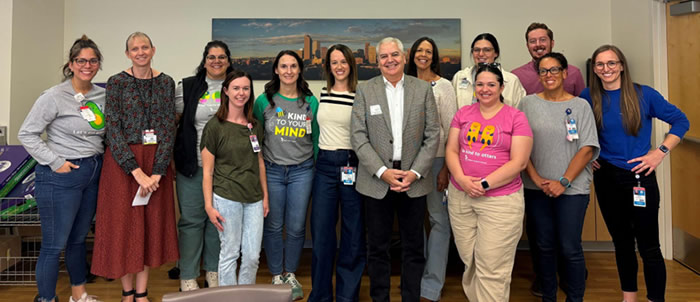
The staff of Children’s Hospital Colorado’s new Crisis Clinic meeting with Dr. David Jobes, Creator of the Collaborative Assessment and Management of Suicidality (CAMS) Framework®.

The United States is experiencing a national emergency in child and adolescent mental health. According to the recent Youth Risk Behavior Survey Data Summary & Trends Report: 2013–2023, surveying high school students, experiences of violence, poor mental health, and suicidal thoughts increased over the past decade. Today, suicide is the second leading cause of death for youth and young adults ages 10-24. In Colorado—a state with one of the nation’s highest suicide rates historically—the youth mental health crisis is especially severe. Only 22% of youth who have a mental illness are receiving care.

While the Office of Suicide Prevention (OSP) within the Colorado Department of Public Health and Environment has made significant strides in the state’s suicide prevention, intervention, and postvention efforts, a critical gap in pediatric mental health services remains. In response, Children’s Hospital Colorado (Children’s Colorado) is addressing the high number of children and adolescents experiencing suicidal thoughts, behaviors, and other mental health concerns that are overwhelming pediatric emergency departments and inpatient units.

The Pediatric Mental Health Institute (PHMI), a department within Children’s Colorado, developed a groundbreaking outpatient Crisis Services strategic plan to build a robust continuum of care for youth experiencing mental health crises, including suicidal thoughts and behaviors. The first initiative in this plan—the launch of a rapid-access, time-limited Crisis Clinic—is showing early success in transforming pathways to care for youth at risk for suicide. Enhanced by the Collaborative Assessment and Management of Suicidality (CAMS) Framework®, this innovative model is redefining crisis intervention and expanding access to timely, evidence-based treatment.

Housed on the University of Colorado’s (CU) Anschutz Medical Campus and in partnership with the CU Department of Psychiatry, the Crisis Clinic started seeing its first patients in June 2024. By blending models from leading thought partners across the nation, selecting the evidence-based Collaborative Assessment and Management of Suicidality (CAMS) Framework® to treat patients, and leveraging a multidisciplinary team approach, the Crisis Clinic is transforming mental health for youth across the state through accessible and tailored outpatient services, empowering patients and families in their fight against suicide.

Blending Care Models to Build a Groundbreaking Outpatient Clinic

As part of the growing youth mental health crisis in Colorado and across the nation, children and adolescents experiencing suicidal thoughts and behaviors often seek care at the emergency department. From there, providers typically refer them to inpatient psychiatric units or discharge them with recommendations for outpatient services. However, due to hospital boarding, long waitlists, insurance limitations, and other barriers to accessing care, patients and families often face difficulties navigating mental health systems and connecting to care.

In response to this complex crisis and the need for more rapid-access care pathways, Children’s Colorado took action through advocacy and coordinated strategic planning efforts. Under the leadership of Dr. Beau Carubia, child psychiatrist and Medical Director for the Consultation-Liaison/Emergency (CL/ED) Division; Dr. Anastasia Klott, child psychiatrist and Interim Associate Medical Director of Crisis Services; and Betsey Bucca, LCSW, Associate Clinical Manager of Consultative/Crisis, the experienced mental health providers at Children’s Colorado came together to create something different. Dr. Collette Fischer, psychologist, joined the team as the Interim Program Director of Crisis Services, and in collaboration with process improvement specialists, the team worked to design and implement new models of care.

Their broad Crisis Services strategic plan takes a comprehensive, three-pronged approach to bridge mental health care gaps, integrating rapid-access outpatient care, enhanced emergency department triage, and short-term inpatient stabilization to ensure youth receive timely, individualized support.

Their vision was to first launch the rapid-access Crisis Clinic to provide immediate, evidence-based suicide-focused treatment in an outpatient setting for patients who neither required higher levels of care nor had an established mental health provider. Borrowing inspiration and guidance from other leading institutions nationwide, they developed a flexible, holistic approach that would meet the unique needs of each child.

The Crisis Clinic narrowed its focus to serving youth experiencing suicidal ideation and attempts. Today, the Crisis Clinic serves youth ages 10-17 who experience a range of suicidal ideation, from distressing thoughts to plans and attempts.

Choosing the CAMS Framework for Proven, Evidence-Based Treatment

As part of a multi-year project to implement the Zero Suicide framework across all clinical sites and levels of care at Children’s Colorado, leaders of the Crisis Clinic selected the CAMS Framework for its effectiveness and adaptability. Dr. Fischer, Dr. Klott, Dr. Carubia, and Dr. Jessica Hawks, Clinical Director and incoming Chief of Psychology, were familiar with these models from their research on system-wide transformation and patient-centered care. Additionally, they were familiar with the CAMS Framework based on discussions with a former colleague, and now current faculty at the University of Washington, Dr. Eileen Twohy. “CAMS was the best fit given the amount of evidence backing it,” explained Dr. Klott.

When they explored CAMS further, they discovered that they could tailor the framework to each patient’s unique needs, which aligned seamlessly with their strategic vision. The framework consists of first gathering information about a patient’s experiences and suicide risk, followed by developing a treatment plan, a stabilization plan, and treating patient-identified “drivers” (the problems that compel the patient to consider suicide). Dr. Fischer added, “Because CAMS is a framework, it allows for flexible treatment planning, helping us remain focused on reducing suicide by addressing those unique drivers.”

The Crisis Clinic prioritizes education about the CAMS Framework and its approach to ensure families understand the care model. Alongside partners at OSP, over 40 providers across their network of care participated in the CAMS training. Additionally, Crisis Clinic providers have completed training in CAMS-4TeensⓇ and CAMS Brief Intervention (CAMS-BI™).

Support from the CAMS-care team has prepared the Crisis Clinic to successfully anticipate setbacks with patients, without which the patients might have been re-admitted to higher levels of care. Dr. Fischer added, “The CAMS Framework has been powerful not only for our patients but also for our clinicians.” Most notably, it provides a common language and ensures objectivity through tools like the Suicide Status Form (SSF), which supports outpatient treatment decisions.

Clinicians at Children’s Colorado often refer to a quote that Dr. Jobes shares in training materials: “CAMS empowers clinicians by empowering their patients.”

Leveraging a Multidisciplinary Team Approach for Holistic Pediatric Care

In addition to the CAMS Framework, the Crisis Clinic transforms pediatric mental health care through a multidisciplinary approach. The team consists of Advanced Practice Providers, Behavioral Health Clinicians, Care Coordinators, Psychiatrists, a Psychiatric Pharmacist, and Psychologists, each collaborating to provide holistic services to patients and their families. The roles of a pharmacist for optional medication management and care coordinator for continuity of care ensure a patient-centered, seamless experience during treatment and the post-discharge transition to outpatient or community mental health resources.

Over 6-8 visits, patients work with a dedicated clinician who uses CAMS and complementary modalities to address the drivers of suicidality. The first session spans two hours and entails comprehensive assessment and care planning, with subsequent one-hour sessions focused on progress and adjustment.

Simultaneously, a second clinician supports the family through education, including providing psychoeducation, lethal means counseling, and safety planning. The co-clinician and caregivers use the CAMS Stabilization Support Plan (SSP) to provide ongoing support for the patient’s suicidality.

At the end of each session, the multidisciplinary team huddles amongst themselves to align on progress. They then sync up with the patient and family to plan for the week ahead. Dr. Klott reflected on the process, remarking, “This level of acuity and volume would be overwhelming to navigate alone.”

The Gary Pavilion at Children’s Hospital Colorado at the University of Colorado
The Gary Pavilion at Children’s Hospital Colorado at the University of Colorado’s (CU) Anschutz Medical Campus houses the child and adolescent psychiatry program.

Transforming Communities One Patient and Family at a Time

Between June and December 2024, the Crisis Clinic pilot served 21 patients using the CAMS Framework across 128 total treatment sessions. Patients accessed timely care, with referrals placed before discharge from the emergency department and an average wait time of just 4.6 business days before starting therapy. Overall, the clinical team has observed stabilization in patient-reported ratings related to suicide risk.

According to initial feedback, patients report they learned coping mechanisms and identified contributing drivers of their suicidal thoughts. They valued feeling heard and understood without pressure. They improved communication with family members. They highlighted the importance of efforts to address self-hate and promote self-forgiveness. Dr. Fischer acknowledged how the rapid-access Crisis Clinic is disrupting patterns otherwise seen in the youth mental health crisis, “Without a clinic like this, patients might come back to our Emergency Departments 10 times worse 10 weeks later.”

Beyond offering direct support with the Crisis Clinic and CAMS, Children’s Colorado is spearheading a cultural shift, encouraging open conversations about suicide to reduce the stigma. This includes community screenings and dialogues around the documentary, My Sister Liv, which emphasizes that talking openly about suicidality reduces suicidality rather than increases it. They also share tools such as hotlines and community resources. By addressing a crisis through a suicide-specific lens, they underscore their mission to treat crises not just as moments of distress but as opportunities to empower patients and families toward healing.

Through rapid outpatient services to divert unnecessary hospitalizations, the evidence-based CAMS Framework for patients and their families, and a multidisciplinary care team, Children Colorado’s Crisis Clinic is redefining suicide-specific care for youth in Colorado. While much work remains to reach more youth experiencing mental health crises and close the care gap in Colorado, the Crisis Clinic’s unique, blended model sets a powerful example for other providers focused on reducing youth suicidality to follow.

Colorado’s Comprehensive Approach to Suicide Prevention: What’s Working

Colorado's Comprehensive Approach to Suicide Prevention: What's Working

Dr. Lena Heilmann, Director of the Colorado Office of Suicide Prevention (OSP), provided an overview of Colorado’s comprehensive approach to suicide prevention, including the programs OSP funds and leads; Colorado-specific suicide-related data and data systems; a deeper dive into the Colorado-National Collaborative and OSP’s emphasis on suicide-specific care; how OSP works to meet the needs of all Colorado communities, including priority populations that face unique challenges and barriers that can increase risk of suicide; how OSP funds its programs through braided fundings and federal grants; the Colorado Suicide Prevention Commission and collaborations with partners across the state through its five active workgroups covering the programs we run and fund through OSP; what a comprehensive approach is; what the CNC is; that we work to meet the needs of all Colorado communities, including priority populations; which federal grants we have and how we implement them; provide an overview of the Commission and workgroups; and show some Colorado-specific data.

Lena Heilmann, PhD

About Lena Heilmann, PhD

Lena Heilmann (she/hers), PhD, MNM, is the Director of the Colorado Office of Suicide Prevention (which is housed within CDPHE). The Office of Suicide Prevention’s mission is to serve as the lead entity for suicide prevention, intervention supports, and postvention efforts in Colorado, collaborating with communities statewide to reduce the number of suicide deaths and attempts. Lena leads a team of eleven people who are passionate about reducing the impact of suicide in Colorado. Lena leads suicide prevention responses to media inquiries, provides subject matter expertise to legislation, serves as the Co-Chair for the Suicide Prevention Commission, is accountable to meeting statutory mandates for the Office, and serves as PI on two SAMHSA grants: GLS Youth Suicide Prevention and Early Intervention and the National Strategy for Suicide Prevention. Lena is fiercely committed to equity in the Office’s approach to comprehensive suicide prevention and had led various initiatives to center community voice, lived experience, and to address disparities impacting Coloradans.

Lena’s passion for this work comes directly from her lived experience. In 2012, Lena lost her only sister Danielle to suicide. Lena’s world and identity shattered with the loss of her soulmate sister. In order to survive this traumatic grief and to honor her sister, Lena decided to leave her career as a German and Gender/Women’s Studies professor and turned to a life of suicide prevention. She connected with sibling suicide loss survivors and compiled a book-length collection of essays titled Still With Us: Voices of Sibling Suicide Loss Survivors, which the American Association of Suicidology (AAS) recognized by awarding Lena with the 2021 AAS Suicide Loss Survivor of the Year Award. Lena volunteers for the American Foundation for Suicide Prevention (AFSP)’s Healing Conversations program.

David A. Jobes, PhD

About David A. Jobes Ph.D. ABPP

David Jobes, PhD, ABPP, is the founder of CAMS-care, LLC. He began his career in 1987 in the Counseling Center of the Catholic University of America, where he developed a suicide risk assessment tool for college students that evolved into CAMS. Dr. Jobes is now a Professor of Psychology and Associate Director of Clinical Training at Catholic; he has trained thousands of mental health professionals in the United States and abroad in evidence-based assessment and treatment of suicide risk and the use of CAMS.

Watch the Recorded Webinar On-Demand

Enter your information to gain access.

  • This field is hidden when viewing the form
  • This field is hidden when viewing the form
  • This field is hidden when viewing the form
  • This field is hidden when viewing the form
  • This field is hidden when viewing the form
  • This field is hidden when viewing the form
  • This field is for validation purposes and should be left unchanged.

2024 CAMS Update and Introducing CAMS Brief Intervention

2024 CAMS Update and Introducing CAMS Brief Intervention

In this suicide prevention month webinar, Dr. Jobes will discuss recent updates based on clinical trial research, clinical use of CAMS, and training developments related to CAMS. With five on-going randomized controlled trials and a series of recent publications, there is much news to report on all things CAMS. Dr. Jobes will then be joined by Dr. Ray Tucker who will present on the emerging use of CAMS as a single-session brief inpatient and/or emergency department intervention with promising preliminary evidence. There are now several new research efforts to replicate and extend early CAMS-BI™ findings. Join us for this exciting update and introduction to CAMS BI as a novel and much needed suicide-focused brief intervention.

David A. Jobes, PhD

About David A. Jobes Ph.D. ABPP

David Jobes, PhD, ABPP, is the founder of CAMS-care, LLC. He began his career in 1987 in the Counseling Center of the Catholic University of America, where he developed a suicide risk assessment tool for college students that evolved into CAMS. Dr. Jobes is now a Professor of Psychology and Associate Director of Clinical Training at Catholic; he has trained thousands of mental health professionals in the United States and abroad in evidence-based assessment and treatment of suicide risk and the use of CAMS.

Dr Raymond Tucker Headshot

About Dr. Raymond P. Tucker

Associate Professor of Psychology, Louisiana State University (LSU)
Clinical Assistant Professor of Psychiatry, Louisiana State University Health Sciences Center (LSUHSC)/Our Lady of the Lake (OLOL),
Raymond P. Tucker is a licensed clinical psychologist and associate professor of psychology at Louisiana State University. There he teaches undergraduate courses in psychology, graduate courses in clinical psychology, and founded the LSU Mitigation of Suicidal Behavior research laboratory. As a clinical assistant professor of psychology at LSUHSC/OLOL, he trains medical staff/students in suicide-specific evidence-based assessment and intervention protocols.

Watch the Recorded Webinar On-Demand

Enter you information to gain access.

  • This field is hidden when viewing the form
  • This field is hidden when viewing the form
  • This field is hidden when viewing the form
  • This field is hidden when viewing the form
  • This field is hidden when viewing the form
  • This field is hidden when viewing the form
  • This field is for validation purposes and should be left unchanged.

Strengths-Based Approaches to Suicide Prevention in the Black Community

Strengths-Based Approaches to Suicide Prevention in the Black Community Webinar

The crisis of suicide among Black youth and emerging adults has escalated in recent years. Despite this, little is known about what factors can protect against the occurrence of suicide for Black Americans. In this talk, Dr. Brooks Stephens will review socio-cultural risk factors for suicide among Black youth and emerging adults, share her research focusing on strengths-based approaches to suicide prevention, and outline essential actions needed to address this public health crisis.

Jasmin Brooks Stephens, PhD

Jasmin Brooks Stephens, PhD

Dr. Jasmin Brooks Stephens is an incoming Assistant Professor in the Department of Psychology at the University of California, Berkeley (starting July 2025). Dr. Brooks Stephens earned her PhD in Clinical Psychology at the University of Houston and completed her clinical internship at Harvard Medical School/Massachusetts General Hospital. Dr. Brooks Stephens’ research focuses on utilizing qualitative and quantitative clinical science methods to characterize the unique social and contextual risk factors that shape the mental health trajectories of Black youth and emerging adults, with a focus on suicide vulnerability and racial trauma. Grounded in strengths-based approaches, her work also aims to identify cultural protective factors that promote resilience and positive psychological well-being for diverse Black communities. Through her work, she aims to develop and implement culturally relevant interventions, programming, and policies that target the reduction of racism-related stress, suicide, and health disparities within Black communities. Her work has been supported by several national organizations including the NASEM Ford Foundation, APA Minority Fellowship Program, and P.E.O. Foundation.

Dr Raymond Tucker Headshot

About Dr. Raymond P. Tucker

Associate Professor of Psychology, Louisiana State University (LSU)
Clinical Assistant Professor of Psychiatry, Louisiana State University Health Sciences Center (LSUHSC)/Our Lady of the Lake (OLOL),
Raymond P. Tucker is a licensed clinical psychologist and associate professor of psychology at Louisiana State University. There he teaches undergraduate courses in psychology, graduate courses in clinical psychology, and founded the LSU Mitigation of Suicidal Behavior research laboratory. As a clinical assistant professor of psychology at LSUHSC/OLOL, he trains medical staff/students in suicide-specific evidence-based assessment and intervention protocols.

Watch the Recorded Webinar On-Demand

Enter you information to gain access.

  • This field is hidden when viewing the form
  • This field is hidden when viewing the form
  • This field is hidden when viewing the form
  • This field is hidden when viewing the form
  • This field is hidden when viewing the form
  • This field is hidden when viewing the form
  • This field is for validation purposes and should be left unchanged.