An Exploration of Future Research and Treatment to Combat the Crisis of Black Youth Suicide in America

While the American public was preparing for the Holiday season, on December 17, 2019 Rep. Bonnie Watson (D-NJ) introduced a bill to U.S. House of Representatives.1 H.R. 5469, or more commonly known as the “Pursing Equity in Mental Health Act of 2019”, proposes to allocate funding to organizations to address mental health problems among youth of color. This bill specifically pertains to addressing the epidemic of suicide among Black adolescents. In the early months of 2019, an emergency taskforce was formed by the Congressional Black Caucus (CBC), which included research findings that were based on the collective work of Black professionals within numerous fields of expertise.

The report states that suicide is the second leading cause of death among Black adolescents between the ages of 10-19.2 The report further states that Black youth disproportionately die by suicide at higher rates than other races/ethnicities. In the last decade, suicide rates for Black adolescents have increased by 73%.3 Contrary to the trends we observe with Black adolescents, current research finds that the suicide rates among Black adults are relatively low in comparison to White counterparts.4

Focus of the Pursuing Equity in Mental Health Act

The Pursuing Equity in Mental Health Act of 2019 aims to:

  • Increase research on the risk factors, preventative factors, and methodology of suicide within Black youth, and
  • Support organizations focused on providing holistic, mental health treatment.

The current literature of research tackling the suicidology of Black adolescents is minimal. An explanation for this conundrum may be explained by implicit bias within research. The congressional report mentions a study that found that Black researchers are denied funding 10x the rate of White researchers.11 There is a necessity for research and treatment concentrated on the alarming trend of suicide among Black youth.

Based on my research with CAMS (Collaborative Assessment and Management of Suicidality), my research interest aligns with examining suicidal behavior within marginalized individuals (i.e., racial/ethnic, gender, and sexual minorities). In this article, I provide suggestions for the allocation of future research, treatment, and interventions supported by the proposed bill.

But first, why do we observe this alarming trend among Black youth? There are a few risk factors that influence suicide and suicidal behavior among this demographic.

Risk Factors

Trauma & Social Media

The image of a dead or injured Black body flashes across the screen of a personal computer or smartphone.

While scrolling through any of multiple, popular social media sites, a teenager may view dozens of these images. In the age of technology, sharing information across platforms is instant, and unfiltered. Whether accurate or appropriate, the information is available.

This increased exposure to graphic images shared among social media has been shown to increase depression and suicide among adolescents.5,6 In addition, other psycho-social stressors such as SES, academic opportunities, and systematic marginalization may contribute to suicidal behaviors among black adolescents. 7

LGBTQ+ Identity

Individuals who identify as LGBTQ+ experience higher rates of suicidal behavior than other groups. 8 Association of this risk factor is often linked to bullying, lack of social acceptance, and heightened occurrence of homelessness. These trends are evident across race/ethnicity and age.

Implicit Bias and Stigma

There is a history of mistrust and bias that permeates the therapeutic relationship between the African American community and a “white” mental health field, stemming from the origins of racist pseudo-science and unethical experimentation.9 This is among several reasons Black people are often reluctant to seek mental health support. Another factor that may contribute to an increase in suicidal behavior among Black youth is perceived social stigma. Black adolescents with mental illness experience stigmatization from family, communities, and the larger society.10

Future Research and Treatment

It is appropriate for allocations of funding to go towards organizations/individuals who are already working with suicidal Black youth. These individuals would already have established rapport within the community and possess advance knowledge on implementing research and providing support. By focusing attention on the existing expertise within this area, we help to lessen the “learning curve” and improve training towards other professionals who have Black clientele.

There are a multitude of established literature on the effectiveness of treatments for suicidal individuals. When working with marginalized groups, it is important to incorporate what works. Why fix what is not broken? Just adapt.

Research has shown that Cognitive Behavioral Therapy (CBT) and Dialectic Behavioral Therapy (DBT) are effective in treating suicidal behaviors.12,13 Furthermore, research also highlights the effectiveness of CAMS as a therapeutic framework.14 What makes these treatments work? The use of client-focused therapy and incorporation of holistic methods (e.g., collaborative approach, community engagement, cultural inclusion, etc.) are the foundations that stabilize these interventions.

A CAMS Hypothetical Randomized Control Trial (RCT)

The efficacy of CAMS was initially measured using RCTs. Suicidal clients (whether recruited through outpatient centers, universities, etc.) were split into a treatment as usual (TAU) group in comparison to the CAMS administered group.15 The Suicide Status Form (SSF) was used as a guide to administer CAMS between the clinician and client. The TAU and CAMS groups were compared after the initial and consecutive sessions.

A similar design could be applied when using an RCT to compare TAU with CAMS in a sample of Black adolescents with a history of suicidal behavior. These participants possibly could be recruited from outpatient centers, counseling centers on college campuses, middle school and high school programs, and through other organizations. Of course, these individuals must meet the requirements of race/ethnicity and a history of suicidal behavior and/or mental health.

Based on previous CAMS RCT research, a hypothetical study is outlined in the flowchart below:
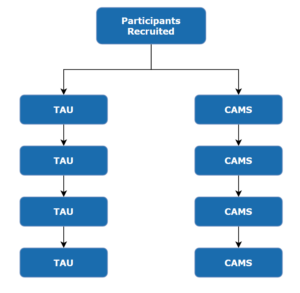

Figure. A flowchart depicting an RCT examining the efficacy of CAMS treatment within a sample of suicidal Black adolescents.

Conclusion

If the Pursuing Equity in Mental Health Act of 2019 is passed into legislation, it will be a milestone for research and treatment of suicidology within Black adolescents. The rising trend of suicide among this group rings warning signs, which call to action experts who provide an interdisciplinary lens to research and treatment.

More extensive and intense research into the risk and preventative factors of suicide among Black youth may begin to tackle a stressor of systematic marginalization. Implementing more efficient mental health treatment specifically designed for this demographic may provide holistic and cost-effective interventions.

As I continue my work as a Black researcher and clinician, I am discovering that integrating a client-focused, community-centered, and culturally inclusive approach into therapy/research is the difference between life and death for our clients.

  1. References World Health Organization. Suicide Rates (Per 100,000 Population); World Health Organization: Geneva, Switzerland, 2019.
  2. U.S. House of Representatives, Emergency Taskforce on Black Youth Suicide and Mental Health. (2019). Ring the Alarm: The Crisis of Black Youth Suicide in America. Retrieved from https://watsoncoleman.house.gov/uploadedfiles/full_taskforce_report.pdf
  3. Runcie, A. (2019, December 17). Proposed legislation attempts to address rising suicide rates among black children. CBS News. Retrieved from https://www.cbsnews.com/news/proposed-legislation-attempts-to-address-rising-suicide-rates-among-black-children-2019-12-17/
  4. Leong, F. T. L., Nagayama Hall, G. C., McLoyd, V. C., & Trimble, J. E. (Eds.). (2014). APA handbook of multicultural psychology (Vols 1 & 2). Washington, DC: American Psychological Association.
  5. Twenge, J.M., Joiner, T.E., Rogers, M.L., & Martin, G.N. (2017). Increases in depressive symptoms, suicide-related outcomes, and suicide rates among u.s. adolescents after 2010 and links to increased new media screen time. Clinical Psychology Science, 6, 3-17.
  6. Feuer, V., & Havens, J. (2017). Teen suicide: Fanning the flames of a public health crisis. Journal of the American Academy of Child & Adolescent Psychiatry, 56, 723-724.
  7. Hope, E.C., Hoggard, L.S., & Thomas, A. (2015). Emerging into adulthood in the face of racial discrimination: Physiological, psychological, and sociopolitical consequences for african american youth. Transitional Issues in Psychological Science, 1, 342-351.
  8. Pritchard, E.D. (2013). For colored kids who committed suicide, our outrage isn’t enough: Queer youth of color, bullying, and the discursive limits of identity and safety. Harvard Educational Review, 83, 320-345.
  9. Washington, H.A. (2006). Medical apartheid: The dark history of medical experimentation on black americans from colonial times to the present. New York, NY: Doubleday.
  10. Rose, T., Joe, S., & Lindsey, M. (2011). Perceived stigma and depression among black adolescents in outpatient treatment. Children and Youth Services Review, 33, 161-166.
  11. U.S. House of Representatives, Emergency Taskforce on Black Youth Suicide and Mental Health. (2019). Ring the Alarm: The Crisis of Black Youth Suicide in America. Retrieved from https://watsoncoleman.house.gov/uploadedfiles/full_taskforce_report.pdf
  12. Stanley, B., Brown, G., Brent, D.A., Wells, K., Poling, K., Curry, J., …Hughes, J. (2009). Cognitive-Behavioral therapy for suicide (cbt-sp): Treatment model, feasibility, and acceptability. Journal of the American Academy of Child & Adolescent Psychiatry, 48, 1005-1013.
  13. Ougrin, D., Tranah, T., Stahl, D., Moran, P., & Rosenbaum, A. (2014). Therapeutic interventions for suicide attempts and self-harm in adolescents: Systematic review and meta-analysis. Journal of the American Academy of Child & Adolescent Psychiatry, 54, 97-107.
  14. Jobes, D.A., Moore, M.M., & O’Connor, S.S. (2007). Working with suicidal clients using the collaborative assessment and management of suicidality (cams). Journal of Mental Health Counseling, 29, 283-300.
  15. Jobes, D.A., Au, J.S., & Siegelman, A. (2015). Psychological approaches to suicide treatment and prevention. Curr Treat Options Psychiatry, 2, 363-370.
For more information

To learn more about effective methods for working with suicidal minorities, read “5 Effective Approaches When Working with Minority Clients” by Tanisha Esperanza Jarvis, M.A.

About the Author

Tanisha Esperanza Jarvis M.A.

Tanisha Esperanza Jarvis M.A.
Tanisha Esperanza Jarvis received her B.A. in anthropology and sociology at Spelman College in 2015, where she also minored in Comparative Women’s Studies. While at Spelman, her research focused on integrating academia and social justice. As a Bonner Scholar and Social Justice Fellow her research work included preventative and interventional treatment of sexual trauma and LGBTQ and racial/ethnic minority research. She finished her M.A. in psychological sciences from The Catholic University of America (CUA) in 2019. Her research within the Suicide Prevention Lab (SPL) focused on integrating an international approach to CAMS research and treatment of suicidality within marginalized communities.

About Tanisha Esperanza Jarvis M.A.

Tanisha Esperanza Jarvis M.A.
Tanisha Esperanza Jarvis received her B.A. in anthropology and sociology at Spelman College in 2015, where she also minored in Comparative Women’s Studies. While at Spelman, her research focused on integrating academia and social justice. As a Bonner Scholar and Social Justice Fellow her research work included preventative and interventional treatment of sexual trauma and LGBTQ and racial/ethnic minority research. She finished her M.A. in psychological sciences from The Catholic University of America (CUA) in 2019. Her research within the Suicide Prevention Lab (SPL) focused on integrating an international approach to CAMS research and treatment of suicidality within marginalized communities.

Challenges of Assessing and Treating Youth Suicide: A Solution in CAMS-4Teens®

The news of rising teen suicide rates is difficult to ignore. Every few months, the media reports on another study that documents how much teen suicide rates have increased in the past 20 years. Rates jumped from 6.8 deaths per 100,000 people in 2000 to 10.6 deaths per 100,000 people in 2017.1 Suicide is now the second-leading cause of death for 15- to 24-year-olds, with only motor vehicle accident deaths outnumbering it. Researchers have noticed trends in suicide rates among girls and young women increasing, as well as for young black men.1,2

Researchers and mental health professionals are struggling to identify causes for these trends and to quickly identify effective prevention and treatment strategies to address this major public health concern. While many research studies report on trends in rates among certain gender and ethnic groups, it is extremely difficult to identify causes for rising suicide rates. Our best educated guesses about this alarming trend relate to added stress caused by:

  • addiction in families (as seen in the opioid crisis),
  • the use of social media and the associated feelings of inadequacy, loneliness, and the pressures of “keeping up” with friends,3
  • lack of access to mental health resources in schools and communities,
  • lack of suicide-specific training for mental health professionals, and
  • evidence that the current generation of youth experience more depression, anxiety, and stress in general than prior generations4.

All of these issues combined with easier access of searching, finding, and being exposed to media that depict or offer information on suicide may be impacting the increase.

Obstacles to Treatment

A major obstacle to reducing the rise of suicide rates across all age groups is the lack of evidenced-based care available for individuals who are suicidal5. Funding for research on suicide treatment lags far behind other health issues. For decades, researchers and mental health professionals did not include suicidal individuals in studies that tested promising new treatments because it was considered too risky. These barriers have brought us to our current state of feeling far behind in terms of knowing what works best for treating suicide. The National Institute of Mental Health has identified research on suicide as an area of priority, and more studies are being funded to help evaluate what methods work best for prevention, screening youth for suicide risk, and finding the best possible treatments.6

There are many layers of prevention and treatment that can be implemented for youth suicide. Many states have suicide prevention centers within their public health departments, which are tasked with implementing prevention programs in communities and schools and training mental health professionals in their state on best practices for working with suicidal patients. Within schools, Signs of Suicide has been found to be an effective gatekeeper training program that teaches teens about recognizing suicide risk in their peers and the steps they should take to connect their friends with resources.7 The Good Behavior Game is a classroom-management system that is used for second-graders and focuses on minimizing aggressive and disruptive behavior, and amazingly has shown long-term reductions in suicidal behavior as kids move through adolescence.8

Existing Treatment Programs

From a treatment standpoint, few treatments specific to suicide exist that have been shown to provide best clinical care for suicidal teens. Cognitive Behavioral Therapy (CBT) and Dialectical Behavior Therapy (DBT) are both used for teens with suicide risk. CBT works well as a treatment for depression and anxiety-related disorders, and it can also be used to help someone understand their thoughts about suicide and their feelings of hopelessness.9 DBT specifically addresses self-harming behavior and teaches teens important coping skills to use in place of self-harm.10

Safety-planning interventions and crisis response plans are useful when used in conjunction with DBT or CBT, as they provide concrete steps for teens and their families to follow when the teen is in crisis or thinking seriously about suicide.11,12

Advantages of CAMS with Youth and Teen Suicidality

Collaborative Assessment and Management of Suicidality (CAMS) is a therapeutic assessment and treatment framework that combines all elements from these treatments into one approach. First, CAMS provides a thorough risk assessment in the first session and uses the Suicide Status Form (SSF) to gather valuable information about a teen’s current experience and overall suicide risk.

With CAMS, the entire assessment approach is collaborative. The therapist sits next to the teen (if they are comfortable with it), encouraging the feeling that they are literally on the same page. Because many adolescents may be hesitant or suspicious of the treatment process, CAMS emphasizes transparency and empathy. Instead of a therapist sitting across from the teen with a clipboard and taking notes (that the teen can’t see) while asking questions, the teen is either writing their responses on the Suicide Status Form themselves (first page), or they are watching the therapist write down their responses (second page). The therapist and the teen write the treatment plan together, identify the top two drivers together, and create the stabilization plan together.

We have seen the CAMS approach work very well with teens (CAMS-4Teens), both in our own practices and with consultation and case presentations from other clinicians, as well as in research. A recent study found that the Suicide Status Form works just as well for assessing teen’s suicide risk as it does with adults. Teens in the study were able to understand and rate constructs like psychological pain, hopelessness, and self-hate in a way that was helpful to determining their overall level of distress and suicide risk.13

Once the therapist and teen identify the top two drivers for the treatment plan, the therapist explains what the goals and objectives will be, and which interventions they will use to help achieve those goals. Many teens have some version of self-hate as a driver for suicide. Therapists can make simple goals of decreasing self-hate and identify interventions to target that driver. Examples of interventions may be CBT interventions for increasing self-esteem or behavioral activation for getting teens out of the house and connected to the community and causes they care about (e.g., mentoring younger kids, animal shelters, volunteer work). Furthermore, elements from CBT, DBT skills, problem-solving, interpersonal therapy, and many other methods can be integrated into the CAMS Treatment® plan to target and treat drivers.

Especially for teens in an acute suicidal state, sometimes it is extremely helpful to first identify the problem. The CAMS Assessment® provides a guided walk-through of the teen’s life at that moment, and if a particular stressor or issue is uncovered as being related to the current suicidal thoughts, it can be addressed quickly in treatment. Teens can be overwhelmed with situational factors that feel unsurmountable. We have observed CAMS to be very useful in breaking down these factors into more manageable pieces that the teen can then recognize as treatable.

Tips for Using CAMS with Teens and Adolescents (CAMS-4Teens)

We have assembled some general tips for using CAMS with teens that may be helpful. Before making any major modifications to the Suicide Status Form (SSF) for use with teens, we decided to test it in its existing form. Our hunches were correct: we discovered that CAMS does not need to be radically changed for use with youth (ages 12-17).13

However, other slight procedural recommendations are helpful to keep in mind. First, some youth may need slower pacing for the assessment. It may take more time to explain concepts like psychological pain and agitation. Also, it may take some time to think about how to explain these concepts in a variety of ways.

Second, if the assessment is taking longer than usual, it is beneficial to prioritize getting the stabilization plan completed and in place. As much as possible and practical, intensive outpatient treatment is the goal of CAMS. This is largely achieved by having a solid stabilization plan/safety plan in place. It is very helpful to identify any supportive adults in the teen’s life that they can list on their stabilization plan as someone they can contact in a crisis. You may need to be creative in identifying these adults (e.g., parents, older siblings, other relatives, coaches, pastors, school counselors, etc.).

Third, some youth may respond better with a “parallel assessment” in which you are still gathering the information for the SSF while they are engaging in some other activity (coloring, fidget toys, etc.).

The last tip is focused on how to work with parents and caregivers during the course of CAMS Treatment. It is essential that other adults in the teen’s life are aware of the stabilization plan, understand how to respond to the child in a crisis, and can help assure access to lethal means are limited. We recommend completing the SSF with just the teen present, and then inviting the caregivers into the session at the end to review the stabilization plan. Caregivers may have a wide variety of emotional reactions to their suicidal teen, and it’s important to provide education on suicide in general, and the process of CAMS. Parents and caregivers may need their own support via therapy or community support groups.

In Conclusion

Thus far we have confidence from recent research results that the SSF is appropriate for teens,13 and that CAMS is a promising evidence-based treatment for suicidal teens.14,15 We know that CAMS is an effective treatment for adults,16 and that many clinicians are using CAMS with youth ages 12+ with success.

Our consultants provide on-going support to clinicians using CAMS with teens, and the overwhelming response from clinicians has been positive. They describe CAMS as useful with all types of teens – from those who are very expressive and talkative as CAMS helps organize their thoughts and feelings, to those who may be more reserved as CAMS allows them to express themselves through the SSF without needing to verbalize everything.

The next phase of CAMS-4Teens research includes randomized clinical trials (RCT), which are the gold standard in treatment research, to gather more evidence for the effectiveness of using CAMS with youth. We see a bright future in which CAMS will be available as an evidenced-base intervention for suicidal youth, a group for which having effective treatment will make a big impact and save lives.

    1. Curtin, S. C., & Heron, M. (2019). Death rates due to suicide and homicide among persons aged 10–24: United States, 2000–2017. NCHS Data Brief, no 352. Hyattsville, MD: National Center for Health Statistics.
    2. Miron, R., Yu, K-H., Wilf-Miron, R., & Kohane, I. S. (2019). Suicide Rates Among Adolescents and Young Adults in the United States, 2000-2017. JAMA, 321, 2362-2364.
    3. Twenge, J. M. (2017). Have smartphones destroyed a generation? The Atlantic, https://www.theatlantic.com/magazine/archive/2017/09/has-the-smartphone-destroyed-a-generation/534198/.
    4. Twenge, J. M., Cooper, A. B., Joiner, T. E., Duffy, M. E., & Binau, S. G. (2019). Age, period, and cohort trends in mood disorder indicators and suicide-related outcomes in a nationally representative dataset, 2005-2017. Journal of Abnormal Psychology, 128, 185-199.
    5. Jobes, D. A., & Joiner, T. E. (2019). Reflections on suicidal ideation. Crisis, 40, 227-230.
    6. Research Prioritization Task Force. (2014). A prioritized research agenda for suicide prevention: An action plan to save lives. National Action Alliance for Suicide Prevention.

http://actionallianceforsuicideprevention.org/sites/actionallianceforsuicideprevention.org/files/Agenda.pdf

  1. Seltine, R. H., James, A., Schilling, E. A., & Glanovsky, J. (2007). Evaluating the SOS suicide prevention program: a replication and extension. BMC Public Health, 7, 161.
  2. Wilcox, H. C., Kellam, S. G., Brown, C. H., Poduska, J. M., Ialongo, N. S., Wang, W., & Anthony. J. C. (2008). The impact of two universal randomized first- and second-grade classroom interventions on young adult suicide ideation and attempts. Drug and Alcohol Dependence, 95 (s1), s60-s73.
  3. Stanley, B. Brown, G., Brent, D. et al. (2009). Cognitive Behavior Therapy for Suicide Prevention (CBT-SP): Treatment model, feasibility, and acceptability. Journal of the American Academy of Child and Adolescent Psychiatry, 48, 1005-1013.
  4. McCauley, E., Berk, M. S., & Asarnow, J. R. (2018). Efficacy of Dialectical Behavior Therapy for adolescents at high risk for suicide. JAMA Psychiatry, 75, 777-785.
  5. Stanley, B., & Brown, G. K. (2012). Safety Planning Intervention: A brief intervention to mitigate suicide risk. Cognitive and Behavioral Practice, 19, 256-264.
  6. Bryan, C. J., Mintz, J., Clemans, T. A., Burch, T. S., Leeson, B., Williams, S., & Rudd, M. D. (2017). Effect of Crisis Response Planning on patient mood and clinician decision making: A clinical trial with suicidal U.S. soldiers. Psychiatric Services, 69, 108-111.
  7. Brausch, A. M., O’Connor, S. S., Powers, J. T., McClay, M. M., Gregory, J. A., & Jobes, D. A. (2019, early on-line). Validating the Suicide Status Form for the Collaborative Assessment and Management of Suicidality in a clinical adolescent sample. Suicide and Life-Threatening Behavior. DOI: 10.1111/sltb.12587
  8. O’Connor, S. S., Brausch, A. M., Ridge Anderson, A., & Jobes, D. (2014). Applying the Collaborative Assessment and Management of Suicidality (CAMS) to suicidal adolescents. The International Journal of Behavioral Consultation and Therapy, 9, 53-58.
  9. Jobes, D. A., Vergara, G. A., Lanzillo, E. C., & Ridge-Anderson, A. (2019). The potential use of CAMS for suicidal youth: Building on epidemiology and clinical interventions. Children’s Health Care, 48, 444-468.
  10. Jobes, D. A. (2015). Managing suicidal risk: A collaborative approach (2nd edition). New York: Guilford.

About the Author

Amy Brausch Ph.D.

Amy Brausch Ph.D.
Dr. Amy Brausch is an Associate Professor of Psychological Sciences at Western Kentucky University where she founded the Risk Behaviors and Suicide Prevention Laboratory in 2011. She completed her Ph.D. in clinical psychology at Northern Illinois University in 2008, following her clinical internship at Utah State University Counseling and Psychological Services Center. Dr. Brausch’s research program broadly focuses on youth suicide risk assessment, prevention, and treatment. Specifically, her work has also focused on the overlap between nonsuicidal self-injury and suicide risk, the overlap between body image, disordered eating, and self-harm, and the role of emotion dysregulation in NSSI and suicide risk. Her work has been funded by the Kentucky Biomedical Research Infrastructure Network and the National Institute of Mental Health. Dr. Brausch has collaborated with Dr. Jobes on research related to CAMS-4Teens, including a validation study of the Suicide Status Form for adolescents. As a Senior Consultant with CAMS-care, LLC, Dr. Brausch has provided training in CAMS to mental health providers in the United States and Australia at community mental health centers, university counseling centers, school districts, and local and state mental health suicide prevention organizations.

About Amy Brausch Ph.D.

Amy Brausch Ph.D.
Dr. Amy Brausch is an Associate Professor of Psychological Sciences at Western Kentucky University where she founded the Risk Behaviors and Suicide Prevention Laboratory in 2011. She completed her Ph.D. in clinical psychology at Northern Illinois University in 2008, following her clinical internship at Utah State University Counseling and Psychological Services Center. Dr. Brausch’s research program broadly focuses on youth suicide risk assessment, prevention, and treatment. Specifically, her work has also focused on the overlap between nonsuicidal self-injury and suicide risk, the overlap between body image, disordered eating, and self-harm, and the role of emotion dysregulation in NSSI and suicide risk. Her work has been funded by the Kentucky Biomedical Research Infrastructure Network and the National Institute of Mental Health. Dr. Brausch has collaborated with Dr. Jobes on research related to CAMS-4Teens, including a validation study of the Suicide Status Form for adolescents. As a Senior Consultant with CAMS-care, LLC, Dr. Brausch has provided training in CAMS to mental health providers in the United States and Australia at community mental health centers, university counseling centers, school districts, and local and state mental health suicide prevention organizations.