What Future? How People Who Are Suicidal Look Beyond the Present Moment

What future? How People Who Are Suicidal Look Beyond The Present Moment On-Demand Webinar

The consideration of suicide involves the contemplation of not only death, but also of life and what it can offer. This presentation explores cognitive underpinnings of life-oriented thoughts, with a particular focus on how people who are suicidal envision their future. Dr. Cha will introduce various ways to assess future thinking among individuals who are suicidal, and present an emerging profile of future thinking abilities that are characteristic of this population.

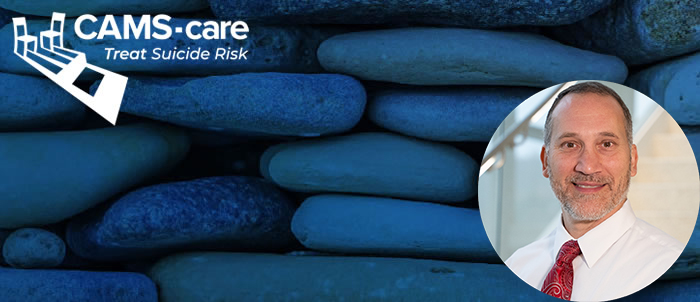
Christine Cha, PhD

About Christine Cha, PhD

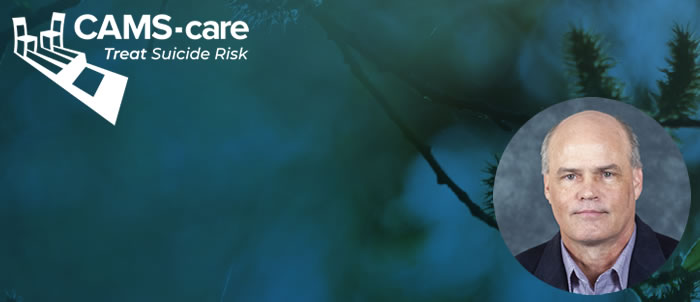
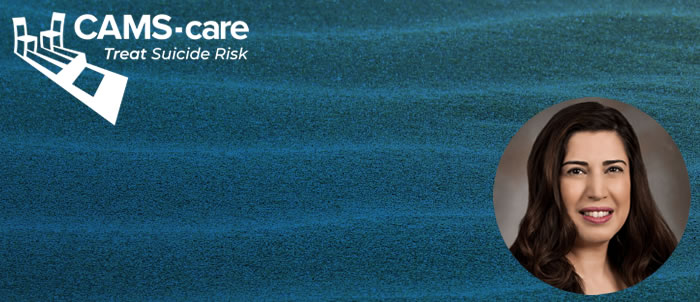
Dr. Christine Cha is an Associate Professor of Clinical Psychology at Teachers College, Columbia University, and Director of the Laboratory for Clinical and Developmental Studies. Her research focuses on thought patterns that may contribute to suicidal thoughts and behaviors, and pertain to concepts proximal to suicide (e.g., death) as well as alternatives to suicide (e.g., future). Dr. Cha’s work has been funded by the American Foundation for Suicide Prevention and the National Institute of Mental Health (NIMH). She serves on the editorial boards of the Journal of Clinical Child and Adolescent Psychology, Journal of Abnormal Psychology, and General Hospital Psychiatry, and has received the Rising Star Award from the Association for Psychological Science.

Watch the Recorded Webinar On-Demand

Enter your information to gain access.

  • This field is for validation purposes and should be left unchanged.
  • This field is hidden when viewing the form
  • This field is hidden when viewing the form
  • This field is hidden when viewing the form
  • This field is hidden when viewing the form
  • This field is hidden when viewing the form
  • This field is hidden when viewing the form

Suicide Risk Factors and Warning Signs: What we’ve learned from the research

It’s important to understand that there are many potential suicide risk variables, the following are a subset of variables with strong empirical research support.

SUICIDE RISK FACTORS

Suicide risk factors are diverse and multifaceted, encompassing a range of individual, social, and environmental factors. They include personal characteristics such as mental health conditions, previous suicide attempts, substance abuse, and other factors. Understanding and addressing these factors can aid in suicide prevention efforts.

History of Suicidal Behaviors

The history of previous suicide attempts has long been considered a major risk factor related to future suicidal behavior. The risk of such future behavior increases significantly with any past attempt behaviors, particularly a multiple-attempt history of two or more bona fide attempts. 

Suicidal Thoughts & Ideation

When a person has suicidal thoughts, the details and frequency of these thoughts are critical. It’s important to determine whether such thoughts are a brief passing fantasy or something they have explored, made a plan and taken specific actions. By directly asking a person whether they are thinking about taking their life, with appropriate follow-up questions, you will be better able to assess their risk of suicide. Contrary to some popular beliefs, several research studies have clearly shown that asking a person suicide-related questions WILL NOT put the idea of suicide in their head.

Do not be afraid to ask, something like:  “It sounds like you are having a difficult time, have you ever wished you were dead?” or “ It sounds like you are really struggling, have you ever wished you could just go to sleep and not wake up?”.  

  • If the answer is “no”, ask: “In the past three months, have you thought about taking your life, or prepared to do anything that could end your life?”
  • If the answer is “yes” ask: “Have you thought about how you might do this?”

Asking your friend or family member to describe their suicide-related thoughts and provide specifics on the frequency and duration of these thoughts will not only help you better understand your loved-one’s struggles and suicide risk factors, but also send them a clear message that you truly hear them and want to listen. You are telling them that they are not alone and you are willing to try and understand their pain.  

Suicide Plan

While suicidal thoughts are an important suicide risk factor, research has indicated that the specific details and seriousness of planning and preparing for suicide can be predictive of the likelihood of future death by suicide. In other words, someone with a vague, inexact, or nonspecific plan is generally much less serious about taking their life, as opposed to someone with a plan that includes a particular method, place, time, and date for how they will end their life.   

The next important question to ask a friend or family member who has shared their suicide plan with you is whether they have access to the item or method they plan to use for carrying out the plan, such as a stash of sleeping pills or access to a firearm. These items are referred to as “lethal means”, and limiting their access can be an important step in suicide prevention. You might ask: “Have you started to work out the details of how you plan to kill yourself?” or “Do you have an idea of where and when you will do it?”

If your friend or family member does have access to the lethal means that they describe in their suicide plan, your next critical step is to work with them to develop a “safety strategy” to remove their direct access to the lethal item, at least until their suicidal crisis is over. For example, are they willing to let you hold their pills for safe keeping?  Are they willing to let an appropriate and trusted friend or relative keep their gun until their suicide crisis is over? Are they willing to take a different route to work or school so that they do not walk by railroad tracks?  Are they willing to avoid parking their car in a tall parking structure?  

Suicide Preparation

In general, preparation behaviors are often related to organizing the suicide attempt action itself, such as obtaining the lethal means, as well as doing research to determine a lethal dose of drugs or determining a suitable location where the possibility of interruption or intervention may be reduced. Other preparation behaviors may include putting one’s affairs in order, such as writing a will, writing suicide notes, shooting a good-bye video, posting a cryptic Facebook message, doing a favorite activity one final time, saying a final good-bye to friends and family, or giving away prized possessions. All of these behaviors may indicate significantly increased suicidal risk for the individual. In these circumstances, you might ask: “Have you collected pills?” or “Have you obtained a gun?” or “Have you given away valuables, written a will or a suicide note?

Suicide Rehearsal

Rehearsal behaviors” is a suicide risk factor that typically involves the acting out of the planned suicide attempt. For example, someone may obtain a rope, find a beam in the garage, secure the rope at a certain length, position a short stool, and even step up on the stool and place the rope around their neck without actually stepping off the stool to make the attempt. Such rehearsal behavior is serious.  You might ask: “Have you held the gun, but changed your mind?” or “Have you cut yourself?” or “Have you hung a rope?”

WARNING SIGNS of Suicidal Ideation

In contrast to risk factors “warning signs” for suicide typically center on being extremely upset and agitated —when someone feels totally out of control. Warning signs for suicide suggest an immediate risk of self-destructive behavior. For example, in the case of heart disease (which is the #1 cause of death around the world), many people have both short and long term risk factors (e.g., obesity, hypertension, high cholesterol, and smoking) but do not die of heart disease. In contrast, someone with such risk factors might have key warning signs that prompt urgent intervention to avert a heart attack (e.g., chest pains, pain in their left arm, feeling faint). 

Below are various topics when experienced in a very serious manner can contribute to imminent for self-harm behaviors, such as cutting or burning one’s skin, over-dosing and suicide attempts.

Severe Substance Abuse

The extremely excessive use of alcohol or drugs during a crisis can directly contribute to being highly upset and out of control which may trigger individuals to harm themselves or even make a suicide attempt.

Impulsivity in Decision Making

Generally, impulsivity refers to the lack of ability to think through the consequences of one’s actions, in other words “acting without thinking”. Suicide attempts and deaths often occur when someone is upset, distressed, anxious, highly emotional and/or highly impulsive. The risk is further increased if impulsive behaviors are essentially self-destructive, for example, a history of fighting, pathological gambling, kleptomania, or other similar impulsive disorders.  

Extreme Reaction to a Death or Significant Loss

For many years, suicidologists have known that suicides often occur after someone has experienced a loss, which may seem to trigger the suicidal act. Such losses may be big or small; it can be one particularly significant loss or an accumulation of several lesser losses. Examples may include a divorce, a romantic breakup, a financial disaster, loss of a job, the death of a loved one or a pet— any event that has significant meaning to the person. Additionally, suicide-triggering losses can be symbolic—for example, retirement from a meaningful career. Although losses often contribute to the circumstances leading up to a suicide, usually such losses are not the only reason for suicidal behavior. 

Critical Relationship Problems

Research studies have shown that relationship issues are often the number one suicide-related concern of people struggling with suicidal thoughts. These problems could be romantic issues or relationships with friends, parents or siblings. In contrast, we also know that social relationships can protect a person against suicide. It is important to not let the highly suicidal person be or feel alone. The perception of being a burden to others can be a particularly important relationship problem when experienced by someone who is extremely upset. Experiencing oneself as a burden on others can create a dangerous downward spiral, wherein the individual experiencing suicidal ideation is disinclined to seek help. In the mind of the person with suicidal thoughts, their suicide can be perceived as a “gift” to the people in their lives who they believe are “weighed down” with the troubles of the person who struggles with suicide. 

Chronic Pain and Severe Health/Pain Problems

There are studies that suggest that general health-related issues, particularly if these issues are constantly occurring or chronic, may be related to suicidal thoughts and behaviors – particularly if these issues are chronically occurring or terminal in nature. While many people live out their lives in chronic physical pain, other can find such pain to be utterly unbearable, which may lead to increased suicidal thoughts as a way to finally escape the pain. 

Serious Sleep Problems & Insomnia

Sleep problems related to insomnia, hypersomnia, and nightmares have been shown to be significant suicide risk factors in adolescents and adults and the lack of sleep impacts REM sleep which is critical to everyone to maintain, and the heightened stress levels caused by lack of proper sleep can exacerbate a sense of peace and calm.   

Legal/Financial Crisis

Legal problems can contribute significantly to suicidal risk.  There is often a window of considerable suicidal risk shortly after a person is first faced with a legal accusation. Similarly, financial issues from poverty, unemployment, credit card debt, payday lenders, owing back taxes, and simply not being able to make ends meet can all contribute to increased suicidal risk. 

Choosing to Live: How to Defeat Suicide Through Cognitive Therapy

Choosing to Live: How to Defeat Suicide Through Cognitive Therapy, by Thomas Ellis and Corey Newman. Award winning book that includes Appendix A: Guide for Concerned Family Members and Friends. Addresses some of the questions frequently asked by friends and family members of persons struggling with suicide thoughts and behaviors.

Choosing to Live: How to Defeat Suicide Through Cognitive Therapy

Suicide is Different Website

Suicide is Different: A web-based resource that provides support to those supporting someone who is thinking about suicide. Here you can learn more about suicide through activities and videos, plan ahead for your own wellness as a suicide caregiver and connect with group support and workshops.
How NeuroFlow is Combining Technology and Treatment to Prevent Suicide

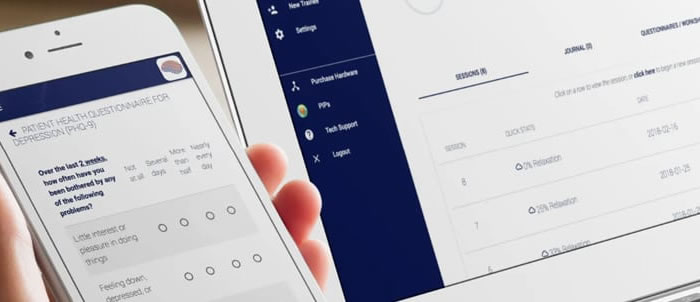
NeuroFlow and CAMS-care partner to offer an evidence based therapeutic framework for suicide-specific assessment and treatment on electronic medical records.

Enhancing an already unique partnership, CAMS-care and NeuroFlow are once again teaming up to help create a happier and healthier world. The latest element of the partnership now gives clinicians using NeuroFlow access to the CAMS evidence based Suicide Status Form to treat patients with serious thoughts of suicide.

According to the Substance Abuse and Mental Health Services Administration, there are 12.2 million adults and 3 million adolescents in the United States who are thinking of ending their lives. The Joint Commission, the Surgeon General, the CDC and Zero Suicide all reference the Collaborative Assessment and Management of Suicidality (CAMS) as one of a handful of evidence-based treatments that clinicians should use to reduce suicidal ideation.

Most clinicians today either don’t know that evidence-based treatments exist, have not been trained, or lack access to them in their electronic medical records. Building on an already existing, mission-aligned partnership between the two organizations, this development addresses these issues directly by getting evidence-based resources to care providers when it matters most.

“NeuroFlow is committed to integrating technology with evidence-based practices. Our partnership with CAMS-care provides a solution for the Treat step in Zero Suicide, putting clinicians on the NeuroFlow platform at the forefront of suicide prevention with access to tools that properly Identify, Engage and Treat the patient,” noted Matt Miclette, Head of Clinical Operations.

About NeuroFlow

NeuroFlow provides best-in-class technology and care services for the effective integration of behavioral health. NeuroFlow’s HIPAA-compliant platform supports over 14 million users across 300 health systems, payors, and organizations, helping them capture behavioral health insights and take action to proactively manage individuals and populations holistically.

Visit the NeuroFlow site

About the CAMS Framework®

Developed by David A. Jobes, Ph.D., ABPP, the Collaborative Assessment and Management of Suicidality (CAMS) Framework is a both a clinical philosophy of care and a therapeutic framework for suicide-specific assessment, management, and treatment of a patient’s suicidal risk. With an evidence base supported by multiple randomized controlled trials (RCTs) from around the world, CAMS focuses on empathy, honesty, and collaboration to form a strong alliance between the caregiver and patient to motivate the patient to save their life instead of ending it.

View the Suicide Status Form

About CAMS-care

Our mission is to save lives through effective care by training clinicians to treat suicidal patients. We have developed CAMS Trained™ and CAMS Certified™ designations, which licensed clinicians can achieve through completing training and gaining hands-on experience in the CAMS Framework. Never again feel unprepared when working with a person with serious thoughts of sucide.

Learn more about CAMS-care training & certification

Suicide Status Form Intake: Integrating a Culturally Informed Interview Process

What is the Suicide Status Form?

The Suicide Status Form (SSF) is part of the Collaborative Assessment and Management of Suicidality (CAMS) completed in conjunction with the client’s sessions. This form helps assess the client, acquire suicidal behavior history, and create an individualized treatment plan. The Suicide Status Form is 1) a tool to integrate the client as an active participant in the therapeutic process and 2) a guide to creating a comprehensive suicide prevention model for the client-clinician.

The initial intake session provides the foundation, developing trust and engagement. For minority clients, the intake can be an intimidating process due to increased exposure to systemic disparities, mental health biases, and marginalization.1 The effectiveness of the SSF is found within its collaborative approach.2 Efficacious and valid treatment for marginalized clients centers client-focused and culturally informed treatment.3 This article is a comprehensive guide to formulating culturally informed questions and feedback during the interview process.

Section A of the Suicide Status Form: Psychological Assessment

Section A of the Suicide Status Form is an assessment of the client’s current suicidal behavior. This section is the baseline of the clinician-client relationship and guides the outcome of the intake. In this section, the client is directly involved in the response of the assessment, while the clinician guides the client. The collaborative approach establishes client autonomy, intimacy, and vulnerability between the clinician-client. Provided below are suggestions for culturally informed questions and feedback for Section A of the SSF:

  • Rate Psychological Pain

    In my experience working with minority clients, the question of “psychological pain” can be difficult to answer. This is potentially due to the stigma of openly talking about suicidal behavior.4 It helps to reframe the discussion as one about physical pain, which then directs the conversation toward disclosing suicidal thoughts.

    “When you begin feeling like hurting yourself, can you share with me where on your body you feel that pain most?”

  • Rate Stress

    Stress can result from both internal and external factors. It can also result from structural factors such as systemic and institutionalized disparities.5 Establishing an interview process which acknowledges the multiple factors of stress on the client’s mental health supports an effective, individualized treatment plan.

    “I acknowledge that there are external stressors and situations that might impact your suicidal behavior. I would like you to know as we proceed with treatment that this is a safe space for you to share those stressors with me, without judgement”.

  • Rate Self-Hate

    See above. As the client measures self-hate, it is suggested to frame the conversation by acknowledging both internal and external factors.

  • Thoughts and Feelings about Suicidal Behavior

    It is important to consider that clients from underserved populations may have a history of experiencing stigmatization and other disparities during previous encounters with mental health providers.6 This may present itself in the form of distrust, lack of engagement, and discomfort with the therapeutic process. In reducing these responses, the provider can discuss the procedures of disclosure and confidentiality to re-affirm trust with the client.

    “We are beginning to discuss more about your suicidal thoughts. This means we are going to talk about what makes you feel suicidal. Before we go any further, do you have any questions about the process?”

  • Reasons to Live; Reasons to Die

    For some cultures, openly discussing suicidal thoughts is taboo. The reasons for these taboos range from beliefs of “keeping things in the family” to limitations with psychoeducation. This section is an intentional approach in comprehending the cultural, social, and individual factors that impact the client’s suicidality. For some clients, this is expressed in community and family being a protective and/or risk factor for suicidal behavior. The family/community might be a support system, but also can represent stressors to the client. Discussing these dynamics with the client will be helpful in future sections of the SSF.

    “Thank you for sharing your experiences with me. I can understand this process has been very difficult, and I thank you for being open to the process. We are going to move at your pace, so if you need a moment, we can take a break. I am here to support you, and sharing how you feel is valid.”

Section B: History of Suicidal Behavior

This section of the Suicide Status Form is where the clinician and client discuss the client’s history of suicidal behavior. This section also details the history of physical and mental health, as well as interpersonal and socio-economic factors that may influence a client’s suicidality. The responses to this section will influence the treatment plan in Section C. Provided below are suggestions for culturally informed questions and feedback for Section B of the SSF:

  • Reliving and discussing these factors might be traumatic to the client. Continuing to re-affirm and validate the client’s openness is beneficial.
  • Burden to Others. Help-seeking behavior is reduced in racial minorities due to a multitude of factors, such as sense of burden on their family/community, fear of the mental health system, and experiences with discrimination.7
  • History of Legal/Financial Issues. When discussing a client’s socioeconomic status, consider that financial stressors may impact a client’s ability to receive mental health support or contribute as a risk factor. Discussing the financial stressors of therapy is important in reducing overall stressors.

Section C: Treatment and Stabilization Plan

Following the responses from Section A and B, Section C of the Suicide Status Form is where the client and clinician work on establishing an individualized treatment plan. CAMS effectively integrates the client into the therapeutic process with its collaborative approach, which aids in establishing the treatment plan. Provided below are suggestions for culturally informed questions and feedback for Section C of the SSF:

  • Confusing Terminology

    In my experience, I have found that terminology can be confusing to clients. At this stage, the clinician needs to thoroughly explain the treatment plan and ask clients if they have any questions.

    “I understand we have been sharing a lot today and that can be overwhelming. We have discussed your thoughts of suicide and your history. Now, I want to share your treatment plan for the remainder of your time with me. I can explain, and if you have any questions, we can discuss them. How do you feel about this plan?”

  • CAMS Stabilization Plan

    As we have established in Section A, family/culture are very important aspects of an individual’s treatment, especially for racial/ethnic minorities.8

    This means for some individuals the support system can be represented by external community services (i.e., therapist, social worker, support group, etc.). For others, the support system might include a complex network of friends, family, and religious/spiritual leaders.

  • Potential Barriers to Treatment

    In section A, we discussed the potential barriers to accessible treatment. I suggest extending the conversation by asking about potential social and structural stressors that may hinder the client’s accessibility to your services. This might include lack of steady transportation, disability restrictions, unsafe family environments, lack of housing, financial instability, and a plethora of other societal factors. Having an early discussion to talk about minimizing those barriers will increase client retention and build trust.

Section D: Clinician Evaluation

In the final intake section of the Suicide Status Form, the clinician provides post-sessions evaluations of the client’s behavior and mental status. Provided below are suggestions for culturally informed questions and feedback for Section D of the SSF:

  • While evaluating a client’s behavior and mental status, the clinician should reflect on their evaluation. Understand that biases and assumptions are a human reality. Our positionality influences our thoughts, ideologies, and assumptions. Check in to see if you are interpreting a certain body language, tone, or response with an open mind. For example, what might be perceived as aggression or hostility to a clinician might be a cultural expression of sadness or pain. Being informed on cultural expressions reduces mental health disparities and implicit biases.

Conclusion: Becoming a Culturally Informed Clinician

To be a culturally informed clinician means that the mental health provider acknowledges and integrates their client’s cultural identity into the treatment. It is not about being a professional anthropologist but being open to exploring and discussing the impact of social identity. This is important in establishing an effective treatment plan. The Suicide Status Form builds a collective understanding of a client’s suicidal thoughts, history, and individualized treatment. The recommendations in this article are a comprehensive guide in forming a culturally informed intake process.

  1. https://www.apa.org/pi/oema/resources/brochures/treatment-minority.pdf
  2. https://cams-care.com/resources/educational-content/vermonts-zero-suicide-initiative/
  3. Foundations of Multicultural Psychology: Research to Inform Effective Practice, by T. B. Smith and J. E. Trimble Copyright © 2016 by the American Psychological Association
  4. https://www.nimh.nih.gov/news/media/2020/responding-to-the-alarm-addressing-black-youth-suicide
  5. https://www.ncbi.nlm.nih.gov/pmc/articles/PMC6532404/
  6. https://www.journals.uchicago.edu/doi/pdfplus/10.5243/jsswr.2010.10
  7. Addressing Mental Health in the Black Community | Columbia University Department of Psychiatry (columbiapsychiatry.org)

About the Author

Tanisha Esperanza Jarvis M.A.

Tanisha Esperanza Jarvis M.A.
Tanisha Esperanza Jarvis received her B.A. in anthropology and sociology at Spelman College in 2015, where she also minored in Comparative Women’s Studies. While at Spelman, her research focused on integrating academia and social justice. As a Bonner Scholar and Social Justice Fellow her research work included preventative and interventional treatment of sexual trauma and LGBTQ and racial/ethnic minority research. She finished her M.A. in psychological sciences from The Catholic University of America (CUA) in 2019. Her research within the Suicide Prevention Lab (SPL) focused on integrating an international approach to CAMS research and treatment of suicidality within marginalized communities.

About Tanisha Esperanza Jarvis M.A.

Tanisha Esperanza Jarvis M.A.
Tanisha Esperanza Jarvis received her B.A. in anthropology and sociology at Spelman College in 2015, where she also minored in Comparative Women’s Studies. While at Spelman, her research focused on integrating academia and social justice. As a Bonner Scholar and Social Justice Fellow her research work included preventative and interventional treatment of sexual trauma and LGBTQ and racial/ethnic minority research. She finished her M.A. in psychological sciences from The Catholic University of America (CUA) in 2019. Her research within the Suicide Prevention Lab (SPL) focused on integrating an international approach to CAMS research and treatment of suicidality within marginalized communities.

Trillium Case Study: Suicide Prevention – A consistent approach with tailored treatment

A Consistent Approach to Suicide Prevention

Dr. Ian Dawe is a Psychiatrist in Ontario, Canada and an expert in suicide prevention. As a Fellow with the University of Toronto’s Arthur Sommer Rotenberg Chair, Dr. Dawe worked with many partners to advocate for the Luminous Veil, the barrier that now successfully prevents suicides at the Bloor Street Viaduct: “Getting people to pause and reconsider their decision frequently results in changed minds.”

As Chair of the Ontario Hospital’s Task Force on Suicide Prevention Standards, Dr. Dawe leads a group of provincial experts, including many with living expertise, to bring effective suicide prevention standards to all of Ontario’s hospitals.

Dr. Ian Dawe

Dr. Dawe envisions a zero suicide plan for Ontario. “The suicide rate hasn’t changed in 15 years—that’s because we haven’t decided to change it together. Like any quality improvement project, you first need a target.”

In 2014, Dr. Dawe was part of a Provincial Taskforce that explored improving care for people with serious thoughts of suicide across 150 hospitals in Ontario. The team knew that a systems-level approach would provide residents with consistent clinical delivery and ensure high-fidelity, evidence-based care replicable at scale.

They selected the Zero Suicide Framework.

The Fifth Element – Treat

In 2016, Dr. Dawe took a position at Trillium Health Partners in the suburbs of Toronto as Program Chief of Mental Health. Trillium serves the most populous and ethnically diverse catchment area across three hospital systems: 2,000,000 people and 130 mental health hospital beds. Dr. Dawe continued to pursue the Zero Suicide Initiative. He also had the opportunity to attend a conference in Sydney Australia in 2017 where Dr. David Jobes gave a presentation on the Collaborative Assessment and Management of Suicidality (“CAMS”).

Trillium had previously invested in DBT, which was used to treat addiction, depression and other acute cases. CAMS was different. It was suicide specific.

Dr. Dawe saw the benefits of the documentation and structure of the CAMS approach so that “patients with serious thoughts of suicide wouldn’t get [his] version of treatment; they would get a consistent version of CAMS.”

Partnering for Greater Patient Care

Active patient involvement is essential to patient-centered care for Dr. Dawe: “Patients and families are the experts—they have living expertise. We have training and compassion. When we collaborate with patients and each other, we create real change.”

He is a strong believer in meaningful partnerships that benefit patients, including aligned mental health care. “We are all of us—physicians and patients—so much better when we work together,” he says. “In both my patient care and administrative duties, I have endeavored to empower patients and their families to be actively part of the process, to make better decisions—this enhances their care.”

CAMS gave Dr. Dawe a blueprint to take to his team. CAMS shares the philosophy in which the patient is the expert in his/her own suicidality. The clinician has the knowledge, and together the patient and the clinician collaborate to create a treatment plan.

Elevating the Standard of Care

The Emergency Department “is still the biggest entry point for care, and yet hospitalizing patients and watching them didn’t do anything. It probably made it worse,” said Dr. Dawes. “The old way didn’t work!”

Trillium established a CAMS Clinic in September 2020 which is open 9 AM to 8 PM, six days a week. During the pandemic, people have not been seeking help in person as much, so the clinic switched to using telehealth for all 69 cases since it opened. Not everyone presents as suicidal during regular clinic hours, so it is imperative that each person receives the same standard of care regardless of time of day.

Dr. Dawe and his team believe that doing suicide care well is a treatment unto itself.

Step 1 – Admission to the ED and the Columbia Short Screener

The goal is for a suicidal person to be seen as quickly as possible, although people seeking mental health care often find themselves subordinate to the demands on the medical staff to treat physical health crises. When the patient is seen by a doctor or nurse, the medical staff are trained to use the Columbia Short Screener with its six questions. It takes roughly four minutes to administer. There was no singular reason for selecting the Columbia; the goal was to choose a single approach and implement it well.

Step 2 – The Crisis Team

When someone screens as suicidal, the crisis team gets involved, and a psychiatrist consults with the patient. Depending on the evaluation, patients may visit an urgent follow-up clinic or, in less acute cases, the CAMS Clinic. Many patients are hospitalized overnight because it provides a safe place, allowing the crisis team and the patient to re-evaluate the plan the following day.

Step 3 – The CAMS Clinic

The CAMS Clinic reaches out to the patient to set up an appointment 48 to 72 hours after the overnight stay. Then the treatment journey begins. At every step along the treatment journey, the patient receives the Columbia Short Screener. The rating scale on the CAMS Suicide Status Form, while not perfect, provides a judgement of patient progress that is more concrete than a gut feeling and points to how the patient improves over time.

Step 4 – Social Services

As a patient’s distress decreases and their hope increases, social services assist with job and food insecurity, housing, legal help and more to build a life worth living.

The Trillium approach is applied consistently while allowing for treatment tailored to the individual. The process is rapid and handoffs between providers are closely monitored.

Training in CAMS

The training and support in CAMS have been excellent. Dr. Ray Tucker, who led the roleplay training and consultation calls, is part of a system of care at Our Lady of the Lake in Louisiana that uses CAMS across psychiatric inpatient units, geriatric inpatient units, psychiatric consult services, and outpatient care at its Regional Medical Center in Baton Rouge.

Grand Rounds with Dr. Jobes was another highlight in Trillium’s training and implementation process.

Ontario-Wide Adoption

Other hospitals in the region are aware of the traction at Trillium, which is the region’s Implementation Science center. Dr. Dawe believes it is only a matter of time before a growing number of Ontario hospitals implement CAMS at scale.

Lethal Means Safety and CAMS

It is interesting how ideas and constructs within suicide prevention that have been around for many years can rather suddenly become popular. For example, the notion of “lethal means safety” (LMS) has been around for as long as I have been in suicide prevention (which is now pushing 40 years).

We used to refer to LMS as “restricting access to lethal means,” but there was a sense that firearm owners might be sensitive to this language as a threat to their second amendment rights. And if there is one thing that is true in the world of suicide prevention, it is that words matter! The most striking example is “committing suicide,” which has now been banished within the field because of how it criminalizes the behavior (“die by suicide” is less stigmatizing). Indeed, recent LMS research has shown the referring to “firearms” is less off-putting to people who own them than the word “guns”—which is good to know! In any case, within contemporary legislation and policy, a particular emphasis on LMS has become red hot.

Understanding Lethal Means Safety

Simply stated, LMS broadly refers to any clinical, community-based, or policy-driven effort that literally blocks or hinders ready access to potentially lethal means that could be used in a suicide to end one’s life. The range of examples is extensive. In the United States, our #1 method choice is by firearm, and brilliant work has been done in recent years in this area by Mike Anestis at Rutgers, Kathy Barber and Matt Miller at Harvard, and Craig Bryan at Ohio State University. While it has been contentious, sincere efforts to engage the firearm community have led to some valuable shared perspectives that can be good for suicide prevention. But there are many other means, including hanging, jumping, drowning, helium “Exit Bags,” medications, razors/knives, carbon monoxide car exhaust, etc.

The Nuances of Lethal Means Interventions

Major population-level increases in suicides have been linked to certain lethal means. A decade ago, dramatic increases in female suicides in rural China were due to toxic pesticides. During the 1970s, Brits in the UK were using lethal coal gas fumes for suicides. These examples are well known because rather simple interventions that involved locking up pesticides and switching over to less toxic forms of coal directly reduced suicides in China and England, respectively.

Keith Hawton at Oxford did a clever study in the UK limiting daily access from pharmacies of over-the-counter pain-relievers and the use of blister packs that literally made it more difficult to gather a lethal dose (of the English equivalent to Tylenol) reduced overdose behaviors! My friend Konrad Michel in Switzerland has been the leader in the use of netting sites where people jump to their death.

During one family vacation, we visited a public park with Konrad at a palace in Bern where netting had been installed below a balcony of an infamous jumping location. Interestingly this net reduced suicide jumps to zero even though one can walk to the end of the balcony and jump off the side, but apparently, no one does this! So lethal means interventions do not have to be 100% foolproof; sometimes symbols of deterrence are quite effective.

Effective Lethal Means Safety Interventions

Within one early CAMS clinical trial, a patient lived in a group house where a loaded handgun was left on the dining room table for anyone that needed it! This was easily removed with the encouragement of the patient’s CAMS clinician. But then the patient had a prized knife collection and, when he became psychotic, he was tempted to stab himself in the eye (a rather gruesome method with uncertain lethality). He refused to surrender or give his beloved knives to another party for safekeeping.

Undeterred, the resourceful CAMS clinician bought him a metal box for his knives with a padlock and gave him the key. On top of his box was a taped copy of his CAMS Stabilization Plan. The patient was moved and grateful for this gift from his intrepid provider.

I once had a patient who almost jumped to her death but for a last-minute grab of her boyfriend (who I called to rescue her) as she started going over the railing. Following a two-week psychiatric hospitalization, we all agreed to have her life-saving boyfriend (who was a carpenter) build a wooden buttress to the sliding glass door to her balcony so she could not jump to her death.

Many of us who have seen suicidal patients over many years have countless stories of lethal means safety interventions that we have orchestrated that have made our patients immediately safer and less tempted by readily available lethal means. In my professional trainings, I often note that ready access to lethal means poses a “rival” approach to suicide-focused treatment for addressing the needs that underlie all potential suicides (e.g., unbearable suffering, isolation, financial ruin, etc.—what we call “drivers” within the CAMS Framework®). By removing temptation, the patient is more inclined to get needs met differently, more therapeutically, and the risk of suicide death decreased accordingly.

The CAMS Evidence-Based Approach to Lethal Means Safety

Within CAMS, lethal means safety is central to the evidence-based treatment framework. In fact, discussing access to lethal means is the first step in the CAMS Stabilization Plan. My friends Barbara Stanley and Greg Brown have developed the famous Safety Plan Intervention, which is a “first cousin” of the CAMS Stabilization Plan and Rudd and Bryan’s Crisis Response Plan. But in contrast to the CAMS Stabilization Plan, “Making the environment safe” is Step # 6 of the Safety Plan. The reason LMS is the first consideration of the CAMS Stabilization Plan is because of the differences between a one-shot Safety Plan Intervention and on-going treatment of suicidal risk, which is the emphasis in CAMS.

A common goal in “standard” CAMS is to keep a person who is suicidal out of the hospital if at all possible. In my view, the decision not to hospitalize a patient in CAMS is almost always rooted in the quality of the Stabilization Plan we are able to negotiate with the patient. If there is strong push back about lethal means, we may have no choice but to hospitalize. But if I can persuade a patient to surrender a stash of pills to their partner for safekeeping or convince another patient to use a cable lock on their firearm for the duration of our treatment, the need to hospitalize is often eliminated. We can then proceed in good faith to complete the balance of the CAMS Stabilization Plan, which focuses on different problem-solving techniques, who to contact in crisis, identifying people who will help decrease interpersonal isolation, and addressing potential barriers to receiving CAMS-guided care. CAMS Treatment® planning then concludes with a discussion of patient-defined drivers and how we plan to target and treat those problems and issues over the course of using CAMS. LMS is thus central to the CAMS Framework.

Unconventional Care Saves Lives

Several years ago, I was in the lab watching a digital recording of a CAMS session for fidelity purposes in our Army randomized controlled trial of CAMS. One of my favorite therapists in the study was working with a challenging case of a Soldier who had been repeatedly sexually assaulted. In turn, she kept a handgun in a side table drawer next to her bed for protection. However, her method for suicide would be to use this very firearm. She was emphatic that removing the gun was simply not negotiable because of the rapes she had endured—a definite therapeutic standoff!

The clinician thoughtfully considered the potential clinical standoff for a moment and then proposed the following: make a box to store the gun and to put a picture of the Soldier’s niece on the box as a reminder about why she should fight to live (her niece was her #1 Reason for Living on the SSF assessment). The Soldier readily agreed. I was worried, but the clinician felt confident in his intervention. In her next CAMS session, the patient brought in a work of art: a beautiful wooden box that she made in a shop with decoupaged images of the beloved niece! In my consultation with the provider, I pushed to swap-out the firearm with a taser, but the patient had zero interest in my helpful LMS suggestion! This remarkable woman responded beautifully to CAMS in 8 sessions.

In any final successful course of CAMS-guided care, there is a question about “what made the difference?” on the final outcome-disposition SSF. This Soldier, without hesitation, said, “CAMS showed me I could get my needs met without resorting to suicide…and you let me keep my gun!”

404 ERROR: Mistakes We Need to Stop Making in Suicidology On-Demand

Rates of death from heart disease, stroke, drunk driving, homicide, and other public health problems have fallen substantially. Yet, suicide deaths have not declined. Why is suicidology not doing better? In this webinar I suggest that we overvalue predicting suicide — so much so that we mistakenly treat prediction as synonymous with understanding and preventing suicide. In reality, highly accurate real-world prediction is a) neither sufficient nor necessary for suicide prevention, b) impossible to achieve, and c) an inappropriate basis for developing and validating suicide theory. These claims may sound counterintuitive, but they reflect common knowledge and practice in other fields of health and science. If we want to make progress, suicidology must correct these mistakes, and adjust suicide research and prevention efforts accordingly.

Dr. E. David Klonsky

About Dr. E. David Klonsky

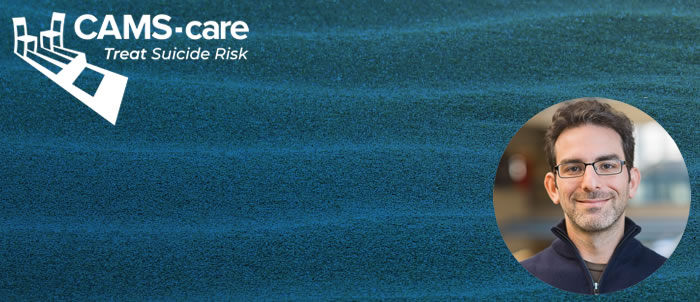
E. David Klonsky, PhD, is Professor of Psychology at the University of British Columbia. He has more than 100 publications on suicide, self-injury, and related topics, and his contributions have been recognized by awards from the American Association of Suicidology, Association for Psychological Science, and Society of Clinical Psychology (APA). He is Past-President of the International Society for the Study of Self-injury, Associate Editor of Suicide and Life-Threatening Behavior, and has advised the American Psychiatric Association for DSM-5 and both the US and Canadian governments regarding suicide and self-injury prevention. In 2015 he published the Three-Step Theory (3ST) of suicide.

Watch the Recorded Webinar On-Demand

Enter your information to gain access.

  • This field is for validation purposes and should be left unchanged.
  • This field is hidden when viewing the form
  • This field is hidden when viewing the form
  • This field is hidden when viewing the form
  • This field is hidden when viewing the form
  • This field is hidden when viewing the form
  • This field is hidden when viewing the form

Suicide Prevention in Healthcare Settings On-Demand

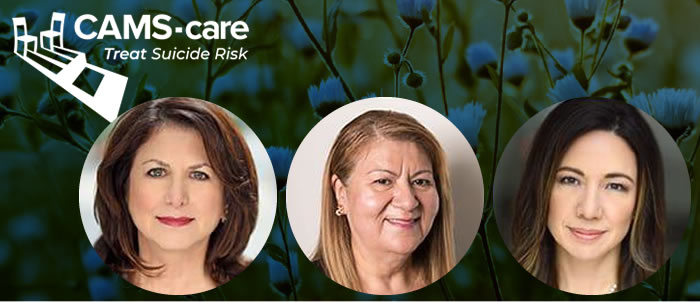
Recent survey data from SAMHSA indicates that there are 12 million American adults that thought seriously about suicide in 2019. Many people who are suicidal end up in emergency departments or are hospitalized in part because clinicians may not be confident in their ability to effectively treat them and may resort to defensive practices (e.g., potentially unnecessary hospitalizations) fearing malpractice liability. As part of Project 2025, AFSP is focusing on reducing suicide deaths in relation to emergency department and healthcare system engagement. Christine Moutier, M.D., AFSP’s Chief Medical Officer, David Jobes, Ph.D., professor and creator of CAMS, and Ms. Diana Cortez Yanez, a leading voice from the lived-experience perspective, will team up to discuss current systems of care along with evidence-based best practices for optimal clinical suicide prevention.

Topics will include:

  • use of evidence-based assessments
  • treatments
  • the use of medications
  • decreasing malpractice risk through sound clinical practices

The goal is to raise awareness about effective clinical care for suicide risk and the importance of creating lives worth living.

Watch the Recorded Webinar On-Demand

Enter your information to gain access.

  • This field is for validation purposes and should be left unchanged.
  • This field is hidden when viewing the form
  • This field is hidden when viewing the form
  • This field is hidden when viewing the form
  • This field is hidden when viewing the form
  • This field is hidden when viewing the form
  • This field is hidden when viewing the form